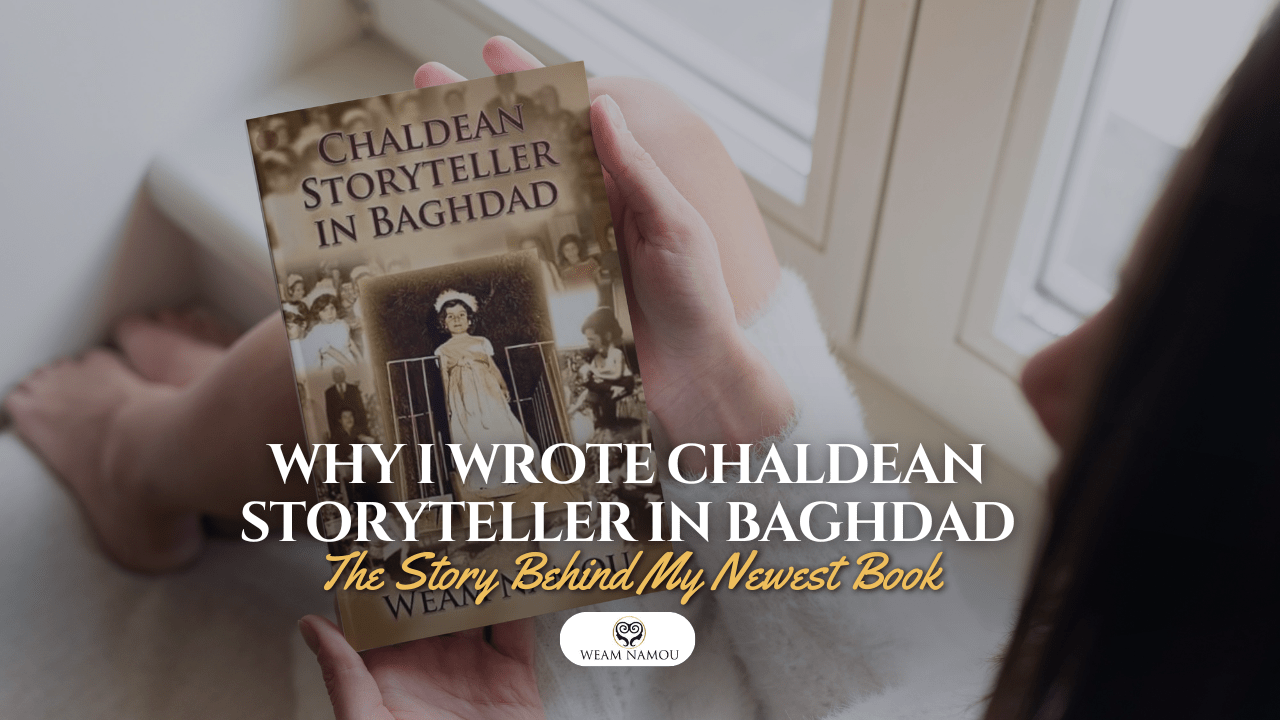
There is a suitcase in my memory that never gets old.
It arrived at our small concrete house in Baghdad when I was a little girl. It came from America, filled with toys and clothes, and inside it was my very first doll – nearly as tall and wide as I was. I remember wanting to touch her, to remove the clear plastic that sealed her like a treasure behind glass. But someone quickly sealed it again and placed her in a safe corner. “When we get to America,” my family promised, “you can play with it all you want.”
That suitcase carried more than gifts. It carried a dream so big that it had to be kept a secret. And that secret, that dream, and the world it came from is the story I have spent a lifetime trying to tell. Today, with the publication of my newest book, Chaldean Storyteller in Baghdad, I have finally told it.
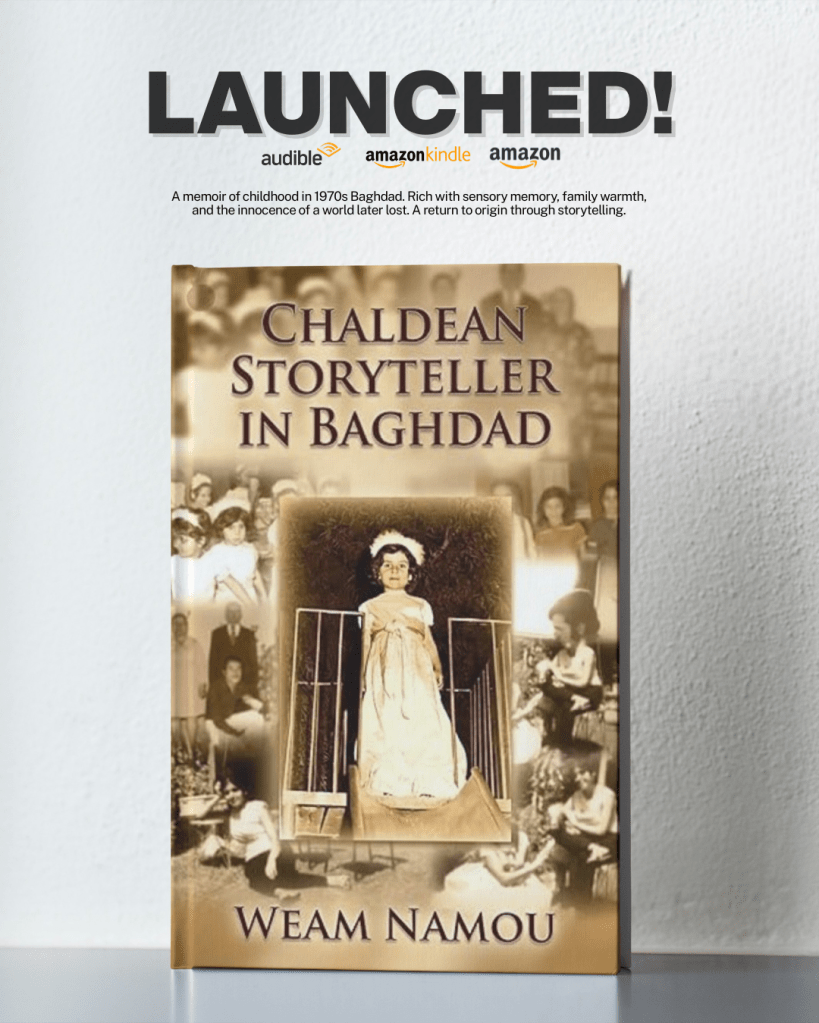
Get your copy: Available now on Amazon
Why This Book, Why Now
I have written 19 books. Some of them are fiction. Some are memoirs. Some explore the history of my people, the Chaldeans, descendants of the ancient Neo-Babylonians who still speak Aramaic, the language of Jesus. But this book is different from all of them. This one takes me back to the very beginning.
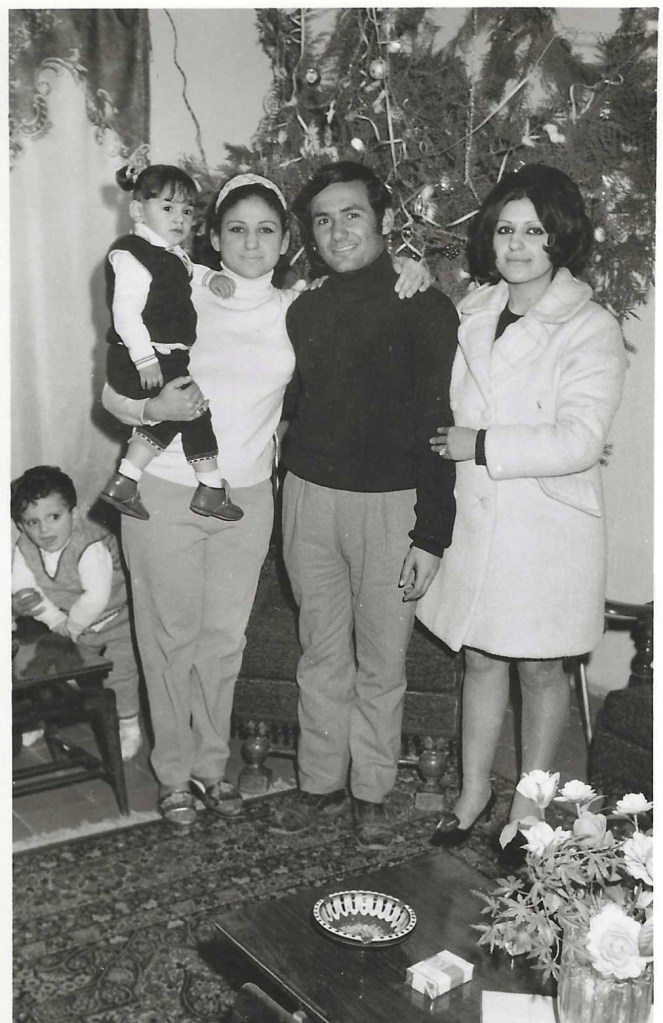
Chaldean Storyteller in Baghdad is a memoir of my childhood in 1970s Baghdad. It is about what life was like in a house with twelve children and two parents who held an impossible dream. It is about rooftops where we slept under the stars and chased the moon, about neighborhood streets where children owned the afternoons, about the smell of cardamom tea and the sound of the muezzin’s call to prayer that was as familiar to me as our own church bells. It is about a world that most people will never see, and that is exactly why I needed to write about it.
For years, people have asked me to write this story. I think a part of me was waiting until I was ready. When you carry memories this tender, you want to make sure the words do them justice. In my earlier memoir, Little Baghdad, I explored what it means for a displaced people to build a home in a new country. But Chaldean Storyteller in Baghdad goes back further. It goes to the home before the home. The one we had to leave behind.
There are an estimated 500,000 to 600,000 Chaldean Americans living in the United States today, with the largest concentration in the Detroit metropolitan area. Despite their deep historical roots stretching back thousands of years to ancient Mesopotamia, their stories remain largely untold in mainstream literature. (Source: Chaldean Community Foundation estimates)
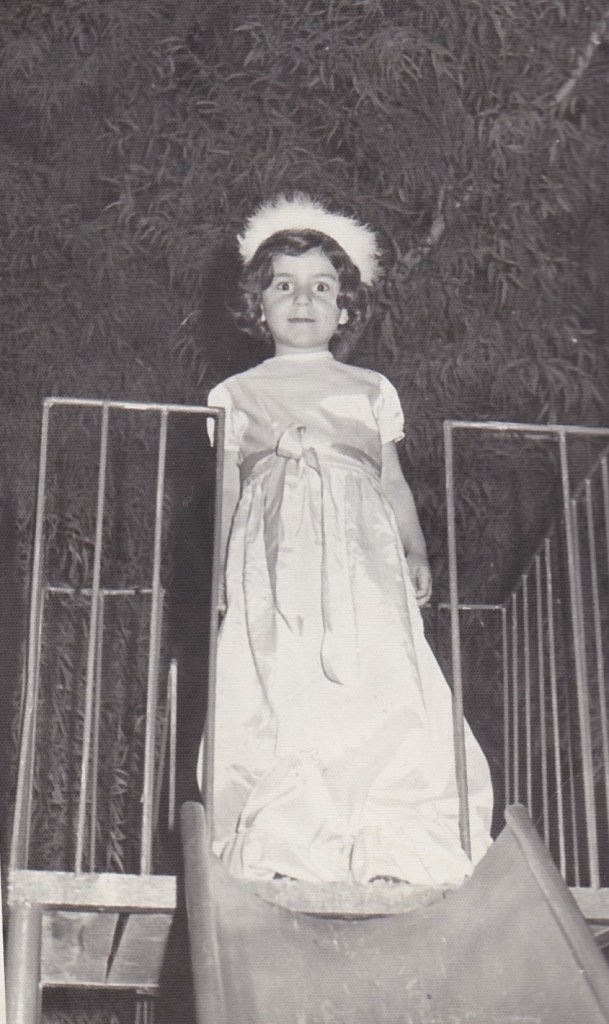
A Childhood in Baghdad That Feels Like a Dream
The book opens with that suitcase from America, and from there it unfolds chapter by chapter through the world I grew up in. I introduce you to my Babba, my father, who was so kind that people came to him for legal advice because he was smart, honest, and never charged a thing. I introduce you to my Mamma, who ran our house like a CEO of a major corporation. I introduce you to my Aunt Hassina, the most renowned midwife in Fallujah, who delivered the babies of sheikhs’ wives and, with her sharp tongue and compassionate heart, convinced fathers not to bury their newborn daughters, a practice that was once customary in parts of the region.
I write about the rooftop where our beds were carried up every summer so we could sleep under the open sky. The neighborhood children who played marbles and hopscotch until the cars interrupted us and we scattered like birds. The bakery where I stood in my nightie, too small to be noticed, while adults grabbed fresh bread over my head. The Christmas celebrations that were simple but full of laughter, and the way our Muslim neighbors came to our door with trays of sweets to wish us a blessed holiday, just as we did for them during Eid.
These are not just my memories. They are the memories of a people. And I wrote them down because memory, like bread fresh from a tandoor oven, does not last forever unless someone preserves it.
A Story of Family, Faith, and the Courage to Dream
At its heart, this book is about a family that dared to dream of something bigger than the world they were born into. My oldest brother, Basim, was the first to leave Iraq. He was eighteen years old, and the day he left, my father cried. “I don’t want you to go,” Babba said. “I don’t know what will happen to you there.” But Basim knew there was no future for us in Iraq. He carried with him not just his own hope but the belief that one day, we would all be together again, somewhere new.
That dream of America ran through everything we did. It was the secret we could not speak aloud, because if the Iraqi government suspected we were planning to leave, we could be locked in the country forever. As a child, I hid the word “America” in my pocket and went about my life, going to school, playing with friends, not fully understanding why the adults around me whispered when letters arrived postmarked from the United States.
According to the United Nations, the number of international migrants worldwide reached 281 million in 2020, representing approximately 3.6% of the global population. Behind each of those numbers is a family, a secret hope, and a story of leaving one life to build another. (Source: United Nations Department of Economic and Social Affairs, International Migration Report)
My family’s story is one of those 281 million. And while each migration is different, there is a common thread that connects them all – the willingness to leave everything you know for the possibility of something you cannot yet see. That is the emotional center of this book.
What You Will Find Inside These Pages
Chaldean Storyteller in Baghdad is written for readers who love memoir and personal storytelling, for anyone curious about life in the Middle East beyond what the news shows, for Chaldean and Iraqi Americans who will see their own families reflected in these pages, and for anyone who has ever held a dream so fragile that they were afraid to say it out loud.
The book spans eleven chapters, each one a window into a different part of that world. You will meet my family – my parents who had twelve children and a thousand worries, my siblings who took care of each other, and the extended family and neighbors who wove a net of community around us. You will walk through the streets of a Baghdad that smelled of fried eggs and onions in the morning and echoed with the sound of children playing until dark. You will feel the heat of summers so hot that people said you could fry eggs under the sun, and the quiet magic of rooftops where we watched the stars and argued about who the moon was following.
You will also see what it was like to be Christian in a Muslim country, not through the lens of conflict but through the lens of daily life. The way my mother reminded us that there are good and bad people everywhere. The way our neighbors of different faiths celebrated each other’s holidays with genuine warmth. And the way the government’s control over everything, from eggs in the market to who could leave the country, shaped the quiet desperation that sat beneath the surface of our otherwise beautiful life.
Why This Book Is the Most Personal Thing I Have Ever Written
I have written books about Chaldean history, like Chaldean Chronicles, which traces the lineage of our people through rare manuscripts and archival sources. I have written about the Iraqi-American experience through my Iraqi Americans book series, and about my spiritual transformation in the Healing Wisdom for a Wounded World memoir series. Each of those books required me to be honest. But this one required something more. It required me to be tender.
Writing about your childhood is like opening a door you have been standing in front of for years. You know what is on the other side. You are just not sure you are ready to feel it all again. But once I stepped through, I found that the memories were not painful in the way I expected. They were beautiful. The sound of my sister telling me about America, where people had so many eggs they could crack them on each other’s heads. The image of my father crying the day my brother left for a better life. The feeling of being small in a bakery, invisible among the adults, waiting for my turn that never came.
These are the moments that make a life. And this book is my way of making sure they are not lost.
UNESCO has recognized that intangible cultural heritage, including oral traditions and storytelling, is at risk worldwide. Their research emphasizes that personal and community narratives are vital for the preservation of cultural identity, especially among diaspora communities. (Source: UNESCO Intangible Cultural Heritage Convention)
Who Is This Book For?
I wrote this book for my community, for the Chaldeans who carry these same memories and need to see them honored in print. I wrote it for the next generation, for the children and grandchildren of immigrants who want to understand where their families came from. I wrote it for the young adult reader who is curious about the world and wants to experience a life and culture that is both vastly different from and deeply similar to their own.
But I also wrote it for anyone who knows what it feels like to carry a secret dream. To love a place that no longer exists. To leave home and carry home with you at the same time.
If you have read my previous work, you will recognize my voice in these pages but hear it in a way you have not heard before. This is me at my most unguarded. This is the story I have been preparing to tell my entire life.
The memoir genre continues to grow, with industry data showing that biography and memoir account for a significant share of nonfiction bestsellers. Readers increasingly seek authentic, personal narratives that offer a window into lived experiences different from their own. (Source: Publishers Weekly, Book Industry Trends)
How to Get Your Copy
Chaldean Storyteller in Baghdad is available now in paperback and eBook through Amazon. It is published by Hermiz Publishing, Inc.
Order your copy here: Get Chaldean Storyteller in Baghdad on Amazon
If this book speaks to you, I would be grateful if you shared it with someone who might need to hear this story. Leave a review on Amazon, pass it along to a friend, or share it with a young person who is curious about the world. Stories only live when they are passed from one heart to another.
A Story That Has Been Waiting
My name is Weam. In Arabic, it means harmony. As a Chaldean, I belong to a community that has survived for thousands of years, through empires and wars, displacement and rebuilding. We are still here. We are still speaking Aramaic. We are still telling our stories.
This book is one of those stories. It is the one that started it all.
For more than 20 years, I have shared my work through books, workshops, retreats, seminars, and personal consultations. I love helping writers and creatives develop their voice, strengthen their craft, and bring their unique vision into the world. Learn more at weamnamou.com.
Love and Blessings,
Weam
 The Path of Consciousness