Today, I attended Palm Sunday at a Chaldean church, a community that traces its roots back to one of the oldest Christian traditions in the world. The church was alive with devotion and joy, its walls echoing with ancient prayers and hymns sung in Aramaic, the language Jesus himself spoke. It was a moving experience, immersing myself in the faith and culture of a community with such a profound connection to history.
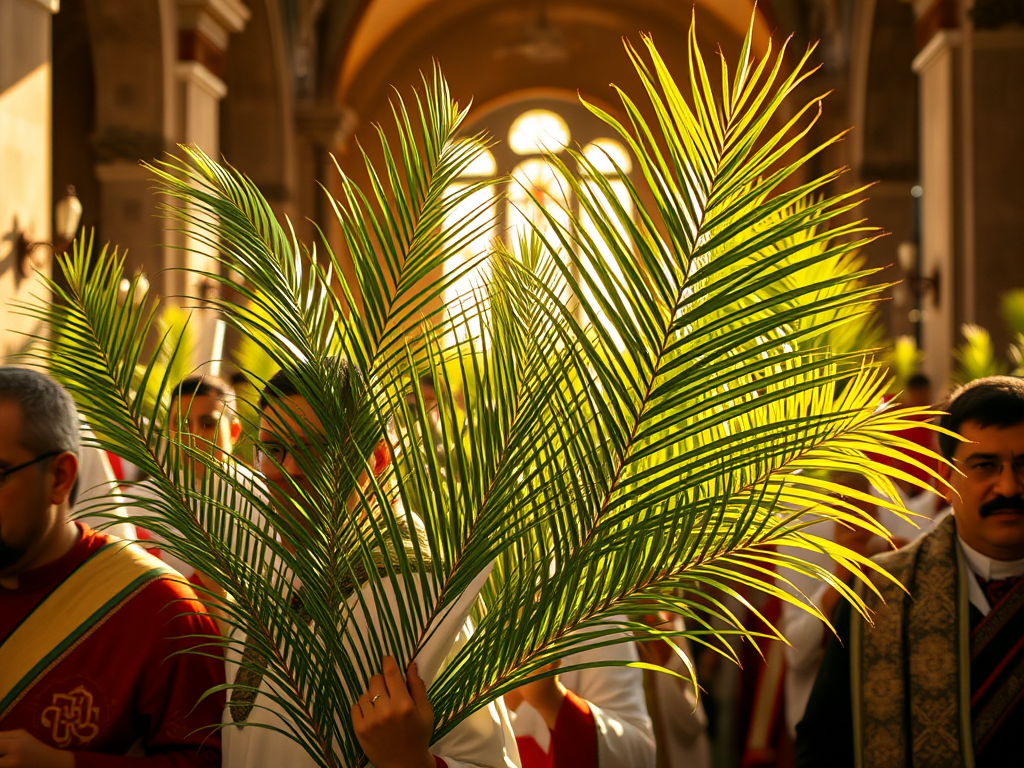
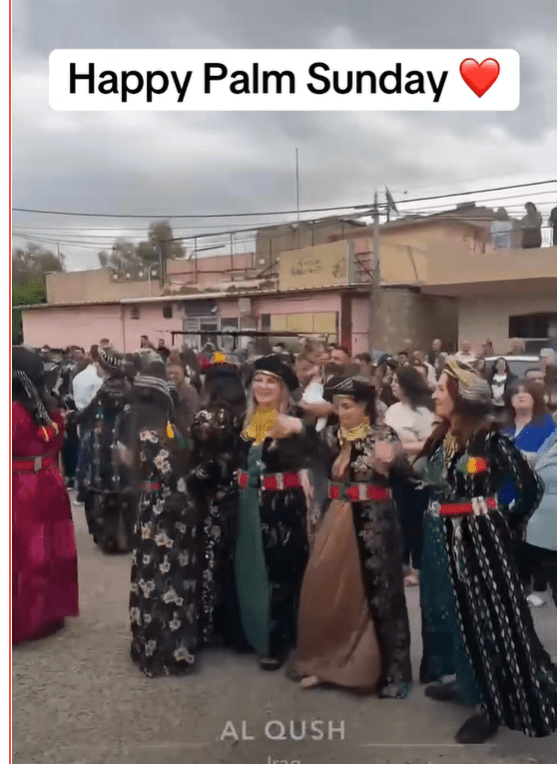
One of the most striking parts of the ceremony was the procession. Members of the congregation walked down the aisle holding palm branches, waving them high in the air as a symbol of reverence and celebration. The atmosphere was electric as women released traditional Middle Eastern mirth sounds—ululations—made during happy occasions like weddings or other festivities, added a layer of cultural depth to the ritual, blending faith and heritage in a powerful way.
At the end of the celebration, everyone received a palm branch to take home. Holding that simple branch in my hand, I couldn’t help but wonder—what does this symbol truly mean? Was there a deeper story behind it?
When I returned home, after having a late brunch with my family, walking the dog, then taking a nap, I decided to do a bit of research. What I found was fascinating, connecting the palm branch not only to Christianity but to a much older legacy: the traditions and beliefs of ancient Mesopotamia.
Here’s a TikTok clip of the Christian communities celebrating in Iraq. You can follow me there for more colorful clips!
https://www.tiktok.com/@weamnamou/video/7492845930249522478
The Deeper Meaning of the Palm Branch
Palm branches are central to the Christian celebration of Palm Sunday, symbolizing Jesus’ triumphal entry into Jerusalem. They represent victory, peace, and eternal life. But their significance goes back much further in history, to the ancient civilizations of Mesopotamia.
In Mesopotamia—the cradle of civilization and the land that gave rise to the ancestors of today’s Chaldeans—the palm tree was a powerful symbol. It represented life, fertility, and prosperity in a region where agriculture depended on the rivers and the lush vegetation they supported. The palm was sacred, appearing in religious rituals, art, and even mythology.
Palm branches were often associated with deities like Ishtar, the goddess of fertility and love, and Shamash, the sun god. They were depicted in carvings and reliefs, sometimes as part of sacred trees or in scenes of divine blessing. The palm’s connection to life and renewal made it a potent emblem, one that resonated deeply with the spiritual beliefs of the time.
As Christianity emerged and spread throughout the region, it absorbed and reinterpreted some of these older symbols. The palm branch, once a sign of prosperity and divine favor in Mesopotamian culture, became a symbol of Christ’s victory over death and sin. On Palm Sunday, Christians around the world carry these branches as a reminder of Jesus’ sacrifice and the promise of eternal life.
Imagine, the palm branch I brought home today carries that history.
 The Path of Consciousness