Blog

A Walk Through Time

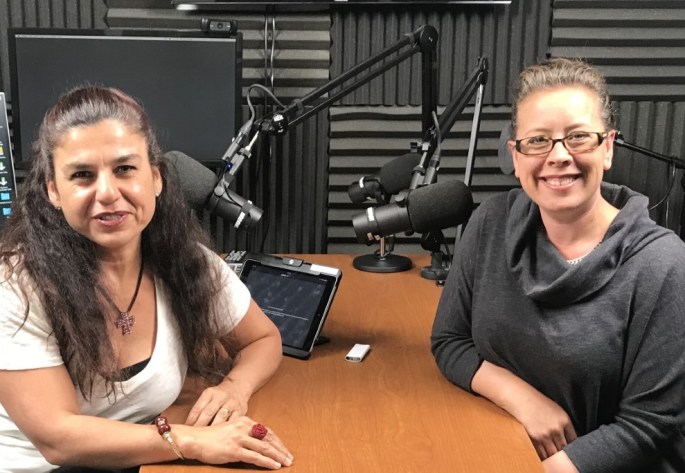
“Memories play a pivotal role in storytelling whether you’re interested in writing short stories, children’s books, creative non-fiction, a memoir, or a novel,” says Cheryl Crabb. “Memories can provide backstory and help reveal and develop character, but they also have the power to propel your narrative forward in interesting ways. That said, for many writers, manipulating memories by moving between then and now and into the future can often be a difficult path to navigate.”

I couldn’t agree more. All my 12 books – from fiction to nonfiction, poetry and memoir – I’ve called upon the past to guide me into formulating words on paper. Our favorite and least favorite memories can provide a treasure of good literary ideas.  

Cheryl says that in his craft book, Six Walks in the Fictional Woods, author Umberto Eco invites us as his companions to: “Come stroll with me through the leafy glades of narrative …”  He also asks us to consider: How does the narrative lead us on, [AND] persuade us to lose ourselves in its depths?

“I don’t know about you, but when I first began to ponder this question, I started to get afraid,” she says. “I felt like I was alone in the woods without direction. And for me, few things are more terrifying than getting lost, especially in the woods. It makes me want to turn around and run home. I suspect I’m not alone in this fear, which often is so intense that it prevents us as writers from entering the woods in the first place.”

She adds that, instead, we choose to stay within the safe confines and comfort of more familiar territory. She encourages people to journey “deep into the woods and beyond” and will be leading a workshop for the Detroit Working Writers Conference on November 10 that will help writers explore how memories can help shape our stories and perhaps even change our lives.

A Wisconsin native, Cheryl Crabb is a long-time journalist and emerging fiction writer. She has worked for fifteen years in newspapers, including the Atlanta Journal-Constitution and The Hartford Courant, and been a guest columnist for the Detroit Free Press. She lives with her husband and their three daughters in Northville and enjoys volunteering for 826michigan, which provides writing programs to school-age students. She recently received her MFA in Writing from the Vermont College of Fine Arts and is currently seeking representation for her novel, The Other Side of Sanctuary

Her novel  is based on the premise that everyone needs a sanctuary, but what happens when there is no longer a place for refuge? Set in the fictional village of Sanctuary along the Sleeping Bear Dunes of northern Michigan, it’s a dual-narrative, literary thriller about a young couple’s troubled marriage and the spooling tensions that arise as a dark series of events unfolds.

“Time draws the shapes of stories.” Joan Silber asserts in the introduction to The Art of Time in Fiction: As Long as It Takes.   “… all fiction has to contend with the experience of time passing. … A story can arrange events in any order it finds useful, but it does have to move between then and now and later.”  So, as Silber interprets it: “A story is already over before we hear it. That is how the teller knows what it means.”

Memories are a rich source for writers. When we bring them to life, we learn a new lesson, see a different perspective. My fondest memories are of the wonderful magic I experienced when, as a child, I walked to school in Baghdad, wearing a custom-made uniform, my hair in braids, tied by bright white imitation silk ribbons. I remember those walks so well: the frosty grass in the winter, birds chirping in spring, the sounds of my shoes click-clacking against an ancient surface that once was famed as the wealthiest and richest city in the world. On my way home from school, I could tell from the aroma what my mother had cooked. Various vegetable stews served over rice are a major part of Iraqi cuisine. The vegetables range from eggplant to cucumber. My favorites were okra stew and northern white bean stew.

Drawing from your favorable and not so favorable memories is a way to help you celebrate your life and those who have shared your journey. It’s a luxury to sit and reflect on the past, to evaluate it, recognize certain patterns and learn along the way. You come to learn that experiences, your stories, are much more fascinating and interesting than those of celebrities. Writing from your memories is transformational.

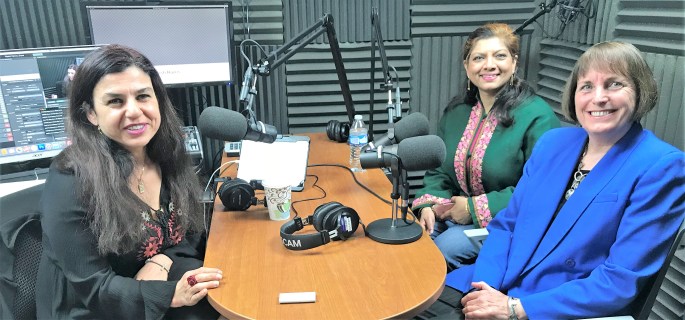
Watch the half-hour interview with Cheryl and check out the upcoming Detroit Working Writers Conference, visit http://www.detworkingwriters.org/conference/

Cheryl's Book
Cheryl Crabb contributed to this children’s book


Love Is Where You Find It

By Guest Blogger Patty Shaw

About 17 years ago my Mother had a stroke that left her paralyzed from the waist down. She had succumb to an autoimmune illness that attacked her spine and broke her nervous system and nearly broke her spirit.  It was hard enough to see my mother tubed up and wired up, but what added to my fear, all of our fear, was that this illness that broke my mother was a like a phantom.  There was no definitive diagnosis, which meant, no specific treatment and outcome.  The doctors did their best to not sound mystified.  It was the nurses who kept us informed and hopeful, and I guess that is really their job.  Doctors seem to choose to stay detached, possibly out of self-preservation.  I can’t imagine being personally engaged with that many suffering people and not fall apart.  

As family and friends gathered around sharing our grief, we were rendered helpless to watch the phantom wreak havoc on my mother’s body.  Like a forest fire, all we could do is wait for it to burn out. This was our family’s first experience with a debilitating disease.  Anyone would agree it was life changing for her, what we weren’t prepared for was how life changing it was for everyone else, especially my father.  It wasn’t just about the logistics, it was also about the feelings and the beliefs and the psychological drama that played out.  Each member of the family had their own personal reaction.  Her illness and subsequent confinement to a wheel chair rocked each and every one of our worlds both collectively and individually.  When she finally came home, after 3 months in hospital and rehabilitation, we all had to learn how to relate to our mother in a new and unwelcome way.  She was now the child and we were the parent. 

Our first response was denial.  We all cleaved to what was and kept our focus and efforts on getting back there as soon as possible.  She did her physical therapy and we cheered her on and gave her hope that this nightmare was temporary.  We all did research and scoured the internet and medical books for a cure or pathway to rehabilitation.  Ultimately we got better educated, but mom stayed in her wheel chair. It was not a pretty sight and the reality of her situation just brought more darkness.  As her body fought to survive, my mother’s will to live started to dwindle.  We all felt her feelings of defeat and depression and we grieved with her.  My father, on the other hand, refused to let her give up and the quiet battles that waged between them were heart wrenching.  Over time, a long time, softness bloomed and the horror turned into compassion and gentleness that acceptance can bring.  The love they have for each other was what brought them through it.  Miracles happen in spaces filled with love.

It happened to be an Easter miracle.  That morning, I found a very different woman waiting for her family to gather around the table for brunch.  The vacant stare was replaced with a determined glint in her eyes as she wheeled around the table throwing silver ware close to the plates.  She was setting the table!  She was back to barking orders and making sure my father didn’t let the rolls burn.  I tried to help, believe me, but she’d just as soon run me over than let me take over.  So I loved her.  I loved her as she struggled to open a box of candles and I didn’t butt in once to do it for her.  I loved her as she rammed into the coveted buffet and nicked it and I didn’t tell Dad.  I loved her as she ordered me around as if I was a child; I didn’t rebel, I did what she told me to do.  It felt so good to just be with her and let her be with me.  Not as mother and child, or invalid and caretaker, but as two women, getting ready for Easter brunch.  My mother passed away many years after that Easter morning.  She had to go through many difficult trials before she left us for good. 

In all of that trauma and drama of her illness, she taught me that love is where you find it.  All I needed to do was to look with an open heart and recognize that what I was seeing was the love I was looking for.

Patty Shaw
Patty Shaw with her mother


Patty Shaw is the author of award winning book Healer’s Almanac – Journey into Health with Wisdom from the 21st Century Goddesses. She is co-owner of Coventry Creations, creators of the Original Blessed Herbal Candles, the Candle Wick Shoppe in Ferndale, and director of CWS Reiki Healing Center. She is a Reiki Master since 1999 and Pranic healing practitioner. http://www.HealingWithPattyShaw.com

Envision Your Success Using Vision Boards

Long ago, a woman gifted me a book called The Power of Your Subconscious Mind by Dr. Joseph Murphy. Once I started reading it, I couldn’t put it down. This was my introduction into the science of the subconscious mind, how we can, through habitual thinking, imagery, and the belief in a higher power create our destiny.        

In all his books, Dr. Murphy provides practical methods to help a person redirect their energy and achieve the result they want. Born in 1898, he was educated in Ireland and England in Eastern religion and later became a Minister-Director of the Church of Divine Science in Los Angeles. He spent many years in India and was a scholar of the I-Ching, the Chinese book of divination whose origins are lost in history.

I was fascinated by this subject and began to set clear intentions for what I wanted in my personal and work life. At first, I used only words and feelings to shift my thought process and manifest my dreams. Later, I incorporated pictures. I was young and didn’t know whether this exercise would work, but aligning thoughts and emotions in this way felt really good. It took me away from negativity and gave me clarity and a sense of purpose. Along the way, I read of many people who had practiced these techniques successfully, such as Olympic athletes who have used it for decades to improve performance. Over the years, people that understand and utilize meditation and vision boards for their success became part of my every day circle.

My friend and colleague Sonya Julie, for instance, used a vision book to change her life. Within a few years, she went from a job in the corporate world to being an entrepreneur, facilitating workshops, creating jewelry and writing her memoir. A co-creator of Rochester Writers, Sonya has published freelance content for a variety of publications including The Oakland Press, Michigan Sports Edge and Rochester Media. She is a Reiki Master and Energy Worker and will be leading a workshop at The Path of Consciousness spiritual and writing conference and retreat in October. In this workshop, called Creative Vision Board Workshop: Envision Your Success!, participants will dig deep into this highly effective practice to help one transfer their goals and dreams into reality. She’s doing somewhat of a similar workshop for the Detroit Writing Conference in November.

Sonya3
Sonya’s Jewelry

“Every day we have a choice regarding how we live our lives,” says Sonya. “Society has told us what is expected of us and what the ramifications are if we don’t follow suit. Do you spend many hours each week working on something you don’t believe in or enjoy? Or perhaps you are working towards your dream but don’t know what steps to take? Perhaps you have too much going on and can’t seem to find the time to make anything happen.”

Sonya invites people to think about what they’d want to do if they had no limits.

“If you had enough money and security and could create anything imaginable, what would that look like? And how would you get there?” she asks. “Be specific – don’t just say you want to save the world or learn to paint – think of something more specific. What would you do if you had no limits on your power to create?”

She suggests taking perhaps 15 or 20 minutes to write down your ideas and dreams. Once you have a general idea, take time to further define your ideas. What kinds of steps would you take to get there? You can set aside time to work on this in whatever way works for you. Get a new notebook that you will enjoy using. Start brainstorming, doodling, and finding creative ways to express that which you hold in your heart. What resides in the core of your being? What are you here to do? To enjoy? To create?

Visualization is one of the most powerful mind exercises you can do. For me, looking back, I see that the majority of what I’d focused on has manifested – except it didn’t necessarily happen the way I expected or in the time period I hoped for. Most of us wish that our dreams would come true more quickly or the difficult seasons would pass by more smoothly, but things worth having, including loving relationships, require work and patience. Otherwise, it becomes a continuous fantasizing that leads to frustration. So it’s important that one has a “vision board” and an “action board” to accompany it.

Watch the half-hour interview with Sonya and for more information about Sonya’s work, visit her websites www.SonyaJulie.com and https://awakeningthecore.com

She will be presenting at The Path of Consciousness Spiritual & Writing Conference & Retreat Oct. 5-7 http://www.ThePathofConsciousness.com

She will be presenting at Detroit Working Writers Conference Nov. 10  http://www.detworkingwriters.org/conference/

Sonya2

Meditation as a Creative Tool


The mind of a writer is busy with what they weren’t able to write yesterday, what they need to write today, and what stories they have to complete before their time is up on this earth. Our modern-day lifestyles are filled with lists of to-dos: duties to attend to; places to go; dreams to fulfill; and on and on. Meditation is truly a great tool that can help you become the wonderful writer you’re meant to be.

Meditation has been important to me on the mat and off the mat. It has helped me navigate through my writing career, giving me clarity of thought, and the energy and inspiration necessary for the task of completing a book, then another and another. In some cases, it can be a remedy for writers block.

But meditation, probably as old as human civilization, is not reserved for writers or other creative activities. A 2012 study published in The American Journal of Psychiatry followed 114 adults for ten years and showed that those with strong spiritual beliefs had only one-fourth the risk for major depression compared to non-spiritual adults. The researchers behind the study are now looking into how the brain creates spiritual experiences. Yale and Columbia University published their findings in Cerebral Cortex.

Author and neuroscience professor Marc N. Potanza, Ph.D. of Yale University’s Yale Child Study wrote “Spiritual experiences are robust states that may have profound impacts on people’s lives. Understanding the neural bases of spiritual experiences may help us better understand their roles in resilience and recovery from mental health and addictive disorders.”

These studies are taking place in various universities across the United States, including here in Michigan. Heather Rae is a yoga instructor, meditation coach, energy and body worker and ordained minister/priestess. Her meditation practice is being studied at Wayne State Medical School. Heather’s studio, Little Lotus, is in Ferndale, where she teaches her signature style Akasha Yoga along with other traditional styles, meditation, wellness workshops and offers body and energy work one-on-one with clients.

When I was looking for someone to lead the meditation workshop at The Path of Consciousness spiritual and writing retreat, a friend referred me to Heather, said she was great in this field. On her website page, https://www.heatherraemagic.com, she writes, “My love of yoga, meditation, magic, and connecting to the Divine led me to create my own style, Akasha yoga – a divine flow centered around nature, with a balance of lunar energy stepping into your grace with fluidity and fiery solar en into your own power. This ritual on your mat works to guide you into your true self – the self that’s luminescent, connected to the entire universe, and where anything is possible.”

Heather Rae 3.jpg

You don’t even have to sit down to clear your mind. Taking a mindfulness stroll is just as effective. That’s why I love my daily walks, where I connect with my breathing, listen to the birds, the sound of the wind, the rustling of leaves, occasional barking dogs, children playing, or people quarrelling inside their homes. Each walk, like everything in life, gives much unexpected insight.

Meditation lets you see with a new perception, and helps you address the different areas in your life. Especially in today’s noisy world, it’s really important to unplug from the noise and find ways to go within. Songwriter Naomi Judd said, “Solitude is creativity’s best friend, and solitude is refreshment for our souls.”

Has your soul received its refreshment today?

On her website, Heather lists a number of ways that meditation and other spiritual tools that are beneficial. For instance, she describes how an abundance mentality opens us to new possibilities and leads to creativity. By contract, a mindset grounded in scarcity is restrictive, which can make us feel anxious and fearful Meditation and the use of affirmations help shift the mindset from scarcity to abundance. She also provides free guided meditations so visit her at https://www.heatherraemagic.com/ to find if there’s something there for you. 

Awakening the Dreamer

One day, I was sitting at my desk, staring at my computer, and thinking of various ways that I could take what I’d learned in my four-year shamanic school out into the world. Typing a few words here and there, the Pachamama Alliance website appeared on the computer screen. It defined itself as a global community that offers people the chance to learn, connect, engage, travel, and cherish life for the purpose of creating a sustainable future that works for all.

I read their story. The Pachamama Alliance was born out of an invitation from the Achuar people to work in partnership with them to preserve their land and culture while bringing forth a new worldview that honors and sustains life. The Achuar people have lived and thrived for centuries deep in the Amazon rain forest, spanning borders of modern-day Ecuador and Peru. They kept their sophisticated culture and worldview remarkably intact as late as the mid-20th century. In Achuar culture, dreams are a guiding principle of life, shared each morning before sunrise. Shamans play an important role in the spiritual life of Achuar communities, including interpretation of dreams. But not all dreams are sweet. Dreams can often require facing and transforming that which you most fear.

Intrigued, I looked deeper into the Pachamama Alliance community and learned they offer different ways for people to learn, engage, and connect locally and globally so they can inspire, educate, and empower each other to build a movement working toward an environmentally sustainable, spiritually fulfilling, and socially just human presence on this planet. One of these ways is a free, donation based, online eight-week course called the Game Changer Intensive. In this course, people are able to delve into a wealth of carefully-curated resources, including videos, readings, and activities, at the comfort of their own homes and on their own schedule. There’s also an opportunity to interact with others online and on weekly small group calls.

Over the years, I’ve taken the Game Changer Intensive course three times, the last time having finally met someone local from Ann Arbor. Betsy McCabe, a volunteer moderator of the Game Changer Intensive group calls, is a musician, educator, mother and activist of social justice and environmental sustainability. Betsy grew up in Georgia and has lived in Tennessee and Washington. Michigan has been her home for almost 30 years, where she raised two children. Her educational background is in the liberal arts, and she says that in her “first career” she worked as an environmental policy analyst (including 10 years with the US Environmental Protection Agency), and that in her “second career” she was an independent piano teacher.

“Now in my third career, I am performing and teaching music,” she said, “and I’m engaging and acting for social change and transformation with volunteer work through the Interfaith Council for Peace and Justice (ICPJ), Friends of Restorative Justice (FORJ), and the Pachamama Alliance.”

Like me, Betsy is a facilitator of the Awakening the Dreamer Symposium, which explores the challenges facing humanity at this critical moment in time and the opportunities we as a human family have to create a new future. This is a half-day workshop developed by the Pachamama Alliance and has been delivered by skilled facilitators to hundreds of thousands of participants in over 380 countries since 2005. People gather at Symposiums around the world to discover the value of ancient wisdom in addressing our modern crises and their personal role in bringing forth an environmentally sustainable, spiritually fulfilling, and socially just human presence on this planet.

I’ve learned so much from the courses offered by Pachamama Alliance and I’m so happy to have met wonderful people along the way, particularly someone local like Betsy. Now, I’m excited to share what I have learned and am grateful that Betsy will help present the Awakening the Dreamer Symposium at The Path of Consciousness spiritual and writing conference and retreat this October 5-7 at Colombiere Retreat Center. Click here for more info about The Path of Consciousnes conference and retreat and join us to help create a new future for our children, grandchildren, and the seven generations to come. 

For more information about the Pachamama Alliance, click here

The Magic of Yoga

Sandy Naimou has been teaching yoga since 2011, practicing yoga for over 20 years, and writing in personal journals since childhood.  Yoga and writing are central to her spiritual life and development.  She currently blogs on her website, CreativeEnergyYoga.com and teaches yoga full-time, primarily at General Motors Corporation.

Sandy holds a B.A. in psychology and M.L.A. in Women’s and Gender Studies.  She spends her free time studying theosophy, anthroposophy, actively working as a board member for the Theosophical Society in Detroit, taking long walks at Cranbrook Botanical Gardens with people she loves, and watching sunsets on the beach, sometimes with a yoga mat.

Her main focus is to help people maximize their potential at work, at school, at home, and in other areas of life’s challenges. That’s why we’re delighted to have her lead a yoga class at The Path of Consciousness spiritual and writing retreat on October 5-7th at the Colombiere retreat center in Clarkston, Michigan where, weather permitting, we will practice outside in the fresh open air on the beautiful grounds of the retreat enter. We will close our practice with sounds of a crystal bowl and Tibetan singing bowl. For more information, click here.

Sandy (solo 2).JPG

“Yoga opens the channels of creative energy so that the streams and rivers of your own consciousness flow freely towards your beautiful creations,” she says.

In this gentle and heart-centered yoga practice, she will engage participants with breath-work, concentration, and physical movement to open and connect the body, heart, and mind.

“Expansion in the heart center particularly opens us to truth and awareness of possibilities,” she said. “Connection between heart, mind and body brings into physical manifestation the ideas that live in our minds and the feelings and desires that live in our hearts.”

She adds that in addition to focusing on the heart center, the physical postures in this practice works on other areas in the body that require attention based on the physical demands of sitting and writing for long periods.

I was introduced to yoga over 15 years ago when my Reiki and Sikkim teachers asked the students to do a standing forward fold. Although I was fit and exercised daily, sometimes twice a day, I discovered I couldn’t touch my toes. I had limited flexibility, which can and does impact our daily life in ways that become obvious especially when you get older. I started going to yoga classes and immediately noticed a difference.

Yoga does more than burn calories and tone muscles. It’s a total mind-body workout that combines strengthening and stretching poses with deep breathing and meditation or relaxation. In my case, it helped distress me during my stressful motherhood routines and allowed me to focus on my writing. Then, when my mother moved in with me, with dementia and in a wheelchair, the balancing and strengthening poses, along with the breathing exercises I’d done in yoga helped me care for her.

Yoga can be healing, strengthening, and transformational. In 1970, Billy Hayes was caught at Turkey airport with two kilos of hashish taped to his torso, then convicted of smuggling drugs and sentenced to four years and two months. Only weeks from his scheduled release in 1975, a high court extended that sentence to 25 years. He escaped after 5 years and went on to write a book about his experience which Oliver Stone wrote the script for and later made into an Oscar winning film called Midnight Express.

In one interview, Billy said, “Before I got arrested, I discovered yoga. And I’ve literally done yoga every day for forty years. It’s the only thing that saved me in jail, physically and emotionally. And in Hollywood. Emotionally, you have to be really tough to be in this business, Yoga just helps keep me balanced every day. It helps.”

In another interview, he said it was like a “magic act” that distressed and relaxed you.


Download from Sandy’s website a free guided meditation to know what truth feels like in your body. Click here

Mesopotamian Goddesses

In December of 2017, I gave a talk about Priestesses and Goddesses of Ancient Mesopotamia at the Theosophical Society, which was filled with an engaging audience who listened to me speak about an important aspect of my ancestry that is often omitted from history – the women who helped build the cradle of civilization, now called Iraq.

We’re all connected to our past. So it’s important to know what it was like in ancient Mesopotamia when females and males had a more equal status and cuneiform scripts were filled with poetry of love stories rather than wars. How did women go from being writers and poets, queens, physicians, and priestesses to, thousands of years later, being sex slaves?

I’ll recap a little history from passages from my memoir, Healing Wisdom for a Wounded World: My Life-Changing Journey Through a Shamanic School (pg 164-165):

What history books say regarding the role of women in ancient Mesopotamia is true. Most girls were trained from childhood for the traditional roles of wife, mother, and housekeeper. They learned how to grind grain, how to cook and make beverages, especially beer, and how to spin and weave cloth for clothing. But in early periods, women could own, purchase, and inherit property and engage in business for themselves. High status women, such as priestesses and members of royal families, were taught to read and write and were given significant administrative authority. A number of powerful goddesses were worshiped, and in some city states they were the primary deities.

Kubaba, a Sumerian Queen, is the world’s first recorded woman ruler in history. She was a former tavern-keeper, one of many occupations that were open to women in Mesopotamia. Kubaba was said to have reigned peacefully for one hundred years. Her symbols were the mirror and the pomegranate.

Enheduanna is the world’s first recorded writer. She wrote and taught about three centuries before the earliest Sanskrit texts, 2000 years before Aristotle and 1,700 before Confucius. She was the daughter of the great Mesopotamian king Sargon of Akkad and the high priestess of the temple of Innana, known as Ishtar, and Nanna, the Akkadian moon god, in the center of her father’s empire, the city-state of Ur.

Enheduanna had a considerable political and religious role in Ur. She wrote during the rise of the agricultural civilization, when gathering territory and wealth, warfare, and patriarchy were making their marks. She offers a first-person perspective on the last times women in Western society held religious and civil power. After her father’s death, the new ruler of Ur removed her from her position as high priestess. She turned to the goddess Inanna to regain her position through a poem that mentions her carrying the ritual basket:

It was in your service that I first entered the holy temple,
I, Enheduanna, the highest priestess. I carried the ritual basket,
I chanted your praise.
Now I have been cast out to the place of lepers.
Day comes and the brightness is hidden around me.
Shadows cover the light, drape it in sandstorms.
My beautiful mouth knows only confusion.
Even my sex is dust.

Enheduanna lived at a time of rising patriarchy. It has been written that, as secular males acquired more power, religious beliefs had evolved from what was probably a central female deity in Neolithic times to a central male deity by the Bronze Age. Female power and freedom sharply diminished during the Assyrian era, the period in which the first evidence of laws requiring the public veiling of elite women was made.

I also shared my ancestor’s history of rich powerful females. This includes Inanna, the goddess of Sumerians who is known as Ishtar for Babylonians and Assyrians. She honored her femininity and used her power to do good for her people. She chose to leave all her possessions behind to go to the underworld which her sister was goddess of. To do so, she had to pass the seven gates (kundalini chakras) to meet her death and return to life.

There’s Ninkasi, the ancient Sumerian goddess of beer. She symbolizes the role of women in brewing and preparation of beverages in ancient Mesopotamia. But this was not a light matter. Beer consumption was an important marker for societal and civilized virtues. Did you know that the oldest recipe for brewing beer comes from the land of Mesopotamia and that the straw was first developed by the Babylonians?

Back to Kubaba – the only queen on the Sumerian King list and one of very few women to have ever ruled in their own right in Iraqi history. She is believed to have fortified the city against invaders and made it strong. After her death she was worshiped as a goddess. Yet in later generations, Mesopotamians decided it was unnatural for a woman to uphold traditional men’s roles and provided this omen to make sure no other woman dares to so improperly cross that line again: “If an androgyny is born, with both rod and vagina – omen of Kubaba, who ruled the country. The country of the king shall be ruined.”

Ironically, the country of “the king” was ruined because of her absence. The thirst to wipe away the feminine energy, “her story”, in the Middle East has succeeded, causing that region to become so imbalanced that, no matter how much U.S. and international intervention, it seems unable to heal.

Yet I believe what the Dalai Lama once said, that “the Western women will save the world.” Yes, she will bring her story back to life.

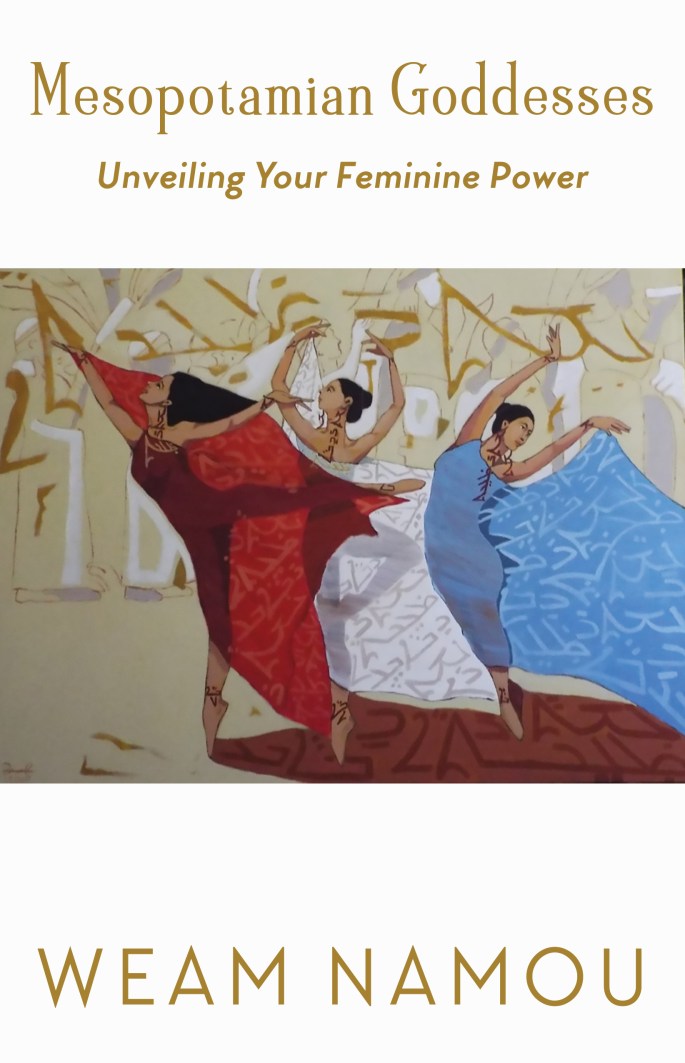
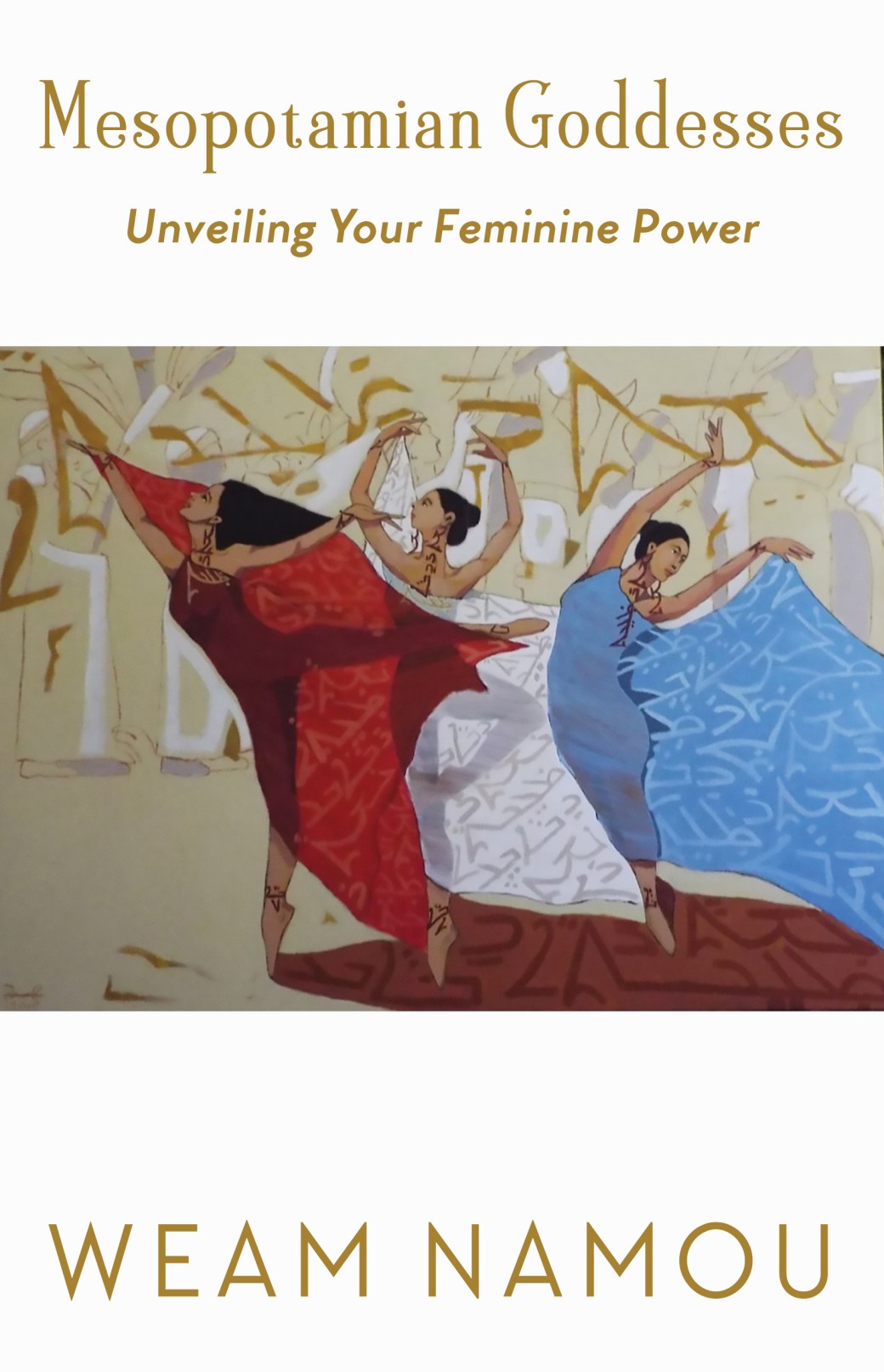
After that talk at the Theosophical Society, I dug deeper into my history, retrieved more stories about queens, priestesses and goddesses from that region, and decided to incorporate them into a book. Mesopotamian Goddesses: Unveiling Your Feminine Power not only shares the stories of these women, but it’s a transformed understanding of feminine consciousness, helping you, through powerful yet practical exercises, to manifest your dreams and create a healthy marriage within yourself, your home, and society.

You can preorder your book, or learn how you can be part of this history by visiting this link:  https://www.publishizer.com/mesopotamian-goddesses

FRONT COVER (LATEST)

The Beauty of Farming

My grandparents, from both my parents’ side, were farmers in Telkaif, a town in northern Iraq where, not long ago, Chaldeans [Christian Iraqis] lived a fairly peaceful life. My maternal-grandfather woke up every morning before the break of dawn, attended church, came home to eat a fresh breakfast he’d grown on his land, and worked in his farm until evening. Then he was off to church once again before having supper and calling it a day. They enjoyed good clean air, exercise, and a quiet time with nature. 

In 2012, I went to the home of a 111-year-old Chaldean woman, Warina Zaya Bashou, who lived in my neighborhood, to interview her for an article. She had just become the second oldest person to be granted citizenship to the United States. I asked her what was the secret to her longevity and she said:

  1. work
  2. don’t go to the doctors
  3. drink lots of tea

She too was from the village of Telkaif and, like my grandparents, had worked a great deal on the farm. Over the years, we’ve lost that relationship with the land and with eating foods grown on local farms rather than delivered in trucks from far away. But we’re trying to bring this relationship back. 

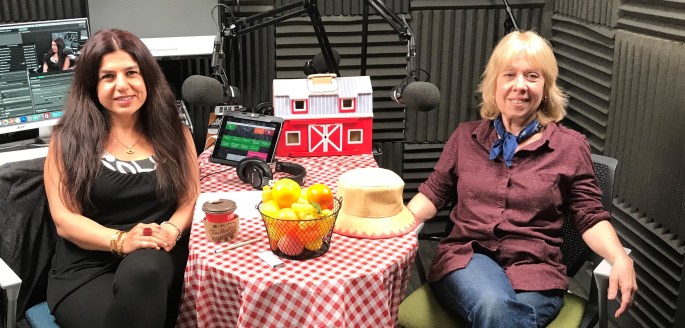
One person who’s helping do that is Diane Dovico, who I interviewed on my show. Diane spent 21 years as the Executive Director of the Royal Oak Community Coalition, a 501(c)3 non-profit and currently, she serves Oakland County working as a Wellness Program Administer at the Alliance of Coalitions for Healthy Communities by designing and facilitating original programs, initiatives, and campaigns. She started So You Want to be a Farmer?  which is a free event she had for kids at the Royal Oak Farmers Market. 

My niece and I took our children to the event yesterday where kids had the chance to play games and do activities such as animal yoga poses, planting vegetable seeds to take home, designing your own farm, story book time, making a healthy snack, and pretending to grocery shop and to learn how to make health food choices. 

I try, whenever possible – meaning when there’s the least resistance from my children – to get them involved in the meal’s preparation or to take them grocer shopping with me. Sometimes the easiest way to get them to eat healthier is by being an example, biting your tongue (kids love to rebel) and limit the types of snacks that enter your home. 

It’s also important to support local farmers. Small farms renew a connection between the food people eat and the land they live on. They help create jobs, improve the health of the land and the people, and they provide a foundation for a more resilient local food system. As people become more conscientious, they understand the beauty and necessity of farming. They want to know where their food comes from, how it is produced, and that it is produced in a way that isn’t damaging the environment. It is this consciousness that will shift the economic attitude to “what’s good for the world is what’s right for the company” for the rewards of brand loyalty and profits.

What’s your relationship to food and the land?

The Women of WISDOM

In response to the divisions that emerged during the recent elections, many women have come together to form unity and a more peaceful world. They began taking on leadership roles, with over 25,000 women contacting Emily’s List about running for office. This is one small example.

But the pattern of women stepping up to create harmony during difficult times is not a new phenomenon. Many women around the world have worked hard to help provide equal opportunities and healthier environments so that individuals, families, communities, and nations can strive. Over a decade ago, Gail Katz, a Jew, Shahina Begg, a Muslim, and Trish Harris, a Catholic, reached out and brought other women together to form WISDOM (Women’s Interfaith Solutions for Dialogue and Outreach in Metro Detroit) which officially became a 501 (c) 3 in May 2007.

The 9/11 attacks and the Iraq War had caused a polarization as turmoil escalated in the world between and among the various faith traditions. In the belief that women could come together and form an interfaith movement where we could listen to each other, respect each other’s differences, and then take action towards change, these inspiring women started a beautiful circle of sisterhood that has gone on to present many empowering programs.

Wisdom

I met one of WISDOM’s co-founders, Trish Harris, through Padma Kuppa, who’s running for a seat in the Michigan House of Representatives. Trish is a Catholic like myself, and she definitely has a lot of wisdom to contribute to the world. In the book Friendship & Wisdom, she writes, “There is something distinctive about how women work together. We tend to take the time to build the relationships first, and then work on solving the problem.”

Friendship & Wisdom features true stories from over 50 remarkable women. One of the woman who shares her story in the book is Padma. Padma is a Hindu American and community activist working for social justice and understanding. Born in India, she arrived to the U.S. to start kindergarten in 1970 on Long Island. Returning to India with her family in 1981, she finished high school and college while living in a mainstream Hindu culture. Returning to New York in 1988 as a foreign student, she, her husband, and their two children have made Troy, Michigan their home since 1998. Padma is a founding member of the Troy-area Interfaith Group, as well as the Bharatiya Temple’s Outreach Committee.

Padma starts her story with profound words (page 89):

One of my favorite Bible verses from 1 Corinthians: “Faith, hope and love abide, these three; and the greatest of these is love.” This is a lot like passages in Hindu scriptures, including these words from the Maha Upanishad: “The whole world is a family.” There also is a prayer of peace in the Rig Veda that reads, in English: “May all be happy. May all be healthy. May all be prosperous. Let no one suffer.”

The Foreword by Barbara Mahany was also touching:

Day after day I wake up with my chest feeling hollowed. The space in my heart hurts so much, so immeasurable, I can’t fathom how to contain it. I shuffle down the stairs of my old shingled house, look out the windows into the quiet dawn, into the leafy arbors, and wonder how in the world can I stitch a single thread into the tatters of this world, this oozing brokenness all around?

And then the stories of this book landed on my desk. This, I knew right away, is where the answer lies: In ordinary-extraordinary stories of women who reach across doorways, and hallways, and kitchen counters – who see beyond burkas and veils and prayer beads and venerations.

Being in the presence of these women, you know there’s something special at work that you want to be a part of. Wisdom received from anyone is very important. With women, their wisdom allows them to see in another woman what she herself might not be able to see or articulate so clearly. When I opened the book that Trish had gifted me, I saw these words: “Weam, thanks for helping to change the world – one relationship at a time.”

I’m grateful for women like Trish and Padma and others who help make communities a better place. May their sisterhood circle continue to grow, prosper, and embrace the whole world.

To learn more about Wisdom, click here:

To learn more about Padma Kuppa, click here

One of the Best-Kept Secrets

One beautiful sunny morning in March 2014, I drove to Colombiere Conference and Retreat Center to cover a story for The Chaldean News about a women’s Lenten retreat. It was a Friday and my son, a preschooler, didn’t have school that day. One of the directors of the retreat encouraged me to bring him along so I did.

Colombiere is nestled on acres of towering pines and oaks in Clarkston, Michigan. I remember upon entering the long road that leads to the building, I felt a sudden disconnect from the hustle and bustle of everyday life. Inside, my son stopped to view some of the statues and look out the window at the walking trails and gardens. We took the elevators to an upper floor and went into a most lovely chapel with bluish décor. Father Sameem Balius was performing mass. He talked about the importance of retreats, how they renew peoples’ faith and help them experience the loving presence of God and to seek the wisdom necessary for good daily living.

Colombiere


Later we moved the cafeteria, which was surrounded by large windows. My son and I observed the green acres of land. A few nuns were doing their morning walks. I interviewed the priests and organizers of the retreat, who initially started it years prior “to combine prayer, meditation and spiritual education”, and went home feeling blessed to have had the opportunity to visit this place, especially with my young son. (I included below a link of the article I wrote in 2014).

Two years later, my family and I went to Cancun, Mexico and I ended up participating in a spiritual ceremony that had me thinking to bring home the experience I enjoyed in the Riviera Maya. As an author of 12 books, I wanted to also combine writing workshops with it. I’ve worked with many writers and have found that oftentimes, there are spiritual blocks preventing them from moving forward in their career. I’ve also worked with many people who have healed several issues in their lives through the process of writing. I decided to start a writing and spiritual retreat and named it The Path of Consciousness, based on the sign welcoming patrons to the spiritual ceremony in Mexico. Last year, Reverend Barbara Yarnell of the Center of Enlightenment and another dear friend Lisa Argo offered to help me find the right venue and prepare other necessary work.

IMG_5864


Someone suggested we visit Colombiere. The name didn’t ring a bell but when we arrived to the building, upon driving into the long road, I immediately remembered the day my son and I went there, the peace that enveloped me and I’m sure him as well since he was so good throughout the day, allowing me to enjoy mass and interview people. From that one visit, we agreed this is the perfect place for the writing and spiritual retreat and didn’t end up touring other retreats. Later, I discovered that Colombiere is said to be “one of the best-kept secrets.”

Chapel


As someone who loves history, when I learned of the story behind Colombiere, I invited Janice Seeley, director of conferences and retreats, to come on my show and share it. Colombiere opened as a Jesuit training facility in 1959. It is named after Claude de la Colombiere, a Jesuit teacher, orator and spiritual director, who lived in France from 1641 to 1682 and was canonized May 31, 1992. In the course of preparation for the priesthood, the young Jesuit undergoes fifteen years of training, years of formation. Some examples of the classes offered in liberal arts were English, Latin, Greek, French, Literature, History, Education, and Speech. This rich background prepares the young Jesuit for further studies in philosophy and theology.

From the beginning, the Jesuit Healthcare Center for retired priests and brothers has been located there, as well as a large community of Jesuits involved in the operation of Colombiere. After the number of seminarians declined by the late 70s and 80s, they decided to open up an infirmary/retirement center for the Jesuit priests. In addition, the remainder of the building opened up as a retreat center. Although the facilities reflect the Jesuit influence, they are not limited to those of the Catholic faith. Colombiere hosts a wide spectrum of non-profit and for profit groups and is available for educational, religious, and governmental day and overnight programs, as well as both corporate and religious retreats.

Aside from having the writing and spiritual retreat there, I’m also considering having the Girl Scout troop which I lead to spend a night or two there, where mothers and daughters can enjoy quiet time without the interruption of electronics or television. If you want to check out the spiritual and writing conference and retreat which will be from October 5 to 7, visit this link The Path of Consciousness
Read Article about Chaldean Women’s Retreat

Continue reading “One of the Best-Kept Secrets”