

It’s a cold April day, after yesterday’s unexpected heat. The fireplace crackles softly as I cuddle under the covers, laptop set on the hearth. Earlier, I watched Miss Potter, a warm and nostalgic film that perfectly matched the comfort of the moment. Inspired by the quiet reflection of the day, I thought I’d share something I wrote about this morning for my upcoming book—about the Chaldean Magi, their connection to Jesus, and the profound mystery that surrounds their story.
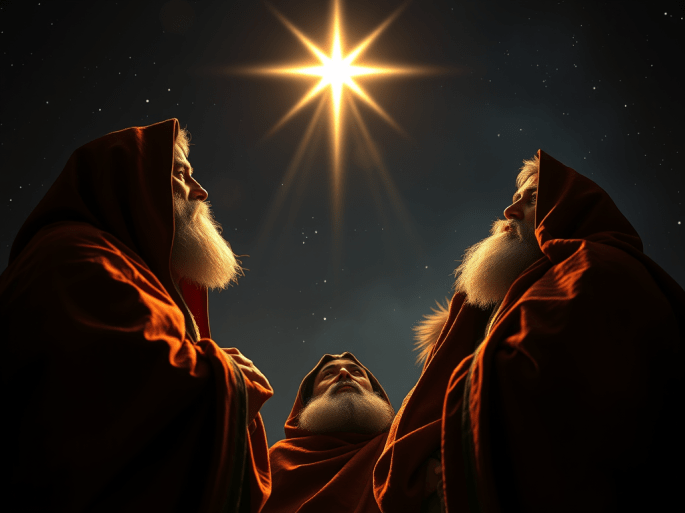
The Magi are often shrouded in a sense of wonder. Described in the Gospel of Matthew as the “wise men from the East,” they followed the star to Bethlehem, bringing gifts of gold, frankincense, and myrrh to honor the newborn Christ. But their story doesn’t end there. Tradition and history link the Magi to the Chaldeans, an ancient priestly class known for their wisdom in astrology, divination, and spiritual practices.

The Magi and Their Role in Jesus’s Story
The Magi’s connection to Jesus is both spiritual and deeply symbolic. After visiting the Christ child, they were warned in a dream not to return to King Herod. Herod, furious at being deceived by the Magi, ordered the massacre of all male children in Bethlehem under the age of two—a tragic event remembered as the Feast of the Holy Innocents. By taking another route home, the Magi not only defied Herod’s evil plans but also played a role in safeguarding Jesus during his vulnerable early years.
But how did the Magi, coming from a non-Christian tradition, recognize the significance of Jesus’s birth? The answer lies in their spiritual heritage.
The Chaldean Magi: Guardians of Ancient Wisdom
The Magi were often associated with the Chaldeans, a people renowned for their mastery of the stars and their ability to interpret divine messages. The Chaldeans’ reputation as wise men and astrologers was so enduring that their name became synonymous with knowledge and mysticism in many ancient texts.
The Magian religion, tied to Zoroastrianism, emphasized the battle between light and darkness—a theme that resonates deeply with the Christian story of salvation. The Magi tended sacred fires, interpreted dreams, and acted as mediators between the divine and the earthly. These roles made them uniquely attuned to the signs in the heavens, such as the star that heralded Jesus’s birth.
Tradition even suggests that after their visit to Bethlehem, the Magi passed through Chaldean villages, celebrating the miraculous birth and planting seeds of faith. Centuries later, these seeds would bloom as Christianity spread to the region.
The Enduring Legacy of the Magi
The story of the Magi is not just a tale of three wise men bringing gifts; it is a profound reminder of how faith and wisdom transcend boundaries. These ancient sages recognized Jesus as the light of the world long before Christianity had fully developed. Their journey symbolizes the universal call to seek truth and to honor the divine, no matter one’s background or tradition.
Writers throughout history, from the priest Berossus to Helena Blavatsky, have marveled at the Magi’s connection to the Chaldeans. Blavatsky, for instance, described the Chaldeans as guardians of mystical and occult sciences, linking them to the broader tradition of the Magi. Their knowledge of the stars and their role as interpreters of divine will gave them a unique place in history as bearers of wisdom and truth.
A Path Illuminated
As I reflect on the story of the Chaldean Magi, I’m struck by their courage and faith. They risked everything to follow a star and honor a child they knew to be extraordinary. Their defiance of Herod’s orders reminds us of the power of choosing righteousness over fear. And their role in protecting Jesus reminds us of the interconnectedness of faiths, traditions, and history.
On this quiet April day, I’m reminded that the Magi’s story is not just about the past. It’s about the ongoing journey we all take to seek light, wisdom, and truth in our lives.
So as the fire crackles and the rain begins to fall outside, I leave you with this thought: What stars are we following today, and how might the wisdom of the past guide us on our own journeys?

 The Path of Consciousness