HOW COMMUNITY SHAPED MY CALLING AT THE CHALDEAN MUSEUM

There’s a moment that happens when you step into a role you were meant for. Everything that felt difficult before suddenly makes sense. Everything you struggled to understand becomes clear. It’s not that the work is easy, it’s that it feels right.

That’s what happened when I became the Executive Director of the Chaldean Cultural Center and Museum.

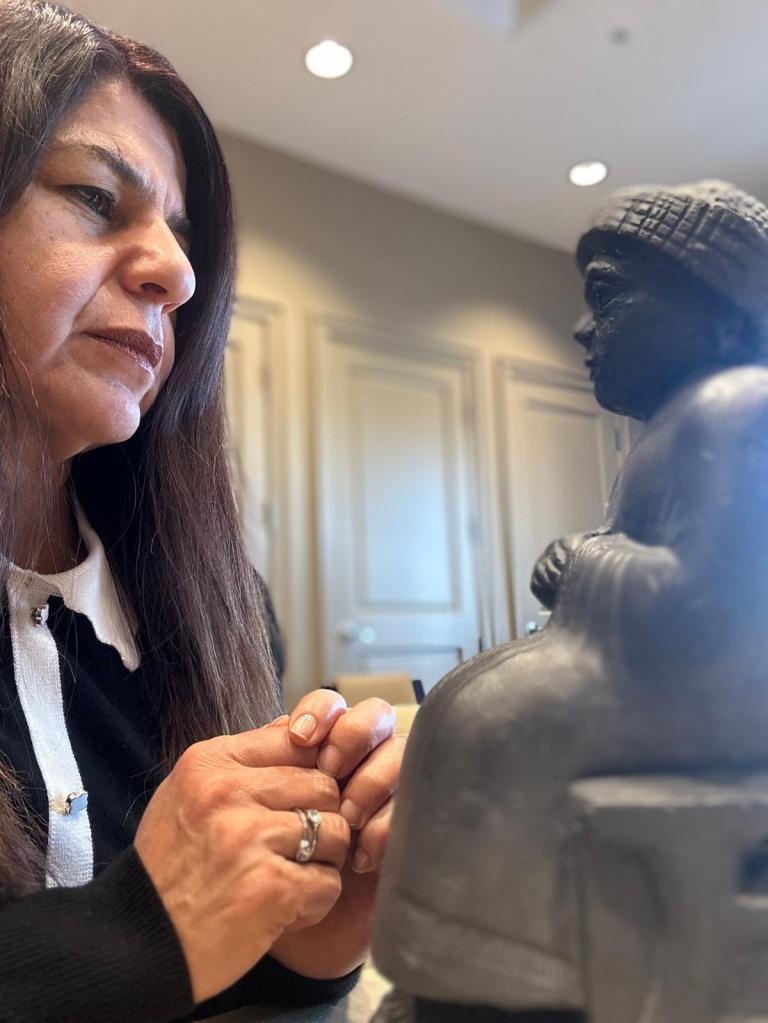
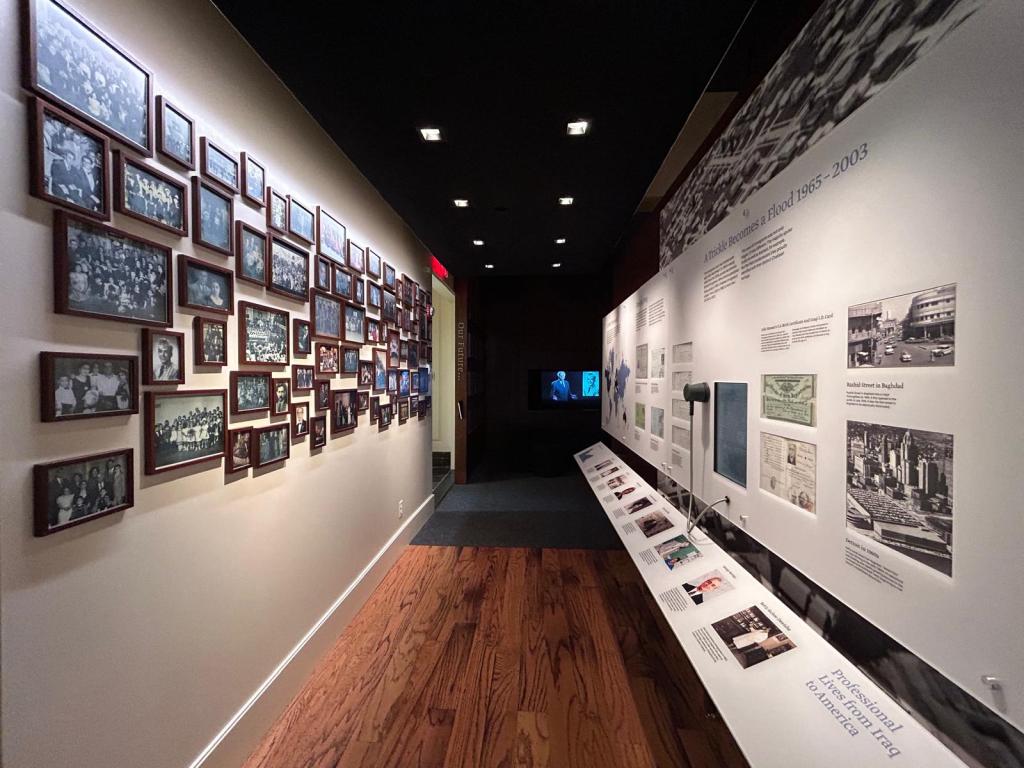
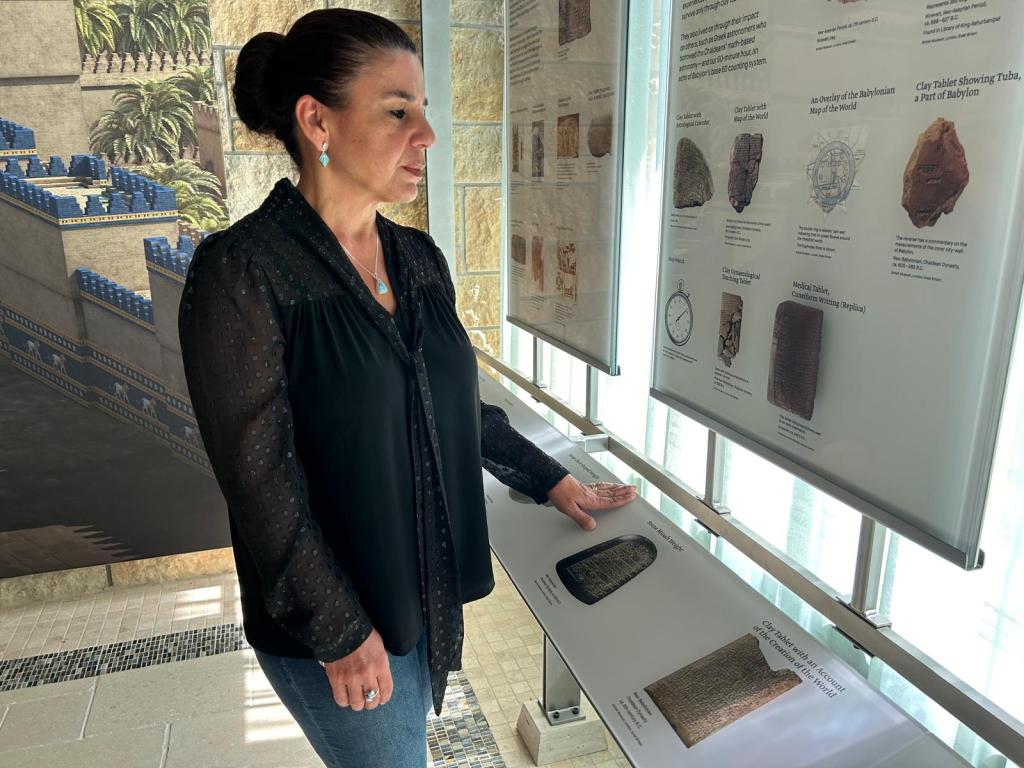
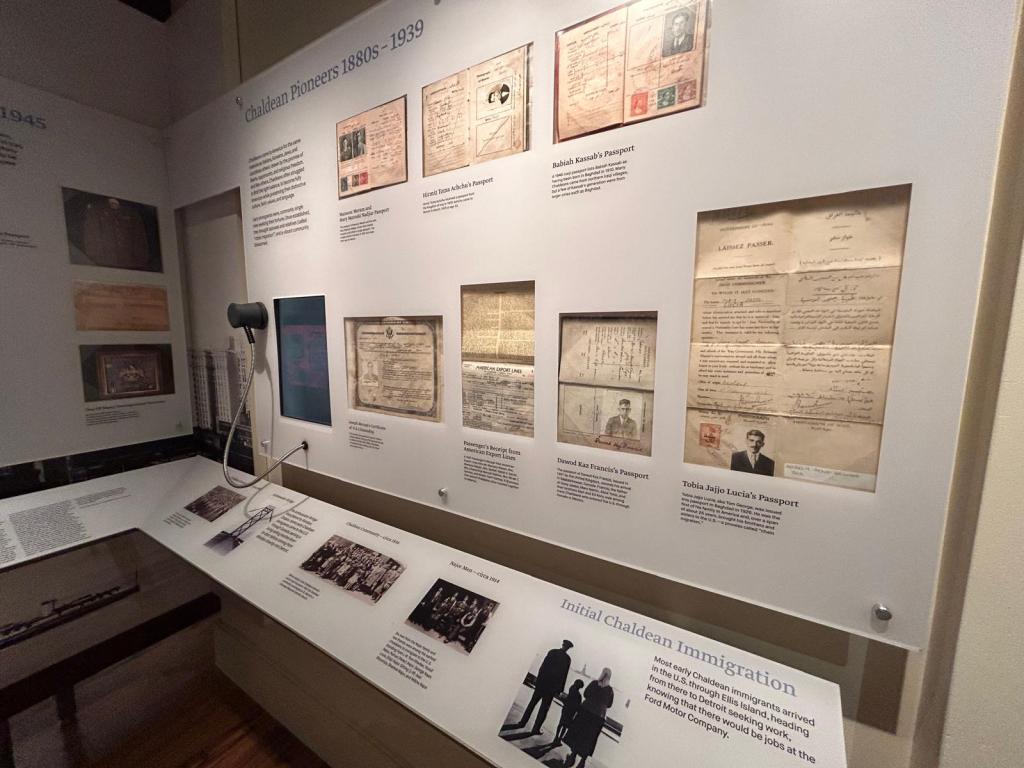
….she opened the entrance door to the museum. Before I reached the threshold, the sound of a mysterious foreign yet familiar music snuck through the doors like a streak of incense. Its pure and holy rhythm transported me to another world, one belonging to the ancients and the underground, where the spirits of my parents and ancestors greeted me, as if to say, โ€œWelcome to our past.โ€ I entered the ancient gallery of the museum, imbued with the colors of copal blue, olive green, and gold that subtly represented that region and its surrounding Tigris and Euphrates Rivers.ย 

Judy explained that this was the Ancient Gallery, one of five of the museumโ€™s galleries. It focuses on the five main empires that ruled in ancient Mesopotamia: the Sumerian; the Akkadian; the Babylonian; the Assyrian; and the Neo-Babylonian (Chaldean). The Ancient Gallery was a couple hundred feet, whereas the land it represented was about three hundred miles long and about fifteen hundred miles wide. We started with the Sumerians, and I was immediately transported to the stories of the people and places Iโ€™ve been reading about for over a decade, my people, my birthland, which I had heavily researched when writing my thirteenth and most recent book, Mesopotamian Goddesses: Unveiling Your Feminine Power. The book was published just four months prior to my visit to the museum and a month prior to my motherโ€™s death. From that point forward, most of what Judy said and what I heard were two different things. I began to float along spontaneous streams of consciousness, my mind randomly taking me to where it wanted to go. Words Iโ€™d read over in the past suddenly appeared, organized into a partly historical, partly personal description of the Sumerians, who around 3500 BC, moved to the land between the Tigris and Euphrates Rivers in southern Mesopotamia, now called Iraq.ย 

– Chaldean Museum isย Chapter 12

Finding My Place

I’ve written before about my journey to this role, how I trained to be a docent at Cranbrook and struggled, how I served as Vice President of Detroit Working Writers and learned about community building. Each experience prepared me, but it wasn’t until I stepped into the Chaldean Museum that I understood what I’d been preparing for.

This wasn’t just a job. This was my calling.

As a Chaldean woman, I carry the stories of my ancestors in my bones. The ancient Mesopotamians, the Neo-Babylonians, the people who invented the wheel, developed agriculture, and gave us the first recorded writer in history, a princess and priestess named Enheduanna. This is my heritage. These are my people.

And suddenly, I wasn’t just learning someone else’s history. I was preserving my own.
What the Museum Taught Me

Leading the Chaldean Cultural Center and Museum taught me something profound about the relationship between community and personal growth. You can’t separate the two. We don’t grow in isolation. We grow when we’re part of something bigger than ourselves.

The museum became more than a building filled with artifacts. It became a gathering place. A touchstone for Chaldeans in the diaspora who needed to remember where they came from. A bridge between generations, where elders could pass down stories and young people could claim their heritage.

Every program we developed, every exhibit we created, every event we hosted was about community. About bringing people together. About saying, “You belong here. Your story matters. Your culture deserves to be preserved and celebrated.”

The Joy of Preservation

Being Executive Director meant carrying a beautiful responsibility. The Chaldean community has maintained its culture, language, and traditions for over 5,000 years. Our language, Aramaic, is one of the oldest living languages in the world. Our traditions connect us directly to ancient Mesopotamia.

The museum was about honoring that continuity. About celebrating the resilience and beauty of a culture that has thrived across millennia. About making sure that this rich heritage continues to be shared, celebrated, and passed down to future generations.

And I didn’t have to do it alone. That’s what community does. It distributes the joy. It shares the celebration. It says, “We’ll do this together.”

Community members donated artifacts from their families, each piece carrying stories of love and survival. Elders volunteered their time to share wisdom accumulated over lifetimes. Young people showed up eager to learn and connect with their roots. Scholars contributed research. Artists created works that honored our heritage. Everyone brought something to the table.
Leadership Through Service

My ancestors believed in a mindset of service. They saw their gifts and talents not as personal achievements but as tools to serve the greater good. Leading the museum taught me what that really means.

Leadership isn’t about being in charge. It’s about serving the community you lead. It’s about listening more than speaking. It’s about creating space for others to contribute their gifts. It’s about holding the vision steady while allowing others to help shape how that vision comes to life.

Every decision I made as Executive Director, I made with the community in mind. Not “What do I want?” but “What does the community need? What will serve our people best? What will ensure our culture thrives for the next generation?”

That’s what service looks like in practice.
How Community Made Me Grow

When I look back at my time leading the Chaldean Cultural Center, I see how much I grew. Not because I was working hard, though I was. Not because I was talented, though I brought my skills. But because the community lifted me up and helped me become more than I thought I could be.

Community members inspired me with their questions and insights. They offered perspectives that broadened my understanding. They encouraged me to reach for higher standards. They celebrated every victory with me and supported me through every challenge.

I learned to speak publicly with confidence because I was speaking about something that mattered deeply. I learned to advocate passionately because I was advocating for a community I loved. I learned to think strategically because the opportunity to make a difference was so meaningful.

But more than skills, community taught me about identity. About what it means to be Chaldean in America. About the sacred responsibility of carrying forward ancient wisdom in a modern world. About the healing that happens when we reconnect with our roots.

I grew because I was rooted in something larger than myself.

The Circle of Growth

Here’s what I’ve learned about community and growth. They feed each other in a circle that never ends.

Community helps you grow. You become more capable, more confident, more clear about your purpose. And then your growth serves the community. You bring back what you’ve learned. You lift others up. You create space for them to grow too.

And their growth feeds the community. And the community continues to flourish. And the circle goes on.

This is how cultures thrive. This is how movements build. This is how positive change happens. Not through isolated individuals working alone, but through communities of people committed to growing together.

Why This Matters Now

We live in a time when many people are searching for connection and meaning. There’s a growing hunger for authentic community, for spaces where we truly belong.

My time at the Chaldean Museum reminded me that community isn’t just nice to have. It’s essential. We need each other, not just for survival but for thriving, for becoming our fullest selves.

We need spaces where we belong. We need people who share our values. We need communities that call us to be our best selves and celebrate who we’re becoming.

Whether it’s a cultural center, a writers’ organization, a faith community, a neighborhood group, or a circle of friends, find your community. Show up for it. Contribute to it. Let it shape you. Let it inspire you. Let it hold you when you need support and celebrate with you when you reach milestones.

That’s where growth happens. In the fertile soil of community.

Gratitude for the Journey

I’m grateful for my time leading the Chaldean Cultural Center and Museum. Grateful for the community that trusted me with their stories. Grateful for the elders who shared their wisdom with such generosity. Grateful for the young people who showed up hungry to learn and eager to connect. Grateful for the board members, volunteers, donors, and supporters who believed in the mission and made everything possible.

That experience transformed me. It taught me who I am and what I’m capable of. It connected me to my ancestors and to my purpose. It showed me what’s possible when people come together in service of something sacred.

And it reminded me that we don’t grow alone. We grow in community. Always.
CRANBROOK – WHEN THE UNIVERSE REDIRECTS YOU

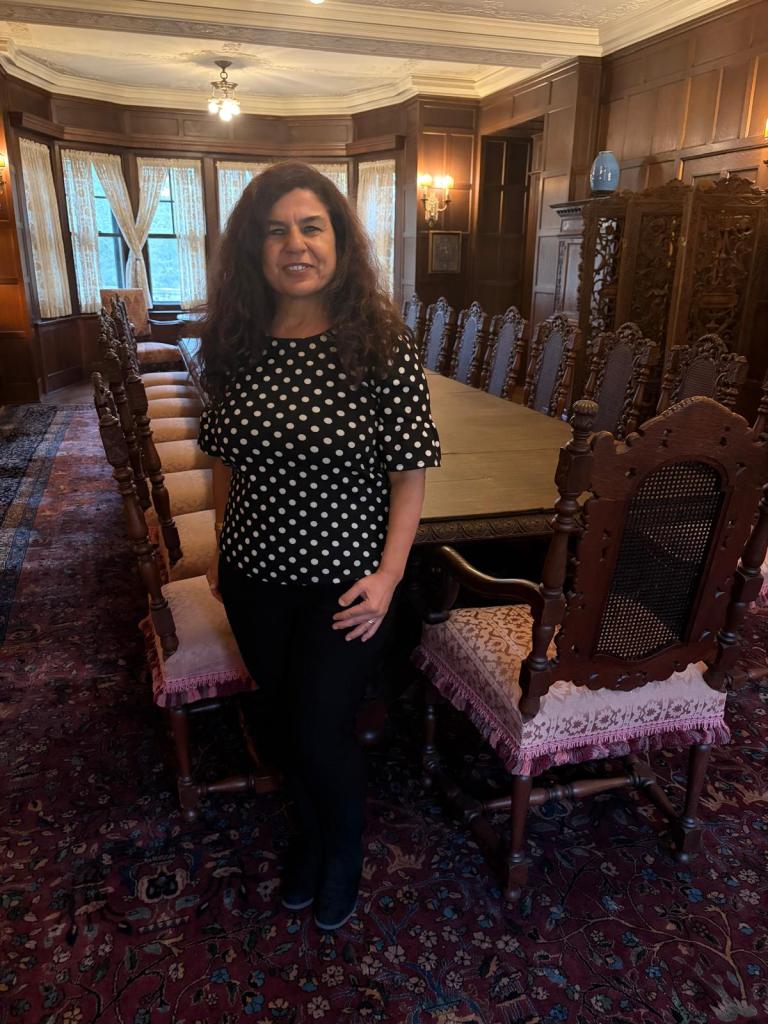
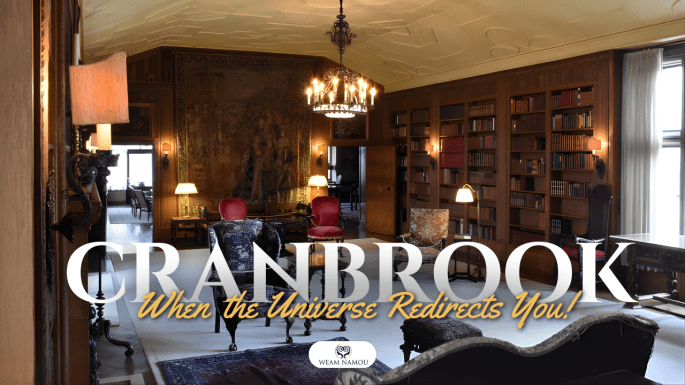
This week, I found myself back at Cranbrook House and Gardens for the 125th anniversary celebration of Detroit Working Writers. Walking through those familiar rooms stirred up memories I hadn’t thought about in years.

Cranbrook holds a special place in my story, though not in the way I originally imagined. Years ago, I trained to become a docent there. I was drawn to the estate’s beauty, the carefully preserved history, the stories embedded in every room. I thought this was where I was meant to be.

But the universe had other plans.

When Things Don’t Click

During the docent training, we were each assigned a room to memorize. Every week, we’d practice presenting as if we were actual docents, working toward that official role. I remember standing in the dining room, trying to absorb every detail, every story, every piece of furniture.

Here’s what I wrote about that experience in Little Baghdad, Chapter 17:

“As I envisioned the meals that took place around the dining table, I heard the docent explain that we were each assigned a script with a room to memorize for the next meeting. Each week, we’d play docent as a means to attaining true docent status. Fear crept in. I don’t retain information very well unless the topic truly matters to me. Otherwise, I tend to freeze. And lo and behold, that was exactly what happened when I stood there in the center of puzzled looks from the rest of the docents-in-training, unable to recall anything about the dining room except that the maid spilt soup on one of the sons and Mrs. Booth’s silverware had ‘Nelly’ etched on the reverse of each of the pieces, the name that her family called her. This reminded me of Nelly Olson in Little House on the Prairie.

That night, walking to my car in the cold quiet winter night, I reflected on the house. โ€ฆ By the time my feet reached my car, I’d made up my mind. I can’t do this.”

I felt embarrassed. Disappointed in myself. I’m usually good at retaining information, at learning new things. Why was this so hard? What was wrong with me?

I never became a docent at Cranbrook.

Then Everything Changed

Not long after that experience, I became the Executive Director of the Chaldean Cultural Center and Museum.

And suddenly, everything that had been difficult at Cranbrook became effortless.

The history of my people, the artifacts, the stories of ancient Mesopotamia, the journey of the Chaldean community. I absorbed it all naturally. I could speak about our culture, our contributions to civilization, our struggles and triumphs without needing to memorize scripts. It just flowed.

This wasn’t about capability or intelligence. It was about calling.

The Spiritual Lesson

When I talk about spirituality, this is what I mean. It’s not always about rituals or meditation, though those have their place. Sometimes spirituality shows up in the simple recognition of where you belong versus where you’re trying to force yourself to fit.

At Cranbrook, I was pushing. At the Chaldean Museum, I was flowing.

That’s the difference between being in alignment and being out of alignment. Your body knows. Your spirit knows. Even when your mind is still trying to convince you that you should make it work.

The struggle I experienced at Cranbrook wasn’t failure. It was guidance. The universe was redirecting me, saying, “Not this path. Keep looking. Your purpose is waiting somewhere else.”

Nothing is Wasted

Looking back now, I see how that experience prepared me in ways I didn’t understand at the time. The docent training taught me about preservation, about honoring history, about the importance of telling stories with care and accuracy.

I used all of that at the Chaldean Museum. I just used it for my own people, my own culture, my own calling.

Nothing is ever wasted. Every detour teaches us something. Every closed door points us toward the one that’s meant to open.

Coming Full Circle

Standing in Cranbrook House this week, years after that difficult realization in the cold parking lot, I felt grateful. Grateful that I listened to that inner voice telling me I didn’t belong there. Grateful that I didn’t force myself to keep going just to prove I could do it.

If I had become a Cranbrook docent, I might never have stepped fully into my role at the Chaldean Cultural Center. I might never have dedicated myself so completely to preserving and sharing the stories of my ancestors.

Sometimes the things that don’t work out are the biggest blessings.

A Message for You

If you’re struggling right now in a place where you thought you belonged, pay attention. Not all struggle is meant to be pushed through. Some struggle is a message.

Ask yourself: Am I struggling because I’m growing, or am I struggling because I’m in the wrong place?

Growth struggle feels hard but purposeful. Misalignment struggle feels hard and hollow.

Trust that inner knowing. Trust that if something isn’t clicking, maybe it’s because something better is waiting. Something that will feel like coming home instead of trying to belong.

Your calling isn’t something you have to force. When you find it, you’ll know. Not because it’s easy, but because even when it’s hard, it feels right.

The universe is always guiding us. Sometimes through open doors. Sometimes through closed ones.

Both are blessings.

Reconnect with Nature: Chaldean Insights for Today

This article, written by me, was first published by Words of the Earth as “Adopt a Mindset of Service” on May 15, 2025: Link to the original article.

As a Chaldean, or Neo-Babylonian, I am inspired by my ancestors, who made extraordinary contributions to civilization. From inventing the wheel and developing agriculture to recording the first writer in historyโ€“a princess and priestess named Enheduannaโ€“Chaldeans laid the foundations of human progress. They were astronomers who studied the stars to understand their place in the universe and believed in using their gifts in service to others. This ethos of service and ingenuity offers valuable guidance for living sustainably today.

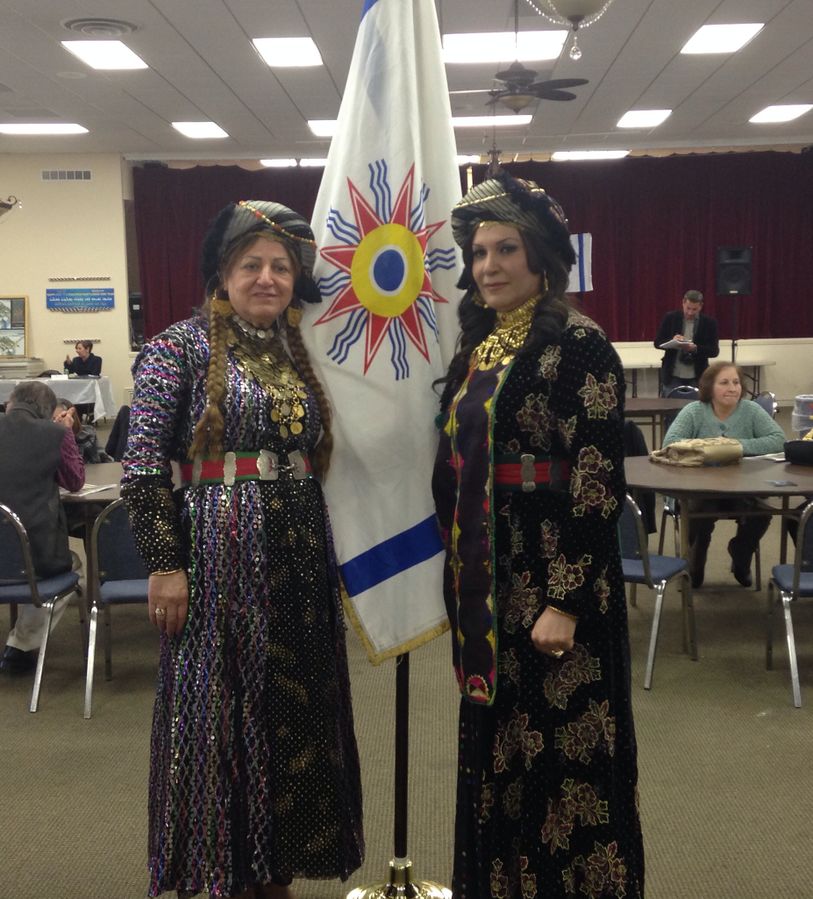
I took a picture of these women during an Akitu Festival at St. Joseph Chaldean Church

Like Native Americans, Chaldeans had a deep respect for nature and understood the interconnectedness of all life. They lived in harmony with the Earth, recognizing that survival depended on balance and reciprocity. Their world also fostered a greater balance between male and female energies, with men and women working together for the higher good. Revisiting these ancient values, alongside modern methods, can teach us how to live more sustainably. Hereโ€™s how their wisdom, and my own experiences, influence my approach to sustainability:

Adopt a Mindset of Service: My ancestors saw service as a fundamental duty, believing every action impacts the greater whole. Sustainability begins with this mindsetโ€“reducing waste, conserving resources, and contributing to the planetโ€™s well-being.

Reconnect with Nature: As agricultural pioneers, they understood the importance of working with the land. Planting gardens, supporting local farmers, and eating seasonally are simple ways to honor this connection while reducing our footprint.

Innovate Simply: Mesopotamians invented tools like the wheel and irrigation systems. Today, we can prioritize energy-efficient solutions, reduce consumption, and creatively repurpose resourcesโ€“practices that blend innovation and simplicity.

Embrace Interconnectedness: Astronomers by nature, my ancestors viewed the universe as an interconnected whole. Likewise, sustainability requires recognizing that every choiceโ€“what we buy, how we eat, how we travelโ€“affects the Earth.

Share Stories and Knowledge: Enheduanna, the first recorded writer, reminds us of the power of storytelling. Sharing knowledge creates awareness and inspires others to embrace sustainable practices.

The Chaldeans rebuilt after immense challenges, demonstrating resilience and adaptability. They did so by blending ancient wisdom with modern practices to create a sustainable world rooted in balance, service, and respect for the Earth.

Reflecting on Our Transformative Half-Day Writers Retreat

Two weeks ago, on Saturday, May 3rd, I had the honor of hosting the Authors Guild Half-Day Writers Retreat at the beautiful Colombiere Conference and Retreat Center in Clarkston, Michigan. The event, co-led with the incredible Gethen Christine Morris, was as transformative as I had envisioned. Life has been busy since thenโ€”celebrating my 20th anniversary, flying to Vegas for a wedding that ended up being postponed, and preparing for the release of my 21st bookโ€”but today Iโ€™m pausing to reflect on the power of that gathering and the inspiration it brought to everyone involved.

The retreat was a reminder of the importance of renewing ourselves, reconnecting with our creative goals, and using spiritual tools to move forward in life and art. What made this event even more special was a touching announcement by Melanie Singer, who attended one of my earlier Path of Consciousness spiritual retreats (also at Colombiere). She shared that, thanks to the teachings she experienced, she recently published her childrenโ€™s book, Martinaโ€™s Muy Bad Day (HarperCollins, February 4, 2025). Hearing how Melanieโ€™s journey came full circle was a deeply gratifying moment, reaffirming why events like these are so meaningful.

The retreat was a beautifully structured journey to help writers reconnect with their creativity, refuel their spirit, and dedicate focused time to their craft. It unfolded beautifully, beginning with yoga and meditation led by Gethen Christine Morris, whose shamanic practice brought clarity and inspiration. I followed with a writing workshop, helping participants overcome creative blocks and breathe life into their stories. Over lunch, connections deepened in a warm, supportive atmosphere, with ideas and encouragement flowing freely. A serene Walk & Write session in Colombiereโ€™s natural beauty rounded out the day, leaving everyone inspired, recharged, and ready to create.

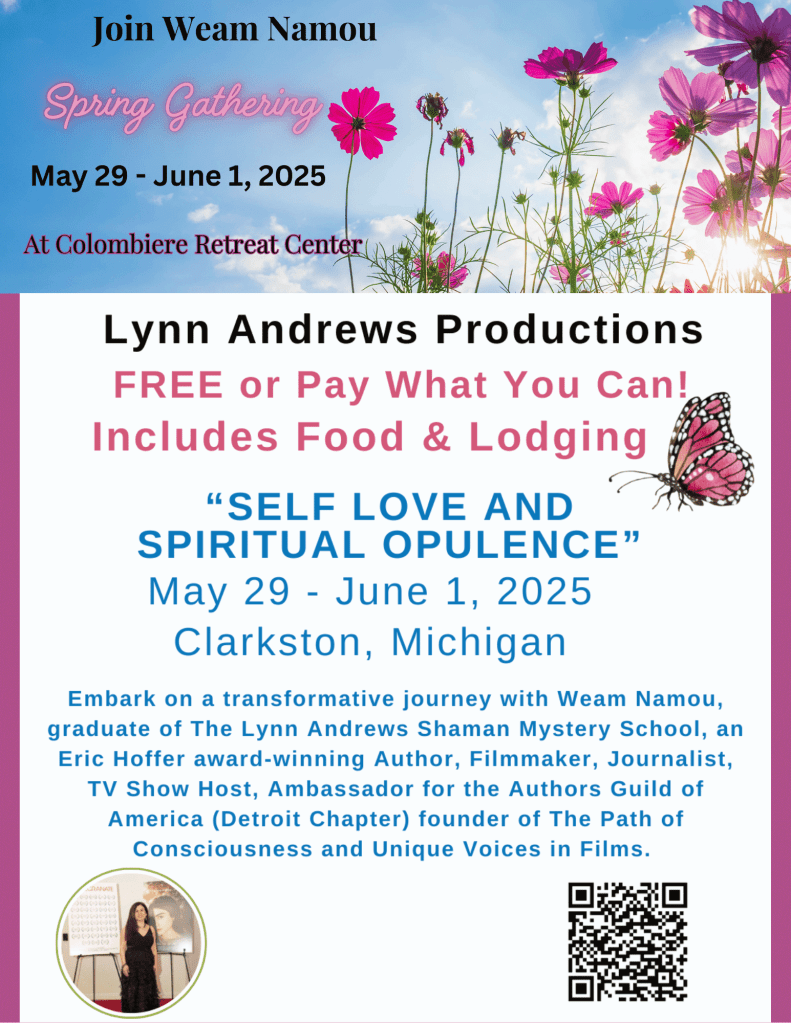
This retreat served as a powerful reminder of the importance of nurturing both our spiritual and creative selves. If you couldnโ€™t join us, thereโ€™s another incredible opportunity on the horizon: the Spring Gathering 2025 at the Colombiere Conference and Retreat Center.

Happening from May 29 โ€“ June 1, 2025, this event is open to everyone and follows a โ€œFree or Pay What You Canโ€ model. Itโ€™s a chance to immerse yourself in shamanic teachings, meditations, and deep self-exploration. Whether youโ€™re seeking renewal, inspiration, or clarity, youโ€™ll leave feeling refreshed, empowered, and ready to embrace your journey ahead.

For details, visit the event page: Spring Gathering 2025 in Michigan.

As writers, creatives, and just as human beings, we often get caught up in deadlines, expectations, and the noise of everyday life. Events like these remind us to pause, reflect, and reconnect with the deeper purpose behind our work. Whether itโ€™s through yoga, writing, or simply walking in nature, thereโ€™s always a way to rekindle the creative spark within.

To those who joined us on May 3rd, thank you for bringing your energy and openness. To those considering joining us in the future, donโ€™t waitโ€”give yourself the gift of time to write, reflect, and recharge.

Looking forward to writing and growing together!

Love & Blessings,

Weam

Traveling the World From Home

When I was younger, I traveled to Greece, Italy, Spain, Portugal, Morocco, Tunisia, Portugal, the Czech Republic, Israel, and many other countries to see the world. I was passionate about life and whatโ€™s out there. 

For over a decade, I enjoyed the beauty that other lands, traditions, and cultures had to offer. I took long walks in regal towns with colorful houses and flower-adorned alleys, sat on floors of Bedouin homes to drink delicious, minted tea and eat tanoor baked bread, rode donkeys and horses, buses, and trolleys, all while reflecting on the wonders of life. The process filled my heart with love and life, and it cleansed me of many preconceived notions, prejudices, and beliefs. It also helped me understand otherโ€™s points of view, including animals, trees, and nature.  

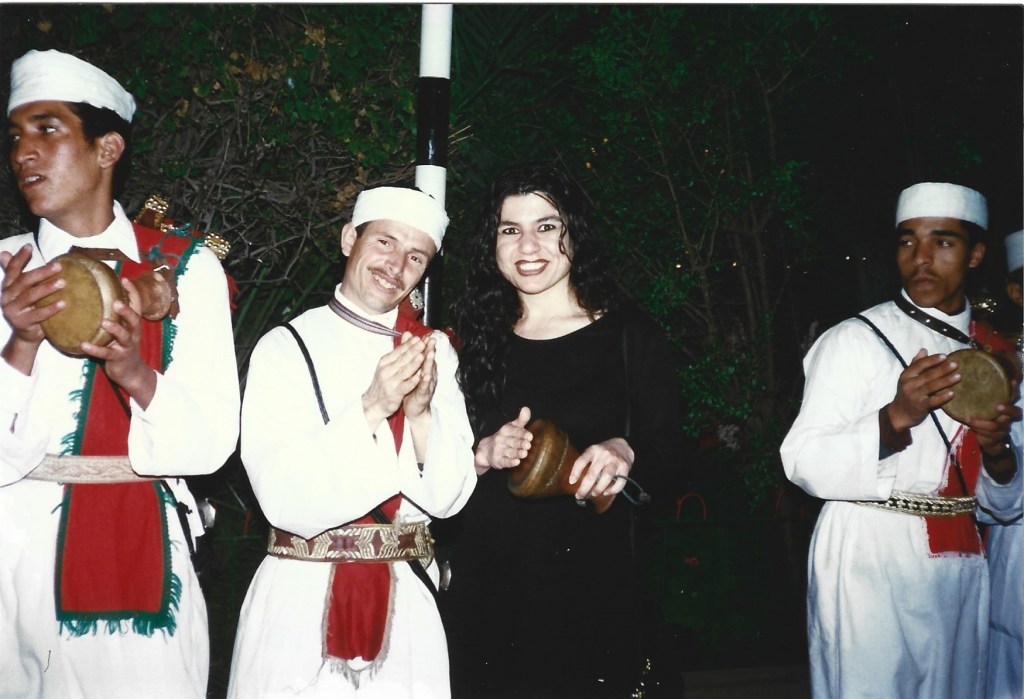
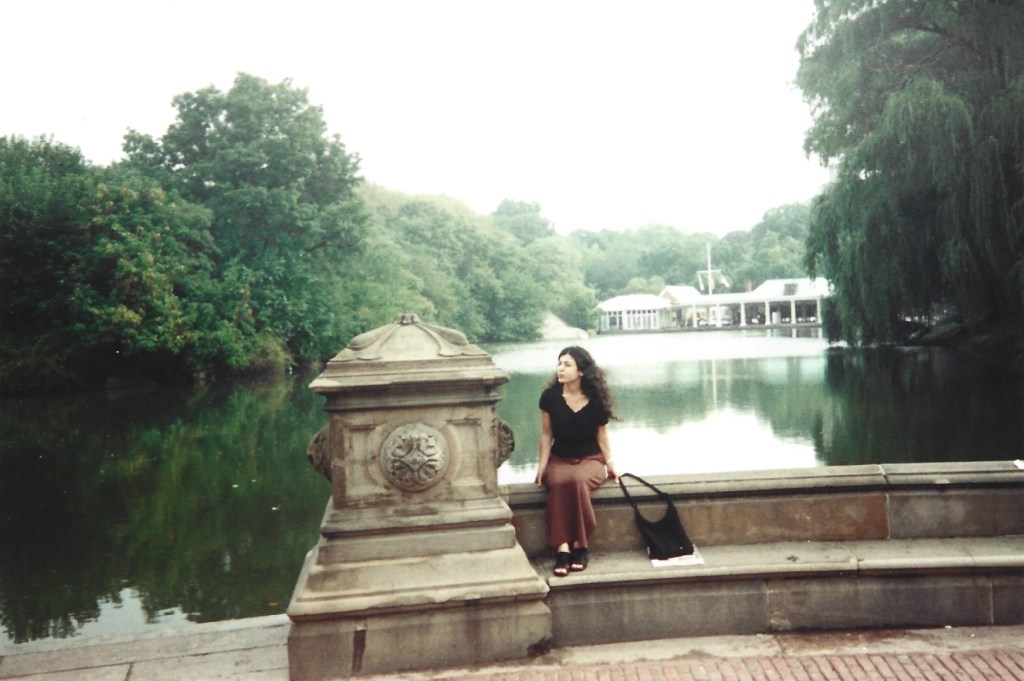
At an event in Morocco (late 1990s)

During my last few trips, something changed in me. I realized that I no longer needed to travel far to experience the wonder and beauty of other cultures. Itโ€™s all right here, just around the corner from home. Coming to this realization, I feel the same excitement as when I used to travel regularly. I meet the most wonderful people and visit the most fascinating places on a regular basis whenever that desire comes up  โ€“ no need to look for travel dates and tickets!

Just recently,  I visited the Arab American National Museum with colleagues, where we learned  about the Mandaeans, an ancient people that I had researched but not extensively.  Afterward, we enjoyed lunch at a Yemini restaurant followed by coffee at a Yemini cafรฉ. Not long ago, I attended a gathering at a nearby church where a spiritual teacher, Ashwin Kapadia, PhD, who is visiting from India, gave his discourse in Integral yoga. In July, I had the pleasure of interviewing indigenous minority communities from Iraq: the Yazidi, Mandaean, Marsh People, and Kurdish. Why did I highlight their communities? Because I love celebrating othersโ€™ heritage as much as I do mine! 

Learning to celebrate and honor your heritage is important, but itโ€™s just as important to do so unto others. This teaching, which is prevalent in Americaโ€™s focus on diversity these days, has brought much richness and value to this country.

What richness is around the corner of your home that you can travel to this week?  

In Prague while studying poetry through the University of New Orleans (2001)

Subscribe to my YouTube channel

Go to my website to sign up for newsletter

Watch me on TikTok


There’s a lot of exciting things happening and I’d love you to be a part of it. I’m particularly looking forward to a new book club by a UK-based art historian and author, Emily Porter, and the first annual Beth Nahrain Conference which will focus on writers of Mesopotamian descent. See below for details!