Watch My Journey Tonight on Spotlight Detroit on PBS

Tonight is a special night for Detroit’s creative community! At 9 PM on Detroit PBS, the world premiere of Spotlight Detroit will feature 25 stunning short films, created by the 2025 Kresge Eminent Artist Marion Hayden and the 2024 Kresge Artist Fellows in Live Arts, Film, and Music. These short films—produced by Kresge Arts in Detroit and 7 Cylinders Studio—showcase the incredible collaboration between local artists and filmmakers, highlighting the vibrant stories of our city.

Among these films is a short video about me, directed by the talented Jamal Adams, who played a key role as the editor of my feature film, Pomegranate. I talk about my writing, Pomegranate, and the Chaldean Museum!


My Journey to Kresge and Beyond

Receiving the Kresge Fellowship last year was a turning point in my career. It was my 15th attempt at applying for the award, and when it finally happened, everything aligned perfectly. In 2024, the Kresge award amount had doubled, and it coincided with the release of Pomegranate, amplifying the film’s visibility and impact.

This experience has taught me many lessons, but the most important one is this: persistence pays off. Success takes time, and sometimes the stars align in ways we can’t predict—but when they do, it feels like divine order.

Another lesson I hold close is the importance of elevating others along the way. When Kresge gave me the opportunity to choose a filmmaker to direct my short film, I immediately thought of Jamal. Having worked side-by-side with him for years, I knew no one else could capture the heart of my story better than he could. Jamal was not just my editor on Pomegranate—he became part of my family. He came over for dinners, spent time with me, my husband, my brother, and his wife, and supported me through some of my most challenging moments.

On the set of Pomegranate with Jamal Adams and Lindy Lenk

Jamal Adams: A Filmmaker with Heart

Jamal Adams is not only a gifted filmmaker but also an inspiring storyteller with a passion for uplifting others. If you’d like to learn more about his incredible journey, check out this article about Jamal. His story is one of perseverance, creativity, and community—qualities that truly shine in all his work.


Join Us Tonight

I’m thrilled to share this moment with Jamal and the many other amazing artists featured in Spotlight Detroit. There’s something magical about seeing our city’s creativity and talent on full display, and I hope you’ll tune in to experience it for yourself.

Don’t miss the world premiere of Spotlight Detroit tonight at 9 PM on Detroit PBS!

Watch Pomegranate here and please rate it to support independent filmmakers!

Empowering Each Other Through Storytelling

Recently, I had the honor of being interviewed by Daniel Rosenstein of Ultimate Energy Coach. It was a powerful conversation that delved deeply into topics close to my heart: my film Pomegranate, my Native American teachings, my journey of healing through shamanism, and the empowerment of women through film.

I believe that healing is important because once you heal certain tramas, you naturally become a healer to others—simply by being yourself. This truth resonates deeply with me, as healing runs through my lineage. My ancestors—my father, grandfather, and my great-grandmother Maria—were all healers. It’s a calling that has been passed down through the generations, and I feel privileged to walk this path.

Interestingly, our connection came through a mutual friend, and we discovered a fascinating coincidence: Daniel’s mother was born in Iraq and left during the 1948 Jewish Exodus. I was born in Iraq as a Chaldean (Neo-Babylonians who still speak Aramaic) and my family left due to the country’s unsettling and oppressive ways. This shared understanding of exile and roots created a deeper connection.

Seven Generations Back, Seven Generations Forward

One of the most profound topics discussed was the importance of honoring both the past and the future. Like Native American teachings, our culture emphasizes doing things “seven generations back and seven generations forward.” The blessings we experience today are the result of our ancestors’ actions, and what we do now will shape the lives of our descendants. This perspective has always been a guiding force in my life and my work.

Pomegranate and the Power of Story

During the interview, I reflected on my recent trip to Los Angeles for the premiere of Pomegranate. While driving through areas like Hollywood, I learned from Uber drivers about the diversity of these neighborhoods—home to significant Jewish, Persian, and Armenian populations. It struck me how the Jewish community is often said to “rule Hollywood,” and I thought: that’s not a bad thing. They understand the power of storytelling.

I often question why our own community doesn’t invest in storytelling. Why don’t we support the art of telling our stories, of humanizing ourselves through authentic narratives? Creative expression is healing, while destruction only leads to pain. And it’s not like we lack talent—while casting for Pomegranate, we received thousands of portfolios from incredibly talented Middle Eastern actors.

Breaking Labels and Finding Balance

Another key part of the discussion was about not putting labels on things. For example, shamanism is often misunderstood, yet it brought me closer to my Christian roots. After all, wasn’t Jesus a mystic, a healer, and someone who said, “You will do things greater than I”?

I also spoke about the importance of the men in my life who helped bring this project to life—my husband, who gave me the space to follow my dream, and incredible collaborators like Sam Sako, Scott Rosenfelt, Jamal Adams, Kevin Hewitt, and others. They stuck with this project and gave me strength when I felt like giving up.

This ties into one of the most valuable lessons I’ve learned from energy teachings: the importance of balancing the feminine and the masculine. Both energies are essential, and finding harmony between them is a cornerstone of healing.

Healing Through Creativity

Ultimately, our conversation came full circle to the idea that healing is inherently creative. By embracing creativity, we can transform not only ourselves but also the world around us. This is the heart of storytelling—connecting, humanizing, and healing.

I invite you to watch the full interview with Daniel Rosenstein here. Together, we explored the power of heritage, healing, and storytelling in ways that I hope will inspire you as much as they inspired me.

Reach Out and Touch Somebody’s Hand

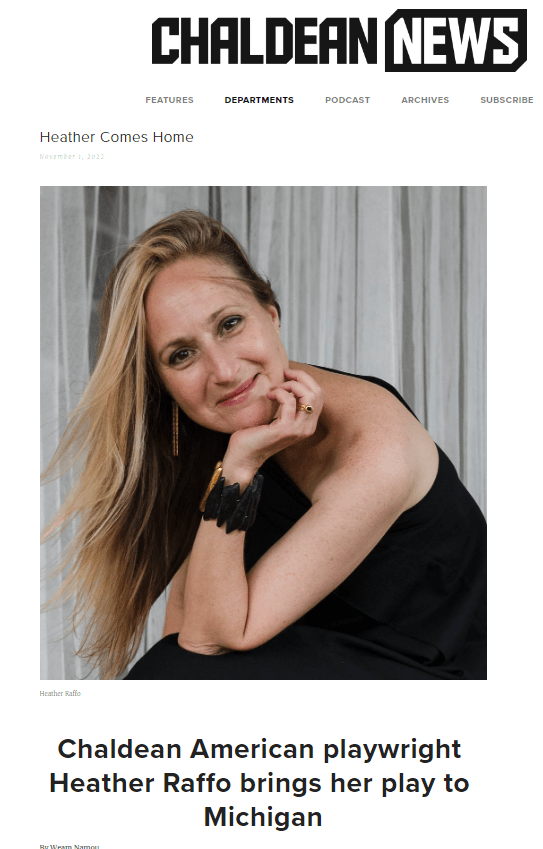
I had several assignments in the last two months to write about Heather Raffo’s play, Noura, for The Chaldean News. The play opened at the Detroit Public Theater earlier this month, but I initially watched it when it was being workshopped in 2016 at the Arab American National Museum.

Click the image below to read the article on Heather that I wrote for Arab America

And here’s one of the recently published Chaldean News articles you can click on to read as well.

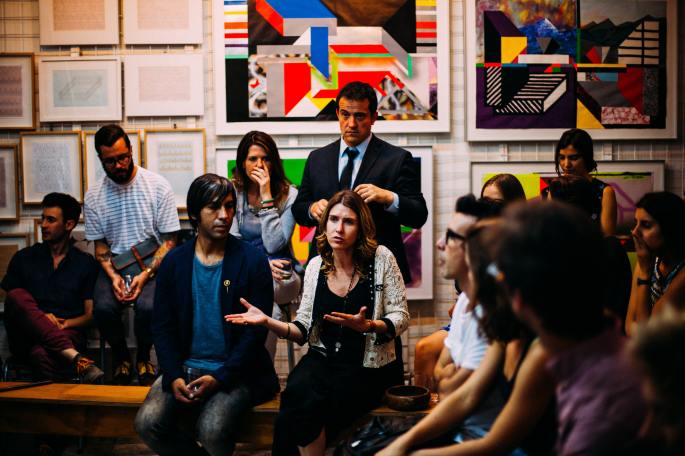
In the process of covering her work this last month, I experienced the Detroit Public Theatre for the first time and met the wonderful people who work there. I was invited to join in a post-show discussion with Heather and a few others as a panelist (coming up on December 13 and December 18). I remembered when I was invited to do the same thing in 2008 for Heather’s play 9 Parts of Desire at the Performance Network Theatre, which unfortunately closed in 1981 after 34 years.

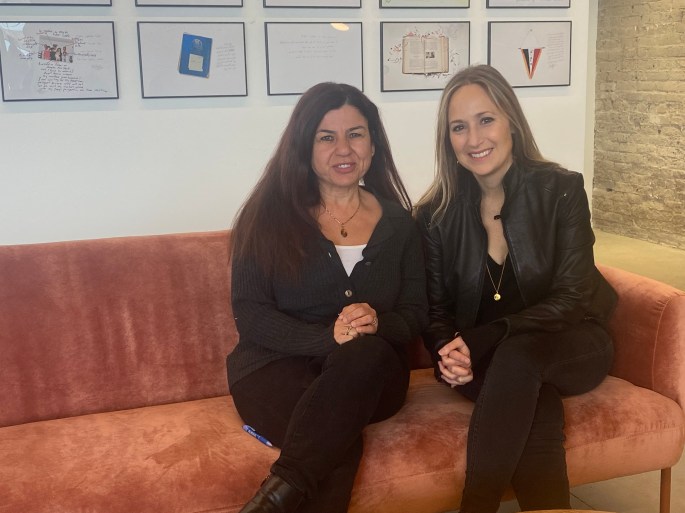
Meeting Heather this time around, we had a chance to spend quality one-on-one time together. I also had an unplanned meeting with Madelyn Porter, a warm, high-spirited, beautiful woman who works at the Detroit Public Theatre. Madelyn has worked as a professional storyteller/actor for the past 40 years. She and I sat at a table near the window with the sun shining over us. In this environment, the lobby area, we enjoyed a pleasant and productive conversation about various topics, including how our communities can work together. I walked away from it feeling inspired and truly happy about my work.

A few days later, Madelyn invited me as a keynote speaker at the Reverend Dr. Martin Luther King, Jr. Prayer Breakfast held January 16, 2023. The theme is “Reach Out and Touch Somebody’s Hand.” The event is sponsored by the Concerned Women of Hamtramck in partnership with the Hamtramck Public School District. She wrote, “Your beautiful voice needs to be heard.” 

I was so honored and so touched. Minorities often feel that their stories are marginalized, and I think that for men and women from the Middle East, this feels especially true. Having a voice at all is a big challenge to begin with, given the regions we were born in. Telling our stories authentically requires a lot of courage. People who listen, who really listen, hear you because they are listening from their hearts and not just their minds. They have the wisdom to understand what it really means to reach out and touch somebody’s hand. And once they do that, they become examples for those they touch so that person can pay it forward. 

As we near the end of this year’s holidays, look at your year and ask yourself, “Who has reached out and touched my hand? What did that do for me? How can I pay it forward in the upcoming year?


You can also learn more about Heather in the 2021 interview with her on camera.


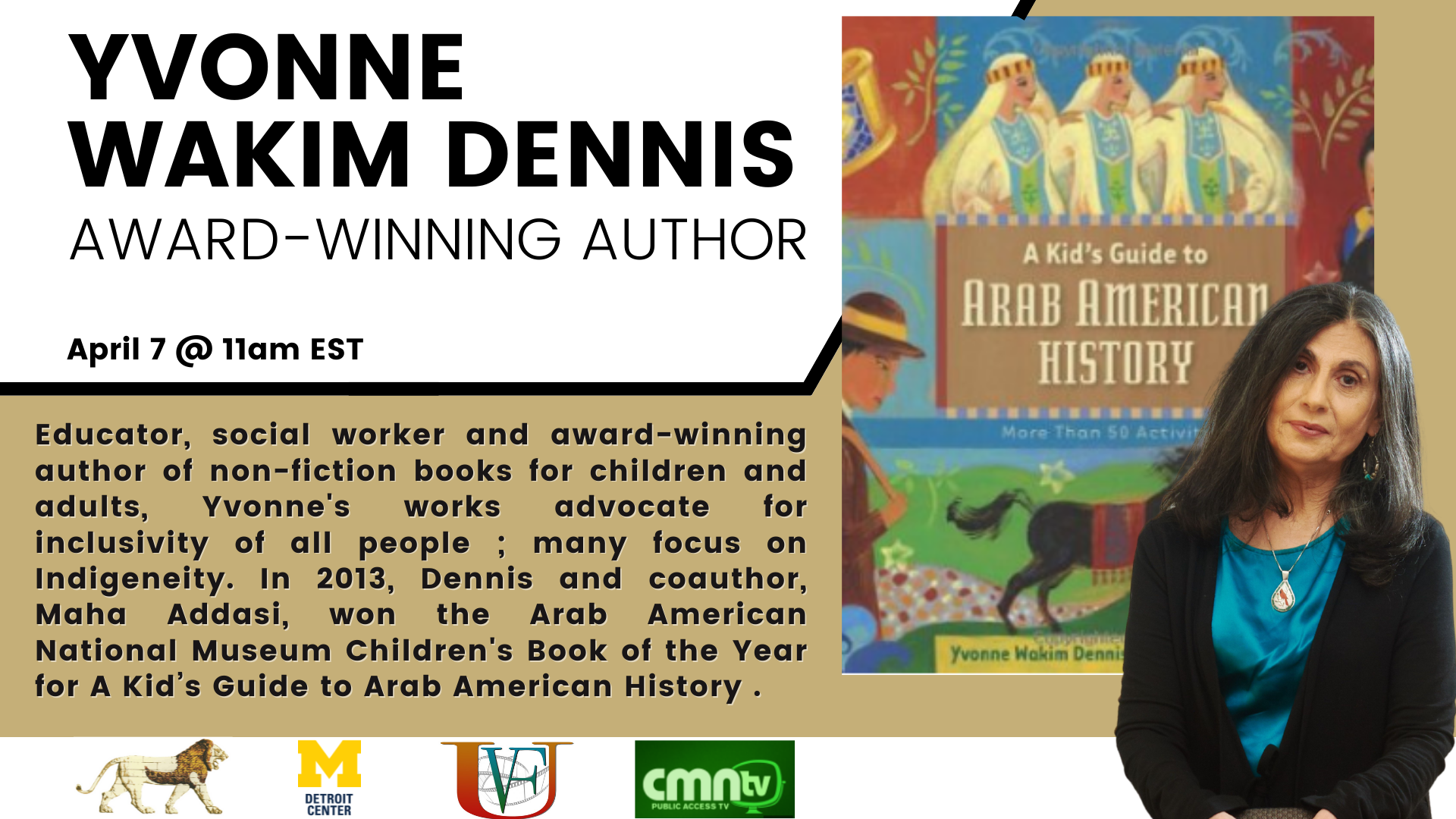
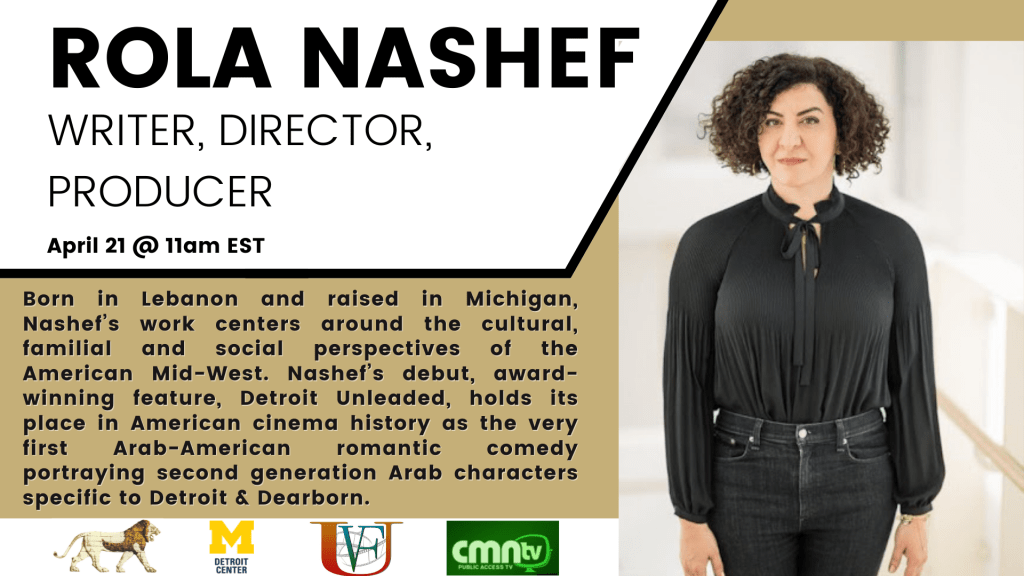
Every month, I interview remarkable individuals on a weekly basis for the Virtual Discussion Series in partnership with Unique Voices in Films, the Chaldean Cultural Center, CMN TV and U of M [Detroit Center].

Check out my YouTube channel where you can watch the interviews live and subscribe. Be sure to set reminders/alerts so you can stay updated on Live and uploaded content.

You can also now find me on Tik Tok, where I’m letting loose and sharing morsels of my life.

Upcoming Interviews for This Month


Honoring Other Narratives

For Women’s History Month, I interviewed women of various backgrounds who are making changes for themselves and others as they use their voices and make their dreams come true.  They included: 

Zilka Joseph – an Indian American and Bene Israel poet whose new book, “Our Beautiful Bones,” was nominated for a PEN and Pushcart prize. Watch the interview

Zoe Moore – an independent Hospitality EDI Strategic Consultant who engages leaders of organizations through her speaking, writing, educational courses and consulting. Watch the interview 

Vicki Dobbs – the founder of Wisdom Evolution and head cheerleader for The You First Revolution. Watch the interview

Natally Boutros –  a first-generation Chaldean American born Actress who was raised in Michigan and co-stars in my upcoming feature film, “Pomegranate.” Watch the interview

Some time ago I was looking for a quote on the freedom of speech, and I came across this:

“I may not agree with what you have to say,

but I will defend to death your right to say it.”

I thought this quote, cited as something written by the French writer and philosopher Voltaire, was perfect! As I dug a little deeper, however, I discovered that the quote was actually misattributed to Voltaire. “Again?!” I thought to myself. This is not the first time a quote written by a woman was attributed to a man. The phrase is that of an English author named Evelyn Beatrice Hall. She wrote it in her book “Friends of Voltaire” (1906) as she imagined what Voltaire might have thought.  

This powerful phrase not only shows the importance of the First Amendment, our right to freedom of speech, but it’s interesting how sometimes we take a quote, a history, a narrative and run with it – only to discover years or decades or thousands of years later that it is not entirely true. A good example of this are the legendary women of ancient Mesopotamia, whose stories were buried, literally, until archaeologists began to dig them up in the 1900s. 

One such story that emerged was that of Enheduanna, who historians now recognize as the first writer in recorded history.  She is dubbed the “Shakespeare of Sumerian literature” and wrote and taught about three centuries before the earliest Sanskrit texts, 2000 years before Aristotle, and 1,700 before Confucius. Yet hardly anyone has heard of her, aside from those historians that take the accuracy of history seriously. What a missed opportunity for our educational system not to be aware of Enheduanna’s works and include them, like Shakespeare, into their curriculum. 

I wrote extensively about Enheduanna and other ancient women and goddesses of that region in my book, “Mesopotamian Goddesses: Unveiling Your Feminine Power.”

This disk was found in the temple of Nanna's consort, Nin-gal (Great Lady), and dates to around 2300 BCE. It depicts Enheduanna, the world's first recorded author, daughter of Sargon of Akkad and high priestess of the moon god at Ur.
This disk was found in the temple of Nanna’s consort, Nin-gal (Great Lady), and dates to around 2300 BCE. It depicts Enheduanna, the world’s first recorded author, daughter of Sargon of Akkad and high priestess of the moon god at Ur. 

We can use our efforts to silence peoples’ voices, but it will return in different forms and be ten times more powerful. Or we can learn to listen, to truly listen to others, to the sun and the moon, and to our animals. Listening is not a chance to interject own views, or to force or manipulate someone to think, speak, or act the way we perceive is “correct.” Our views and feelings are not always “correct.” There is a lot in the universe that we can learn from, but we won’t be able to do that, to grow and evolve, if we prevent others from speaking, and instead constantly interject our rights and wrongs. 

When we truly listen, we give ourselves an opportunity to hear the things we are afraid of, so that we may heal ourselves and those around us, so that we may transform our relationships and experiences into something beautiful. 

Exercise: 

Choose someone you disagree with and write down ten of their good qualities. If your mind automatically jumps to, “This person doesn’t have ten good qualities, no way!” Ask yourself what are you resisting? Why are you afraid to look at their other side?  

After you do that, write ten things you dislike about yourself and why. When you complete that list, decide how you will change at least one of those ten things so that you can live a healthier lifestyle – physically, emotionally, spiritually, and intellectually. 

This exercise will help you realize that each of us has a lifetime of work on ourselves let alone trying to change someone else. In focusing on what we are thinking, saying, and doing, we are listening to the most important person – ourselves – and then we will have mastered the art of listening to others. 

Each one of us has an inner power which can be honored through listening. True listening involves actively paying attention to the words and sounds that you hear, to absorb their meaning and understand the speaker’s narrative and story.

Check out my YouTube channel to learn about this week’s guest, who I’ll be interviewing live. Subscribe to my channel and set reminders/alerts so you can stay updated on Live and uploaded content.

We are celebrating Arab American Heritage Month during April.

Here’s the guest line-up for April: