

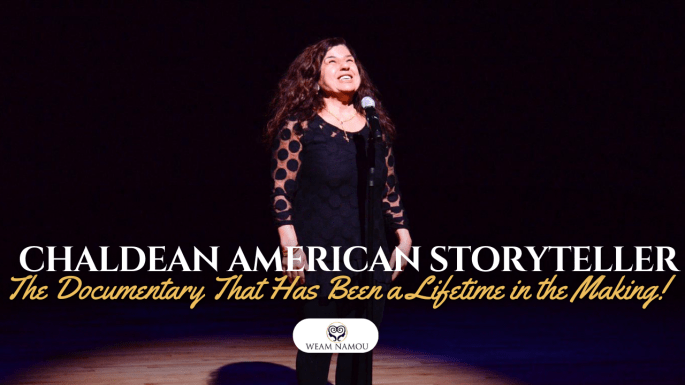
Some stories take a lifetime to tell. Not because they are complicated, but because the person telling them needs to live long enough, learn enough, and heal enough to finally sit down and say: this is where I come from.
A Chaldean American Storyteller is that story for me. It is a documentary about my journey from Baghdad to America, about what it means to carry an ancient heritage into a modern world, and about the invisible thread that connects everything I have ever written, filmed, and built. I previously made history as the first Chaldean American to direct a feature documentary, The Great American Family. This film is my second feature documentary and third feature film overall, and it blends AI technology with real archival footage to tell one family’s journey.
Where This Documentary Comes From
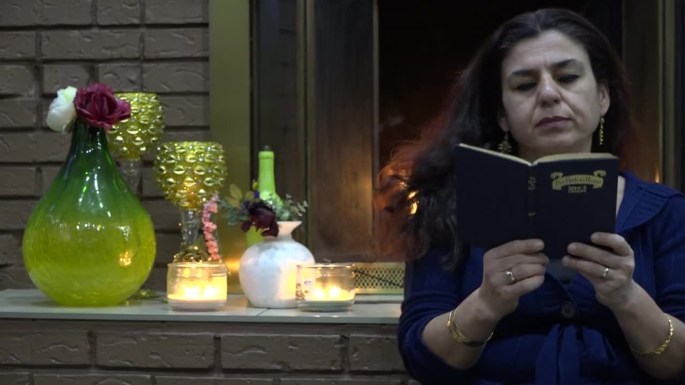
I have spent more than thirty years telling stories. Through 20+ books, two feature films, and my work as executive director of the world’s first and only Chaldean Museum, I have tried to preserve a culture that has survived for thousands of years. My film Pomegranate screened in 25 countries and won over 50 international awards. My memoir Chaldean Storyteller in Baghdad traces the childhood that shaped everything that came after. But there is a larger story that connects all of these pieces, and a documentary is the only way to tell it.
A Chaldean American Storyteller follows the arc of my life from a small concrete house in 1970s Baghdad to the work I do today as an author, filmmaker, and cultural preservationist in the United States. It is not just about me. It is about my family, my community, and the Chaldean people, descendants of the ancient Neo-Babylonians who still speak Aramaic, the language of Jesus. It is the story of what happens when an ancient people meet the modern world, and what is lost and found in the space between.
The global documentary film market was valued at approximately $12.96 billion in 2024 and is projected to reach $20.7 billion by 2033. Audiences are increasingly drawn to authentic personal narratives, with the social and cultural genre dominating documentary viewership worldwide. (Source: Business Research Insights, 2024)
Where Ancient Heritage Meets Artificial Intelligence
What makes this documentary unlike anything that has come before is how it is being made. A Chaldean American Storyteller is the first Chaldean documentary to use artificial intelligence alongside real archival clips and footage from the past. AI is being used not to replace the truth of the story, but to bring it to life in ways that were previously impossible.
When you are telling the story of a childhood in Baghdad during the 1970s, there are no film crews waiting to capture it. There are no professional recordings of the rooftops where we slept under the stars, or the neighborhood streets where children played marbles until dark, or the bakeries where fresh bread came tumbling out of ovens that had been baking for five thousand years. These moments existed only in memory. Through a thoughtful blend of AI-assisted reconstruction and authentic archival material, this documentary allows viewers to see and feel a world that would otherwise remain invisible.
The AI in film market is projected to grow from $1.8 billion in 2024 to $14.1 billion by 2033, with documentary filmmakers at the forefront of adopting AI for archival restoration, scene reconstruction, and narrative enhancement. (Source: Market.us, “AI in Film Market” report, 2024)
This is not a gimmick. This is the future of heritage storytelling. When communities have been displaced, when wars have erased physical records, and when the people who remember are growing older, technology becomes a bridge between what was and what can still be preserved. That is exactly how AI is being used in this project: as a tool of preservation, not replacement.
A Historic Milestone in Chaldean American Filmmaking
When I directed Pomegranate, I became the first Iraqi‑American woman to write and direct a feature film. Earlier, with The Great American Family, I made history as the first Chaldean American to direct a feature documentary.
I share this not for the title, but because representation matters—especially when you come from a community whose stories have largely been told by others. The Chaldean people are among the oldest continuous ethnic groups in the world, yet our presence in mainstream film and media remains rare.
A Chaldean American Storyteller continues that path. It is told from the inside, by someone who lived it, and it uses emerging technology to honor the past while reaching toward the future.
Industry research shows an increasing focus on diverse voices and underrepresented perspectives in documentary filmmaking, with audiences and platforms actively seeking content that provides authentic first-person narratives from communities whose stories have historically been absent from mainstream media. (Source: Data Horizon Research, Documentary Market Trends)
What This Documentary Will Bring to the World
A Chaldean American Storyteller is for anyone who believes that the stories of small, displaced communities matter just as much as the stories we see on the evening news. It is for Chaldean Americans who want to see their heritage on screen. It is for the children and grandchildren of immigrants who are searching for a way to understand where their families came from. And it is for anyone who is curious about how AI can be used responsibly and beautifully to tell stories that would otherwise be lost to time.
I am pouring into this project everything I have learned from writing 20+ books, from directing two feature films, from running the world’s only Chaldean Museum, and from the spiritual practices that have shaped my life through The Path of Consciousness. This is not just a film. It is the culmination of a life spent in service of storytelling.
[IMAGE PLACEHOLDER: Weam at work on the documentary, or a portrait that captures her as filmmaker/storyteller]
Stay Close to This Story
This project is in motion, and I look forward to sharing more as it unfolds. If this resonates with you, if you are someone who believes in the power of storytelling and cultural preservation, I would love for you to follow along. There will be more to come, and I want you to be part of it.
In the meantime, if you want to experience the story that inspired this documentary, my memoir Chaldean Storyteller in Baghdad is available now on Amazon. And for a deeper look into the history of the Chaldean people, Chaldean Chronicles traces the lineage of a people whose name is among the oldest still in use.
For more than 20 years, I have shared my work through books, workshops, retreats, seminars, and personal consultations. I love helping writers and creatives develop their voice, strengthen their craft, and bring their unique vision into the world. Learn more at weamnamou.com.
Love and Blessings,
Weam




 The Path of Consciousness