Reconnect with Nature: Chaldean Insights for Today

This article, written by me, was first published by Words of the Earth as “Adopt a Mindset of Service” on May 15, 2025: Link to the original article.

As a Chaldean, or Neo-Babylonian, I am inspired by my ancestors, who made extraordinary contributions to civilization. From inventing the wheel and developing agriculture to recording the first writer in history–a princess and priestess named Enheduanna–Chaldeans laid the foundations of human progress. They were astronomers who studied the stars to understand their place in the universe and believed in using their gifts in service to others. This ethos of service and ingenuity offers valuable guidance for living sustainably today.
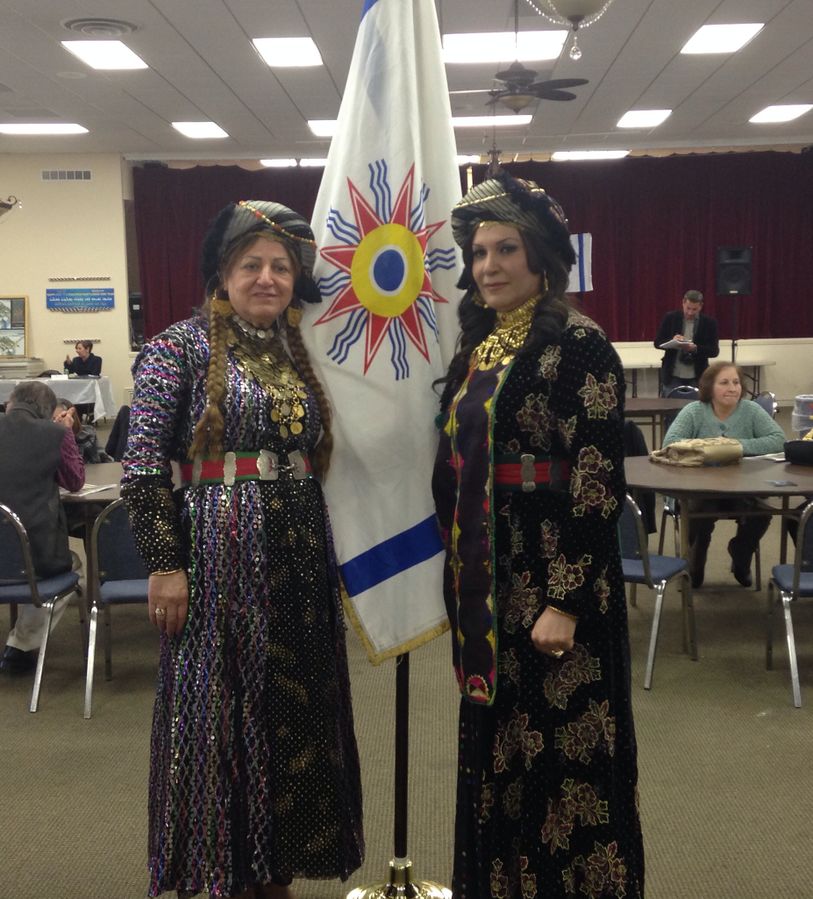
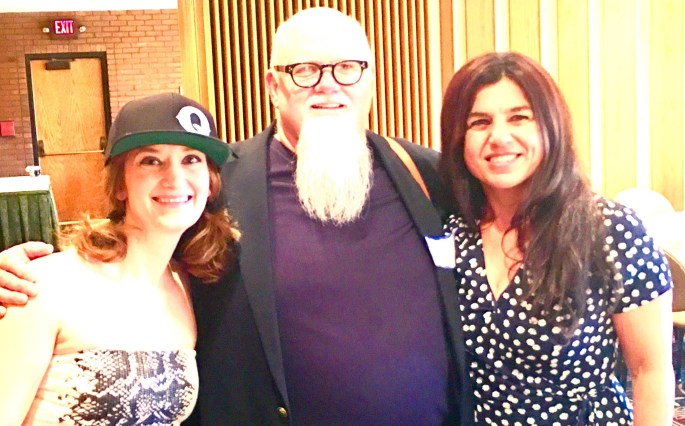
I took a picture of these women during an Akitu Festival at St. Joseph Chaldean Church

Like Native Americans, Chaldeans had a deep respect for nature and understood the interconnectedness of all life. They lived in harmony with the Earth, recognizing that survival depended on balance and reciprocity. Their world also fostered a greater balance between male and female energies, with men and women working together for the higher good. Revisiting these ancient values, alongside modern methods, can teach us how to live more sustainably. Here’s how their wisdom, and my own experiences, influence my approach to sustainability:

Adopt a Mindset of Service: My ancestors saw service as a fundamental duty, believing every action impacts the greater whole. Sustainability begins with this mindset–reducing waste, conserving resources, and contributing to the planet’s well-being.

Reconnect with Nature: As agricultural pioneers, they understood the importance of working with the land. Planting gardens, supporting local farmers, and eating seasonally are simple ways to honor this connection while reducing our footprint.

Innovate Simply: Mesopotamians invented tools like the wheel and irrigation systems. Today, we can prioritize energy-efficient solutions, reduce consumption, and creatively repurpose resources–practices that blend innovation and simplicity.

Embrace Interconnectedness: Astronomers by nature, my ancestors viewed the universe as an interconnected whole. Likewise, sustainability requires recognizing that every choice–what we buy, how we eat, how we travel–affects the Earth.

Share Stories and Knowledge: Enheduanna, the first recorded writer, reminds us of the power of storytelling. Sharing knowledge creates awareness and inspires others to embrace sustainable practices.

The Chaldeans rebuilt after immense challenges, demonstrating resilience and adaptability. They did so by blending ancient wisdom with modern practices to create a sustainable world rooted in balance, service, and respect for the Earth.

Spiritual Insights: Exploring the Chaldean-Kabbalah Connection

Last year, during an interview with Daniel Rosenstein, I discovered an intriguing connection between our shared interests and cultural histories. Daniel’s mother was born in Baghdad, and she, like many others, had to leave in 1948 due to the Farhud Exodus. Our conversation opened the door to a fascinating exploration of the Chaldeans and their overlooked legacy.

Daniel revealed that he had learned about the Chaldeans in his studies but, like many, was unaware that this ancient community still exists today. As a Chaldean myself, this was a powerful reminder of how important it is to share our history and keep our stories alive.

What made our discussion even more compelling was the connection Daniel made between the Chaldeans and the Kabbalah. He sent me several resources that delve into the relationship between the ancient Chaldean traditions and the mystical Jewish teachings of the Kabbalah. These connections shed light on overlapping histories, spiritual philosophies, and shared wisdom that transcend time and geography.

Here are some key insights, inspired by the resources Daniel shared:

1. The Chaldeans and Their Legacy

Known for their contributions to astronomy, mathematics, and spirituality, the Chaldeans flourished in Mesopotamia (modern-day Iraq) between 612 and 539 BCE. They were instrumental in shaping early civilization and left their mark on various cultures, including the Jewish people during the Babylonian Exile. Source

2. Chaldean Influence on the Kabbalah

The Kabbalah, often referred to as the mystical or esoteric side of Judaism, shares many concepts rooted in Chaldean spirituality. The Chaldean Kabbalah, according to some scholars, was a precursor to the Jewish Kabbalah, blending astrology, numerology, and divine symbolism. Source

3. Theosophy and the Chaldean Mystical Tradition

H.P. Blavatsky, a founder of Theosophy, wrote extensively about the Chaldean Kabbalah. She described it as a key to understanding the hidden wisdom of the ancients, connecting it to the broader spiritual traditions of the East. Source

4. Numerology: A Shared Language of Mysticism

Both Chaldean and Kabbalistic systems emphasize numerology as a means of understanding the divine order of the universe. These philosophies reveal how numbers hold symbolic power and can guide spiritual growth. Source

5. The Origins of Kabbalah in Pagan Mysticism

Some argue that the origins of Kabbalah can be traced back to ancient pagan practices, including Chaldean magic and mysticism. This perspective emphasizes the interconnectedness of spiritual traditions across cultures. Source

6. Modern Perspectives on Kabbalah

Even today, the Kabbalah continues to evolve, and its historical ties to the Chaldeans remain a topic of interest for scholars and spiritual seekers alike. Source

Personal Reflections

As a Chaldean, an award-winning author, and a spiritual guide, I’ve dedicated much of my life to exploring the intersections of faith, culture, and self-empowerment. My journey has included deep work within the Chaldean community, as well as studies at a Shamanic school under the guidance of my teacher, Lynn Andrews.

Through this work, I’ve learned the importance of understanding and harnessing energy, embracing silence, and building a strong connection with intuition. These lessons resonate with the wisdom found in both Chaldean and Kabbalistic traditions, highlighting the universal truths that connect us all.

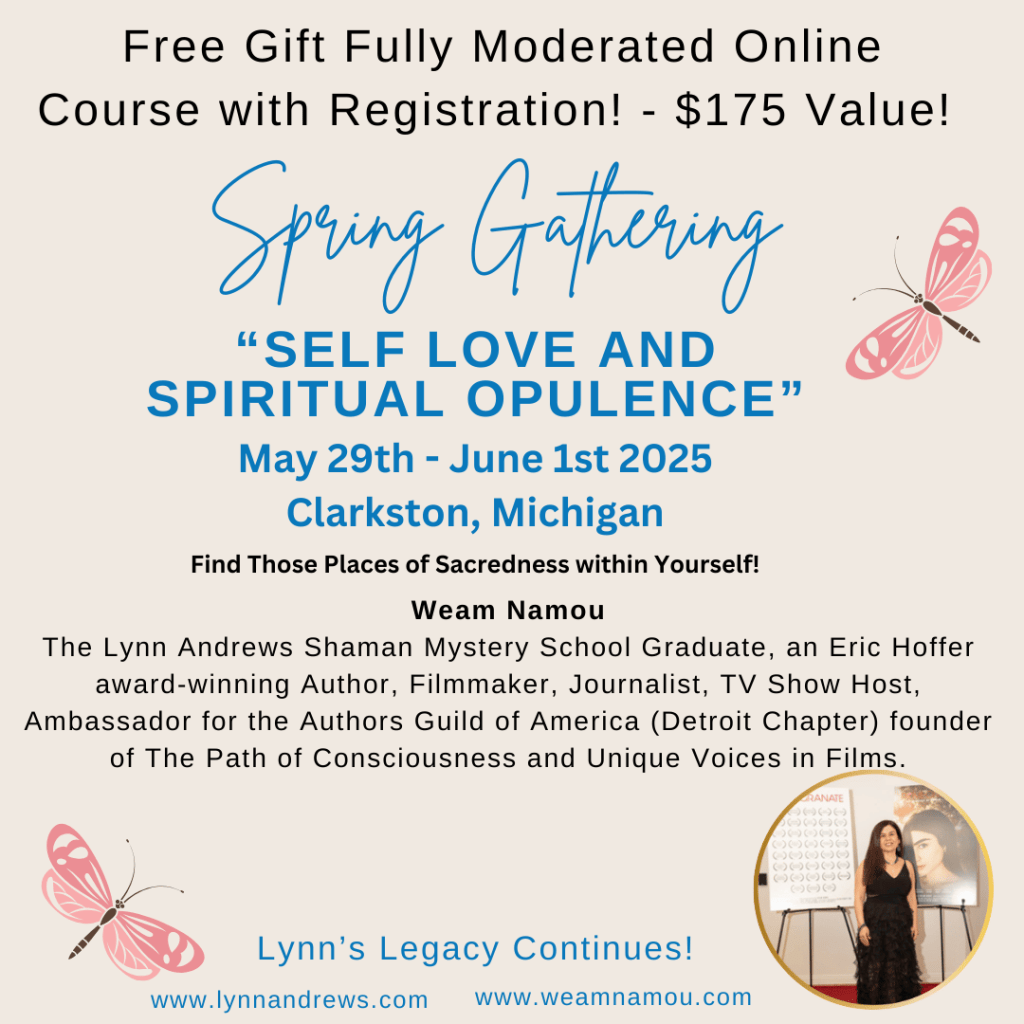
If you’re interested in exploring these themes further or seeking guidance, I invite you to take a step further into your own spiritual journey. If this resonates with you, I’d love for you to join me at a truly transformative event:

Unlock the Gateway to Spiritual Opulence & Self-Love!

Fear is simply a way of keeping you asleep. To awaken, you must move out of fear and into love. Fear keeps you in ego, while love brings you closer to your true essence. Gratefulness is key—it opens your heart and connects you to your inner truth.

Do you want to be truly shielded? Then embrace vulnerability. Vulnerability is your greatest shield because it requires dropping the ego and stepping into your authentic self.

As Lynn V. Andrews says:

“Self Love and Spiritual Opulence.”

Join us at Lynn Andrews Productions’ Spring Gathering 2025
When: May 29th – June 1st, 2025
Where: Clarkston, Michigan

Embark on this transformative journey with me, Weam Namou, a graduate of The Lynn Andrews Shaman Mystery School, Eric Hoffer award-winning author, filmmaker, journalist, TV show host, and founder of The Path of Consciousness and Unique Voices in Films.

Let’s honor Lynn’s legacy together, and unlock the pathways to love, spiritual opulence, and self-discovery.


To learn more, visit this link https://lynnandrews.com/pages/spring-gathering-2025-in-michigan-details

Communication as Art & a Tool for Change

In the month of February, I interviewed the following talented and inspiring people:

* Jamal Ali, documentary filmmaker and aircraft engineer who was awarded the Outstanding Refugee Entrepreneurship Award by the Minnesota Department of Human Services. Watch the interview  

* Jan Hadley, a Christian grandma and author committed to sharing the Lord’s love.   Watch the interview

* Majid Aziz, an Iraqi-American who escaped extremists twice through poetry.  Watch the interview

* Yasmine Mohammed, an author and activist who had the courage to escape her abusive life, tell her story, and help others.  Watch the interview

What do these people have in common, aside from talent and hard work? Courage. The courage to use communication as both an art and a tool for change. 

Some of my readers have described my books as a “recipe for life.” My former New York agent, Frances Kuffel, and an Iraqi American critic, said about my writing for my first book The Feminine Art that the style resembled that of Jane Austen. For Austen, the novel was her chosen tool in the struggle to reform humanity. While she mixed satire with tenderness, she focused on the emotional authenticity of her characters. She didn’t write in a way that would alienate people with intimidating language or lofty morals and themes. Through her novel, she attempted to make people less selfish and more reasonable, more dignified and sensitive to the needs of others. Her stories were about recoiling from greed, arrogance and pride and being drawn to goodness within ourselves and others. She was a true feminist way before “Feminism” even existed. She made women “think.” So I see how we are similar.  

From early on in my career, I have followed Dr. Joseph Murphy’s three steps to success (written in The Power of Your Subconscious Mind):

  1. Find out the thing you love to do, then do it.
  2. Specialize in some particular branch of work and know more about it than anyone else.
  3. You must be sure that the thing you want to do does not rebound to your success only. Your desire must not be selfish; it must benefit humanity. 

There are a lot of big issues happening in the world right now, most of which we have no creative control over. We have the choice to work on what we can control, which is ourselves, and to plant seeds of beauty and joy, in order to create a new reality, one that is absent of the continuous patterns of war, violence, and conflict.  Unfortunately, many people today are choosing to silence or even punish and hurt anyone who opposes their opinion – even if it’s a type of artform – rather than communicate with them. This type of behavior is dangerous, and it leads to loss of relationship, inner turmoil, trauma,  violence and potentially even war. 

Words have power; verbal as well as nonverbal communication are both vital, both healing art forms.  I encourage you to use them to transform your life and the lives of others. 

Check out my YouTube channel to learn about this week’s guest, who I’ll be interviewing live. Subscribe to my channel and set reminders/alerts so you can stay updated on Live and uploaded content.

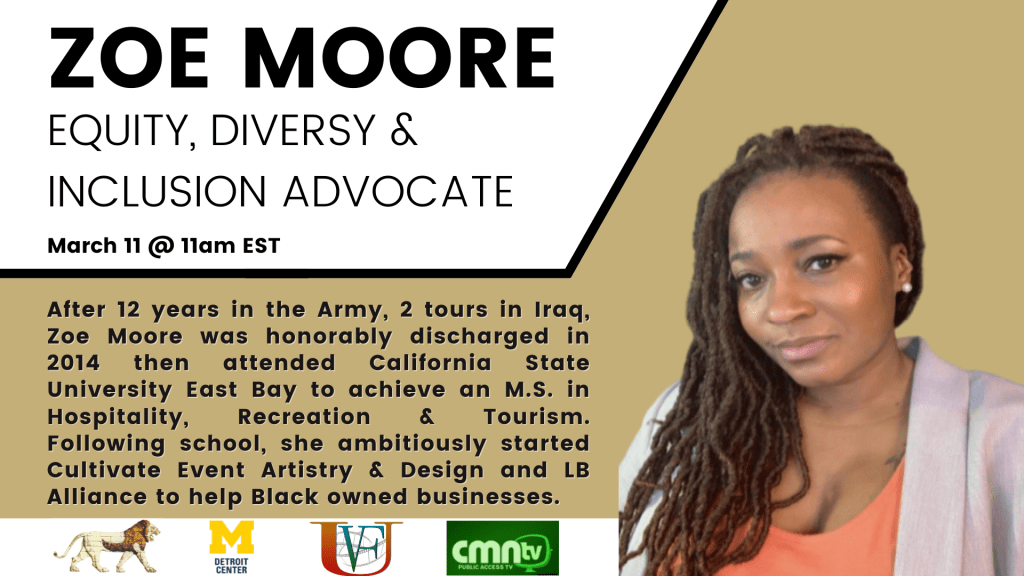
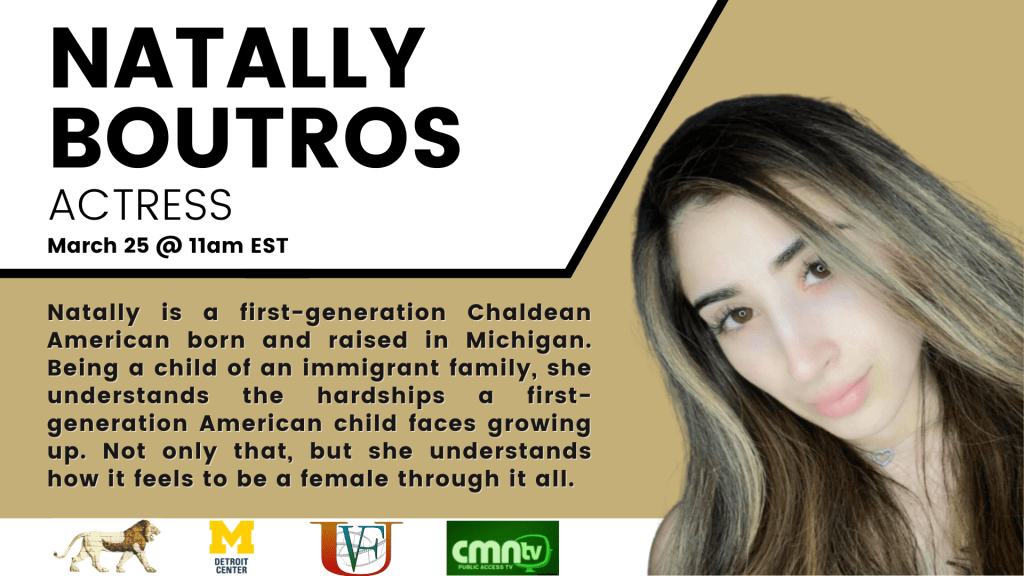
We are celebrating Women’s History Month during March.

Check out the guest line-up for March:

Interview with Ann Esshaki, Writer and Spoken-Word Performer

Ann Esshaki is a Chaldean-American writer and spoken-word performer. She studied at Eastern Michigan University where she earned her M.A. of Creative Writing and Wayne State University where she earned her B.A. of English. During her years at Wayne State, she performed at numerous open mic events including the “Women in Hip-Hop” event hosted by 5EGallery on Tuesday’s at the Old Miami. In 2012, she was personally invited by Kem, Grammy-nominated R&B singer, to perform at his Mack & Third event. More recently, she has published Kaldani, a book of poetry about the Genocide and Diaspora of Chaldeans (minority Christians from Iraq), which is available on Amazon. She is passionate about sharing the history, culture, and language that uniquely belongs to Chaldeans.

Check out her book by visiting: https://www.amazon.com/Ms.-Ann-M.-Esshaki/e/B08Y99D5N6%3Fref=dbs_a_mng_rwt_scns_share

Respect: The Poetry of Detroit Music

M.L. Liebler is the author of fifteen books and has been on faculty in the English department at Wayne State University since 1980. I interviewed him over ten years ago when I was working as a freelance writer for the St. Clair Shores.  He’s St. Clair Shores’ (his hometown) first Poet Laureate. The next time I saw Liebler is when he was a keynote writer for the Detroit Working Writers. We’ve stayed connected since then.

Liebler’s recent book, Respect: The Poetry of Detroit Music, is a collection of poems and lyrics that shows the global impact of Detroit’s music scene – Grammy winners, Pulitzer Prize winners, Rock and Roll Hall of Fame inductees, and poet laureates. Included are icons such as Eminem, June Jordan, Fred “Sonic” Smith, Rita Dove, Jack White, Robbie Robertson, Paul Simon, Nikki Giovanni, Philip Levine, Sasha Frere-Jones, Patricia Smith, Billy Bragg, Andrew Codrescu, Toi Derricotte, and Cornelius Eady.

Amazon (paperback)

Respect.jpg

Here’s a poem from M.L. Liebler, called “Rhythm and Blues Fire.”

TONIGHT GASOLINE POURS

CREATING A FIRE OF RHYTHM

AND BLUES IGNITING AN ENGINE

OF SWEET SOUL DREAMS

WARM, DARK PRUPLE

LATE SUMMER NIGHT SONGS

THAT RESPECT THEMSELVES

HOT HARMONIES ON AN EASTSIDE DETROIT STREET

FALCONS SINGING IN THE FRONT

ROOM AND ACROSS THE STREET

AND A YOUNG BOY HEARS

THEIR CALL AND RESPONSE.

IT’S A NEW CHURCH

IT’S DETROIT. IT’S LATE 1959

AND IT’S OUR GOOD FORTUNE TO HAVE

NOT HYMNS FOR OUR NORTHERN SOULS.

I found so many other wonderful poets in this book, including a dear friend, Zilka Joseph. Zilka was born in Bombay, India, and grew up and was educated in Calcutta. She moved to Chicago with her husband in 1997 and currently lives in Michigan. She has been nominated twice for a Pushcart prize.

Other works by Liebler include award winning Wide Awake in Someone Else’s Dream (Wayne State University Press 2008) featuring poems written in and about Russia, Israel, Germany, Alaska and Detroit. He has read and performed his work in Afghanistan, Israel, Palestine, Russia, China, France, UK, Macao, Italy, Germany, Spain, Finland and most of the 50 States. Aside from teaching at Wayne State University, he is the founding director of both The National Writer’s Voice Project in Detroit and the Springfed Arts: Metro Detroit Writers Literary Arts Organization.

Liebler2.png

For more information and upcoming events, visit  http://www.mlliebler.com

The People Around You

Before the publication of my first book in 2004, I was eager to launch my writing career. I imagined the wonderful life of an author that awaited me and expressed this to my Native American teacher as he sat crisscross in his La-Z-Boy, smoking his pipe, staring at me with his inquisitive eyes. After some silence, he said, “The only people that matter are those around you.”

His words remain in my heart today, revealing their wisdom whenever I get too caught up in my work. Although I always strive to improve my craft, to expand my career, and to create beautiful things in the world, what my teacher had said becomes clearer and more meaningful with time. I see a lot of people get mystified and obsessed over famous names or becoming famous themselves – neglecting to discover the treasures within their own circle.

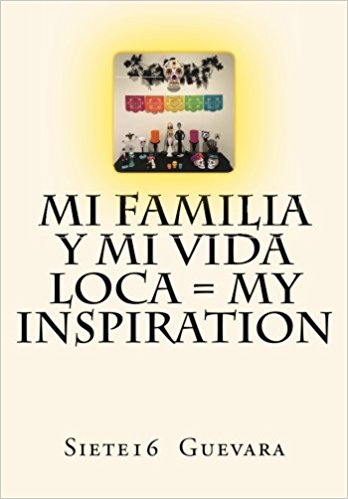
Myself, I try to see the wonderful attributes of those who cross my path, like Siete16 Guevara. He’s an author who cares to make an impact on the lives of those around him. That’s the first thing I recognized when we met over a year ago at a book signing. He didn’t talk about his books as much he did about creating unities between literary communities. He has regular poetry readings, free for the public. In honor of National Poetry month, he will host two Open Mics at the Dovetail in Warren, Michigan (April 13th and 20th) where performers, poets, storytellers, musicians and singers are welcome to join.

Siete 16 was born in Saginaw, Michigan, and after high school moved to the Rio Grande Valley in Texas where he lived for about eleven years. When he returned to Michigan, he sought out the artistic scene of poets and writers, like the community he encountered and became a part of in Texas. It was happening in Saginaw for about three to four years, but it had dissolved so Siete16 moved out to the Metro Detroit area and found several groups and communities where he made friends and connections with.

His work was accepted by college magazine – The Gallery at the University of Texas and in ARTIFEX at Macomb Community College. He has published three books of his own poetry, and currently works on his fourth book. He’s also publishing a second book of poetry written by students in Sterling Heights. The first book of student poetry was from Saginaw.

“My greatest accomplishments are two things, my daughter, and my nonprofit organization that I started with my dad,” he said.

The nonprofit is called Artistas Latinx en Accíon Siempre (A.L.A.S.) In Spanish it means, Latinx Artists in Action Always.  A.L.A.S. means wings in Spanish, which ties into their motto: Perform with Us, Soar with Us!

Sieta 16 reminds me of Will, an artist I met in Suttons Bay a few years ago. He owned a store called Casey-Daniels where he made jewelry and sold handmade handbags. He’s also the publisher of Exposures, a Leelanau County Student Journal that has been around for nearly 30 years. He’d said to me about his artwork, “I make weird things. I’m not going to stick myself in art shows. You know why? Because I’m not looking for the approval of others. I’m going to authenticate me. You’re going to authenticate yourself.”

With that, I returned home with a whole new perspective.  

Sieta’s books on Amazon

Siete 16

Ano Dos Mil

Siete 16 -2

Where is the Sexto Sun?

Siete 16 - 3