Where Writing Began: My Chaldean Heritage and Storytelling Journey

Writing is more than the simple act of putting pen to paper—it is a lifeline, a sanctuary, and a means of resistance against forgetting. It began in my birthplace, Iraq, the cradle of civilization, where ancient Mesopotamian cultures—including the Chaldeans—helped shape history by developing one of humanity’s most profound tools: the written word.

I was honored to reflect on this legacy in the inspiring article, “Why Are You Passionate About Paper & Forest Products?” 🌿✨ The feature gave me the opportunity to share how deeply my Chaldean roots have shaped my passion for storytelling and preserving history.

The Chaldeans are among the earliest contributors to the written word, a tradition we have carried through millennia. My ancestors, who still speak Aramaic—the language of Jesus—used writing as a means to create, document, and inspire. The first recorded writer in history, Enheduanna, was a Mesopotamian princess, priestess, and poet, whose words continue to echo across time.

As a Chaldean-American, I consider writing both a gift and a responsibility. It is a legacy I proudly carry forward, creating stories that honor my heritage and ensure the voices of my people are remembered.


The Power of Writing: A Personal Reflection

In the article, I contributed to the section Cultural Heritage and the Power of Writing, where I shared how my people’s groundbreaking invention of writing has shaped my life’s work. Here’s an excerpt (click here for the article):

“Over the centuries, empires and adversaries have tried to erase us, yet we preserved our identity through the written word. Even as recently as 2014, extremists sought to destroy the artifacts and written records of my people. Despite these threats, our stories endure because of the resilience of writing as a medium. Paper became more than a tool; it became a sanctuary, a means of peace and resistance against forgetting. The simple act of putting pen to paper is a way to honor those who came before me and ensure that their voices are not silenced.”

These words remind me of the fragility of memory and the vital role writing plays in preserving history, especially for the Chaldean people. When ISIS destroyed ancestral villages and cultural artifacts in northern Iraq, I felt a deep urgency to document our stories. Writing became my way of ensuring that the history, struggles, and triumphs of my people would not be forgotten.


The Beautiful History of the Chaldeans

The Chaldeans have a rich and vibrant history that dates back to ancient Mesopotamia. Known as one of the earliest civilizations, the Chaldeans contributed significantly to the development of writing, astronomy, and mathematics. Their legacy of innovation and resilience continues to inspire me today.

Even as our communities have faced displacement and destruction throughout history, we’ve held onto our traditions, language, and culture. Writing has been a cornerstone of this survival. Whether inscribed on clay tablets or recorded on paper, it has allowed us to preserve our identity for future generations.

As an author and filmmaker, I strive to honor this history by creating stories that reflect the strength and beauty of my people. Through storytelling, I hope to shed light on the struggles we’ve overcome and the contributions we’ve made to the world.


Read More

In addition to reflecting on my cultural connection to writing, the article highlights other perspectives from leaders in the paper and forest products industry. It’s a fascinating read that explores sustainability, innovation, and the role of paper in everyday life.

If you’re interested in learning more about my journey and the stories of other contributors, check out the full article here: Why Are You Passionate About Paper & Forest Products?

My passion for writing has been the driving force behind much of my life’s work. It has led me to write 20 books and thousands of articles, earn an Eric Hoffer Book Award, and write, direct, and produce two feature films, which together have won over 50 international film awards. I’ve also held numerous leadership roles that have allowed me to advocate for storytelling, heritage, and cultural preservation on a larger scale.

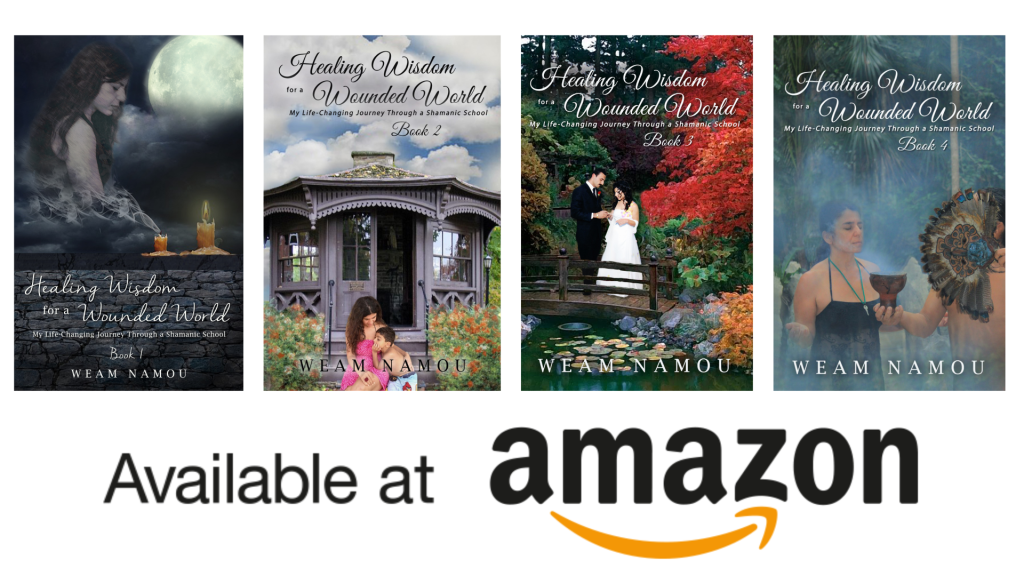
These accomplishments are more than milestones—they are part of my mission to honor my ancestors’ resilience and ensure their voices endure for generations. You can learn more about my journey in my four-part memoir series on Lynn V. Andrews’ mysticism school, which transformed my life as a woman, wife, mother, and author, and deepened my connection to my ancient roots.

Thank you for taking the time to read about my passion for writing and the cultural heritage that inspires it. I’d love to hear your thoughts—what role does writing play in your life?

https://www.amazon.com/dp/B078MK8HZZ
Sharing My Chaldean American Story at the Charles H. Wright Museum of African American History

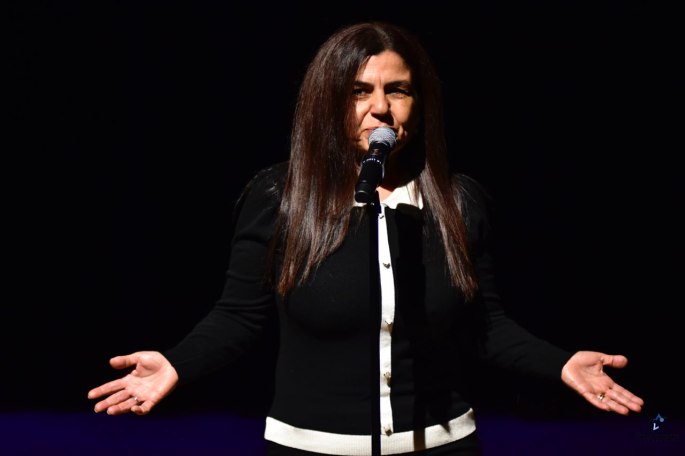
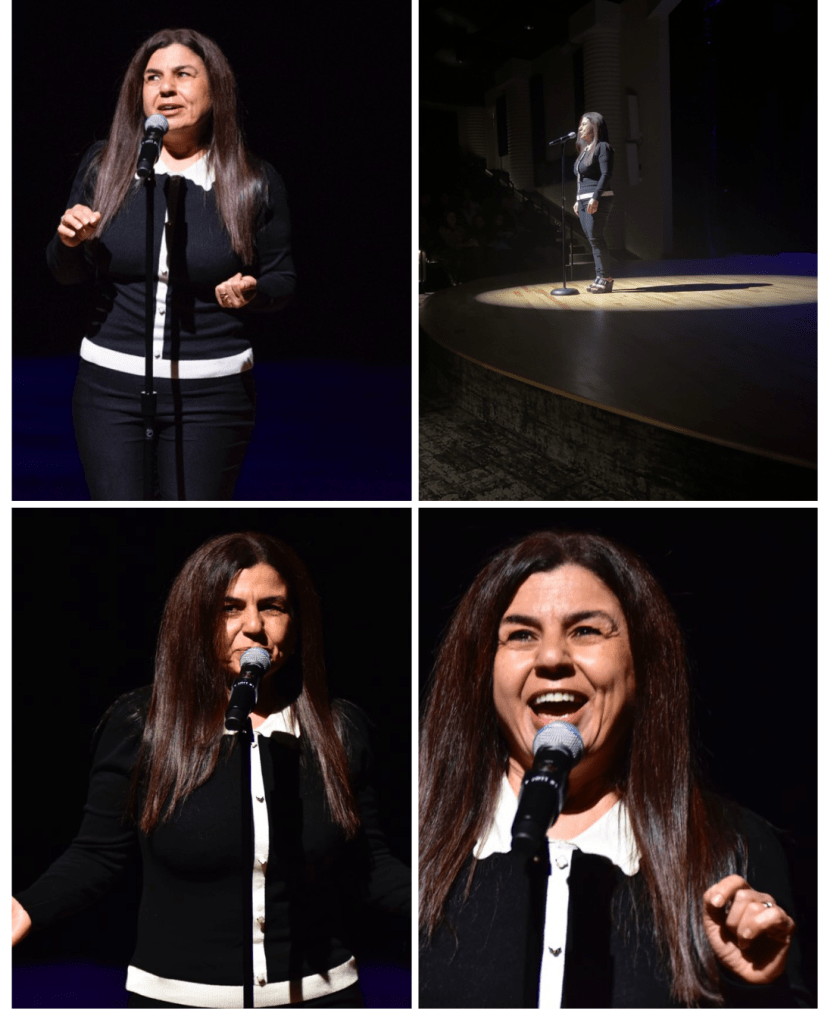
On March 21, 2025, I stood on the stage of the Charles H. Wright Museum of African American History, ready to share my story as part of The Secret Society of Twisted Storytellers (TSSOTS). This event, hosted by the visionary Satori Shakoor, was a powerful celebration of Women’s History Month. It was an evening of courage, vulnerability, and connection, where stories from diverse backgrounds came alive in front of an audience that was nothing short of extraordinary.

I brought my Chaldean American story to the stage, sharing what it was like to grow up in Iraq. I spoke about the day my school principal slapped me so hard for missing one of Saddam Hussein’s parades that I passed out. That slap wasn’t just a moment of physical pain—it was a symbol of the fear and oppression that permeated life in my homeland. It also marked the beginning of my journey toward reclaiming my voice and my power.

At one point, as I spoke about my mother and emotions overwhelmed me, I had to pause. The audience didn’t just sit silently—they held me in that moment. One woman later told me that she wanted to leave her seat, come on stage, and hug me. I felt everyone’s support, their unspoken hugs wrapping around me as I gathered myself and continued.

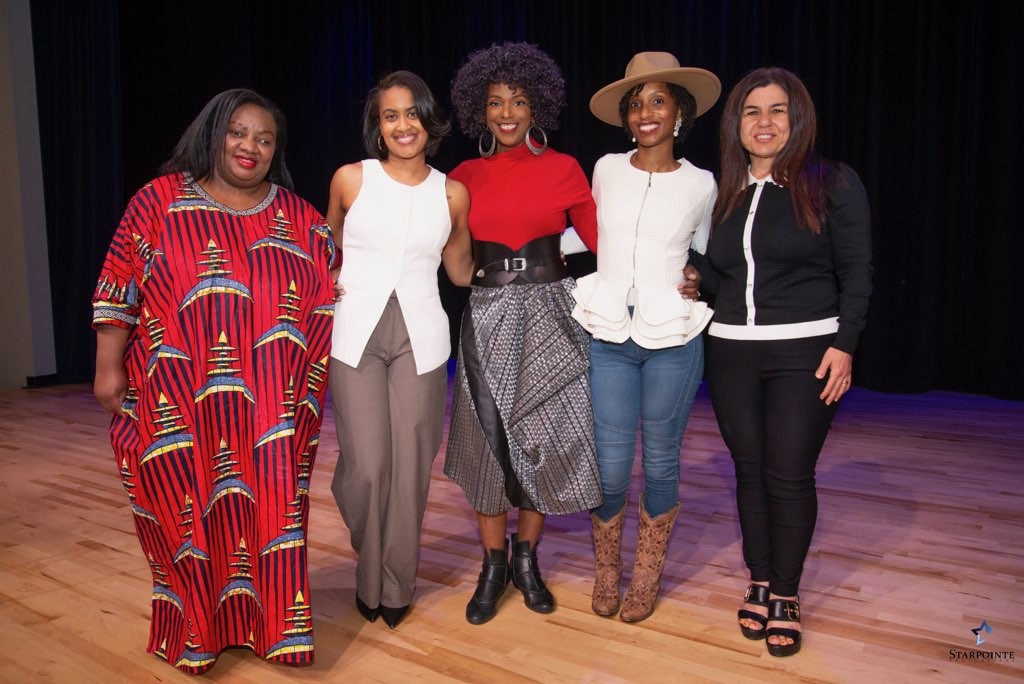
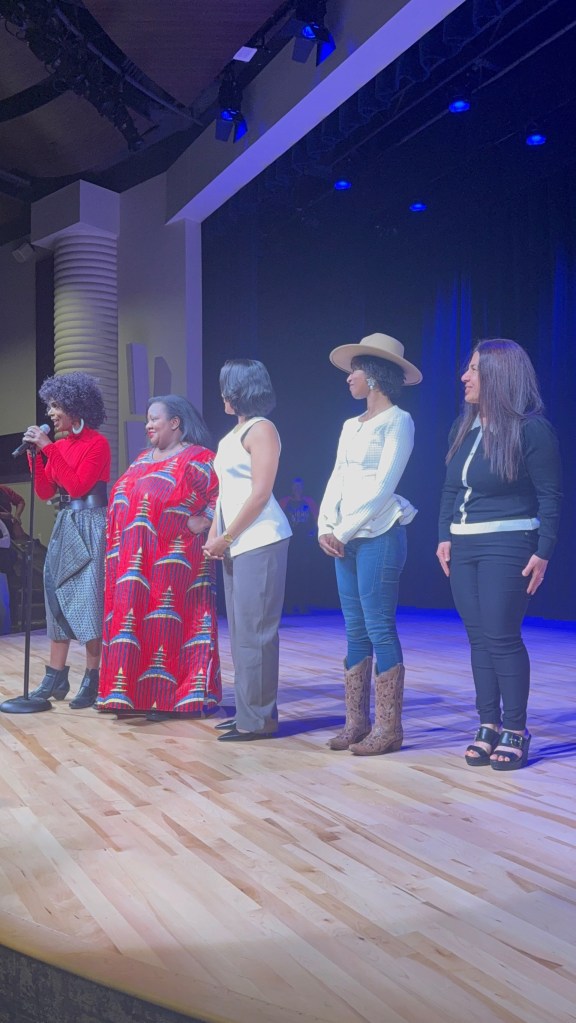
The evening wasn’t just about my story, though. It was about the collective power of storytelling. I was honored to share the stage with three phenomenal women:

  • Ciera Estelle, who spoke about her journey from advocating for a bullied classmate as a young girl to becoming an educator who teaches the importance of speaking up. Her message was a powerful reminder that silence can make us complicit in injustice.
  • Tuyishime Claire Gasmgera, who offered a unique perspective on feminism from her experiences in Rwanda. She challenged Western ideas of feminism, advocating for a broader definition that empowers women to make their own choices, whether that’s activism or caring for their families. In her case, she went from hating being in the kitchen to loving it!
  • Faith Brown, whose heart-wrenching story left no one in the room untouched. As the author of The Monster that Killed His Family Twice: The Faith Green Story, she shared the unimaginable tragedy of losing her four children to her husband’s violence. Her strength was a testament to the resilience of the human spirit.

Together, we shared stories that transcended cultures and continents, united by themes of resilience and transformation.

An Extraordinary Audience

The audience that night was unlike any I’ve ever encountered. They weren’t just watching—they were with me, every step of the way. Their attentiveness, their warmth, and their energy created a space where I felt safe to share even the most vulnerable parts of my story.

After the event, many came up to me to express their support. Some hugged me, others shared their own reflections, and one woman said, “I felt every word you spoke.” It was humbling to see how my story resonated, and it reminded me of the profound connection that storytelling can create.

The Power of Listening

What made this night truly special wasn’t just the stories—it was the way the audience listened. Listening is an art form, and when it’s done with intention and an open heart, it can transform both the storyteller and the listener.

Satori Shakoor opened the evening by reminding the audience of their vital role: to listen. “You have the most important job tonight,” she said. And she was right. Too often, people are so focused on preparing their response that they miss the essence of what’s being shared. But that night, the audience listened with their hearts, creating a space where stories could unfold in their rawest, most authentic form.

Satori’s Vision and the Magic of TSSOTS

This is the magic of The Secret Society of Twisted Storytellers. Founded in 2012 by Satori Shakoor, TSSOTS is rooted in one of humanity’s oldest and most intimate traditions: the oral art of storytelling. What began in a 45-seat performance space in downtown Detroit has grown into a global phenomenon, with standing-room-only audiences at venues like The Marygrove Theater and the Charles H. Wright Museum of African American History.

Satori herself is a powerhouse. Her warmth, wisdom, and passion for storytelling have transformed countless lives. Beyond her work with TSSOTS, she’s also a talented artist and storyteller with an upcoming film project, Confessions of a Menopausal Femme Fatale, that promises to be as impactful as her live events. Her vision is simple yet profound: to use storytelling as a tool for healing, connection, and transformation.

As I left the stage, I carried with me the love and support of everyone in that room. Of course, I shared my story behind Pomegranate, which, as a result of healing, I was able to accomplish. The beautiful part is that after all the encouragement and support I’ve been given by others, the icing on the cake is being able to pass it forward—through my work and simply by being me.

To learn more about The Secret Society of Twisted Storytellers or to attend future events, visit www.twistedtellers.org.

To learn more about Pomegranate, visit:

The Wonderful World of Disney

Richard Rothrock is an award-winning writer and teacher with an undying love for film, television, literature, the Indianapolis 500 and all things Disney. The author of “Sunday Nights With Walt,” he has been a great story consultant to several of my projects. Richard is a proud graduate of George Washington High School in Charleston, West Virginia and holds a Bachelor of Arts in English and Film from Oakland University and a Master of Arts from Bowling Green State University. His work has appeared in magazines, newspapers and book anthologies. 

I recently interviewed Richard about his book, Sunday Nights With Walt and couldn’t get over how much he looks like Roger Ebert. In the book, Rothrock writes, “Growing up in the 1960s and 1970s, Sunday nights at my house were different from the other nights of the week. It was the only night when my mother made pizza. It was the only night of the week when we could drink soda. It was the only night of the week we could have candy for dessert. It was the only night of the week when we were allowed to eat dinner in front of the television. And the only shows we ever watched were Mutual of Omaha’s Wild Kingdom and The Wonderful World of Disney. (Mom sent us to bed as soon as Bonanza started). 

Richard’s comprehensive history of that show, in its many forms, will take you back to long-ago Sunday nights spent together with family… and Disney. He combines meticulous backstories and episode synopses with insight into how Walt’s TV show shaped American culture and how it shaped his own childhood and adolescence, gently exposing him to the wide, wonderful world outside his rural town – a world not just of Disney, but of nature, technology, history, foreign cultures, and even romance. 

Questions and Answers with Richard Rothrock: 

Is Walt Disney a personal hero of yours? Why are he and his work so
inspirational to you?
He is a hero of mine for many reasons. He was a guy with a vision. Like me, he knew
what he wanted to do at a young age and no one could talk him out of it. He wanted
to advance animation from a funny sideshow to an art form. He understood his
limitations as an artist but then hired people who complemented his talents and
abilities. Together, they did conquered animation and push it to the heights we
know today. Without him, there would be no Pixar or DreamWorks or anything.
Everything he did was built on what had come before. He tackled live action film
and was an early innovator in television. He pioneered new processes in film F/X.
He then used his knowledge of animation and moviemaking to revolutionized the
amusement park and give us Disneyland, the first modern theme park. He pioneered
the world of robotics and gave us audio-animatronics. And he was just turning his
talents and accomplishments, building on what he’d done before to help our cities
and society when he died. And all of it was designed to uplift and entertain a
worldwide audience. To build a better world and, to quote Walt, gives us “a great big
beautiful tomorrow.” And I think we need that more than ever now.

What was it like to go back and watch all the show’s episodes 50 years later?
By and large, it was fun. There were some episodes that didn’t hold up as well as I
remembered but the really great ones were just as good as before. And, being an
adult now, I picked up some new angles and incidents in them that I had missed as a
kid the first time around. The best part about this book was watching the episodes
again.

Richard Rothrock - Doesn't he look like Roger Ebert?
Were there some episodes that you could not find and wish you could have?
Yes, although I found almost all of them. I really wanted to see some past favorites
like Run, Light Buck, Run (1966) about an injured antelope adopted by a prospector.
Also Michael O’Hara the 4th (1972) about a teenaged girl who wants to be a police
officer like her dad but women “didn’t do that” back then. I wanted to see A Salute
to Alaska (1967) because it had the final introduction Walt recorded before his
death. But the biggest episodes I wanted to watch again and could not find were the
Gallegher episodes about a teenaged reporter in the 1890s. They were hugely
popular in the 1960s but have never been released on VHS or DVD. I had to rely on
my memories and whatever commentary I could find in books and on the web to
write about it.
Which episode from The Wonderful World of Disney did you enjoy the most as
a kid?
That’s easy. There were two episodes that stood out the most to the young me. The
first was Secrets of the Pirates Inn (1969) a mystery story about three friends down
on the bayou who helped an old sailor find buried treasure at the inn he just
inherited. I loved the twists and the turns in the story and how the clues led to
hidden passages and secret staircases inside the inn. And the ending had twists I
did not expect.

The other episode was The Scarecrow of Romney Marsh (1964). It starred Patrick
McGoohan as an 18th century English vicar who led a double life as a bandit named
the Scarecrow. It was a Robin Hood kind of story because the Scarecrow used the
profits from his smuggling ring to help the poor area residents pay their taxes. I
loved the chases and the daring do. There are great scenes and great performances
throughout, and the title song that opened and closed each episode was my favorite
song on the Disney show. Those were the two episodes I looked forward to the
most.

What episode did you take the most inspiration from?
Probably one that few people remember called Smoke (1970). It starred Ron
Howard in one of his last juvenile roles as a teenaged boy named Chris. He is still
trying to get over the death of his much loved father a few years back. What makes
it all worse is that his mother has remarried to a really nice guy and everyone
accepts this new stepfather but Chris. Because accepting him will mean Chris has
gotten over the loss of his father and he doesn’t want to. The episode taught me all
about the destructive power of grief and how it can make a mess of our lives if we
are not careful. I have used that lesson multiple times in my life.

How have you applied the show’s inspirations in real life?
In many ways. It taught me how to deal with bullies in school. It helped me learn
how to deal with loss and growing up. Romance. Divorce. Dealing with adults. The
show turned into a guide for when I was down and when I had doubts. I pretty
much learned all the basics of adulthood from the show and have built on that
knowledge ever since.
How did The Wonderful World of Disney affect other members of your family?
I don’t really know because we never really talked about it. I suspect Mom liked the
show because it was good, safe family entertainment so she wouldn’t have to worry
about we kids being exposed to something inappropriate. I know my sisters loved
The Scarecrow of Romney Marsh as much as I did. Being older, they were big fans of
The Mickey Mouse Club which I missed. My sister Pam loved Babes In Toyland
(1961) though I never knew why she loved it so much. She loved that movie so
much as a child that she literally wore out our copy of the soundtrack album by
playing it over and over. Now as to whether they took those lessons forward into
adulthood, I don’t know.

Richard
The Wonderful World of Disney was appointment TV for a generation. Do you
think there is anything like that for kids today?
Not in the same way. I do believe there are children and teens out there who obsess
about one show just as much as we did. What is different today is how they
consume that show. No show is ladled out anymore on a week-to-week basis. It is
binged watched non-stop online, even the children’s networks employ binge
watching. I know that Disney Channel airs marathons of Phineas & Ferb almost
every morning. Nickelodeon does hours and hours of SpongeBob SquarePants.
Cartoon Network does the same with Teen Titans. So today’s children are able to
watch their favorites all day every day in a way we could not back then. I don’t
know if that makes it “appointment TV” but it is there for the watching.

Would a show like World of Disney survive today?
I don’t think so. It was a show that tried to appeal to a wide audience. And it tried
to introduce that audience to a wide spectrum of life experiences and nature and
world cultures. Today’s shows don’t try for a wide audience. They aim for niche
audiences only interested in one thing and those niche audiences don’t seem
interested in much of anything outside of that niche.
Was there a time when you wanted to work for Disney?
Surprisingly, no. I couldn’t draw so I knew I had no chance working in animation.
And in the 1970s it seemed like the glory days of the studio had passed. I did dream
about working at one of the parks at one time but that was a long time ago.
Would you have lived in EPCOT had Walt Disney actually built it?
Yes, definitely. I loved the look of the city from the downtown to the residential
neighborhoods. I loved the idea of riding a People Mover or a Monorail wherever I
went. And the homes had the same style as the houses in The Incredibles (2004) so I
think they looked super cool. That 1960s notion of futuristic design still looks
pretty good to me.
What are you hoping your audience takes away from this project?
For the people who watched The Wonderful World of Disney every Sunday night, I
hope it brings back cherished memories and helps them reclaim and relive a special
time in their childhoods. For those who were not alive back then, I hope it helps
them better understand the importance of Walt Disney to both the entertainment
industry and how he helped shape the values of the Baby Boomer generation. And
how what he tried to instill in we children of the 1960s is still just as relevant today.

What is the enduring appeal of Disney?
There is definitely a nostalgia factor of looking back at a simpler time. However, I
think Disney’s enduring appeal is the belief in human goodness. That when things
are bad we can come together. And that there is hope for the future if we are willing
to work for it. That we again appreciate the value of science to make good progress
in our lives. We can still have “a great big beautiful tomorrow” if we want it to be.

Visit Richard’s website https://www.richardrothrock.com/

The Art of Living on Purpose

Satori is a Buddhist term that references Sudden Enlightenment. It’s a term that Detroit-based artist Nina Caruso uses in her coaching platform SatoriShift: the art of living on purpose. Nina’s work spans many mediums but her primary focus has been abstract encaustic and oil painting as well as mixed medium sculpture.

Nina has 20 years of teaching experience working with students from Pre-K to senior citizens. She currently shares her love of art while teaching senior adults and adults with disabilities and other challenges. She believes that all forms of art are a response to our existence and are best expressed through exploration, play and curiosity.

As a Whole Life Healing Coach, she uses art as a means to help others to explore, express and expand. Through her SatoriShift platform, Nina facilitates a variety of holistic modalities including art, yoga, diet, self-care, and mediation to infuse and unfold conscious purpose into the lives of individuals, communities, and organizations.

Nina 2.jpg

Q: What type of healing work do you do?

I work with individuals or groups to bring to light and expand upon their specific or united purpose.

Q: How do you incorporate holistic healing into your artwork?

I consider each person holistically. I look for instability and offer methods to restore balance through a variety of holistic modalities including art, yoga, nutrition, brain health, self care, mindfulness, intuition and meditation.

Q: What makes your work different from other healing work?

I believe that we all have purposeful work to accomplish while we are here. Our mission is innate within us whether we know it or not. Often anxiety and discomfort may arise within us if we are not in tune and true to ourselves. I serve as a guide to assist in bringing clarity and tools in support of manifesting one’s purpose. Satori is a Buddhist term that references Sudden Enlightenment. Making the shift to sudden enlightenment is truly living with purpose. It is through this platform that I provide creative coaching through process based art experiences and conscious healthy living choices.

Q: On your website, you address five healing aspects. Can you describe each one:

These are suggested offerings of the creative coaching that I offer. One may choose from this menu or I can create a unique recipe in support of my individual clients needs. These menu items can be expanded upon or combined for a greater impact.

Nina 1

* Shining in to Shine Out

Sankalpa painting is a meditation on canvas. Where one can explore the pathway to self through this meditative painting approach. Through this process you will find yourself in the space where your head and your heart are in agreement while helping to restore focus and harmony in your world. Group or individual offerings are available.

* Celebrating Identity

This is an opportunity to explore and celebrate group or individual identity and purpose through artful means. Through this practice you will unleash your authentic self in order to live your passion. You will explore, express, and expand while inspiring others to do the same.

Nina 3.jpg

* Take Good Care

This is all about self care. Clearing any obstacles that are in the way from being healthy in body, mind and spirit is key to living on purpose. I work together with my client to position them in a place where their head and heart are aligned with the direction that they are taking. This can be acquired through having awareness of self care and what that means personally for an individual or organization. Together we will explore creative options to support individual or group well being.

* The Power of Story

Because our stories are so powerful it is important to be aware of them and make sure that they are servicing us along our path and not sabatoshing us. In this practice we will explore, create and manifest your story through artistic modalities. Your story is exactly that; yours to edit and rewrite according to your purpose. Let’s explore your story together making sure that your head and heart are aligned, we will omit any fear or lack and colorfully illustrate the pages with love and abundance.

Nina 6.jpg

* Be the Change

This is a practice in social justice. Art is and has always been a visual language. It has the ability to deliver messages on a soul level. What shift would you like to see in this world? Here we will join together in bringing your message to light.

* Creating Community

Art unites communities. We can work together as individuals, families, organizations, or whole communities to create personalized artful offerings to foster unity. Allow SatroiShift to assist you in creating unity within your community

* Placemaking

Placemaking is a powerful way to explore how art and artful practice can enliven your world. Through Placemaking we create a sense of place within a community or personal space through artful expression. Arts based placemaking manifests in many forms. It may be site specific permanent or temporary art in public and private spaces or present as site specific events all fostering artistic movement creating culture within our lives.

For more information, visit www.ninacaruso.com

A Story’s Moral Meaning

For decades, Stanley Williams, PhD, has been helping writers in the art of storytelling.  Many of his teachings are based on his book The Moral Premise: Harnessing Virtue and Vice for Box Office Success, which Will Smith called “the most important tool in his tool kit.” Stan has consulted with Will and his team on over a dozen motion picture projects, which have totaled over 1 billion dollars at the worldwide box office.

Stan was my screenwriting instructor at the Motion Picture Institute of Michigan (MPI). Over the years, he was supportive of my work by attending, sometimes with his lovely wife, my events and giving me advice on my first feature documentary, The Great American Family. In January of this year, I invited Stan as my first guest on my TV show. Earlier this month, he invited me as his first guest on a podcast he’s starting called, “VERISIMILITUDE, Conversations with Storytellers: How the narrative arts reveal what is good, true and beautiful.” To listen to the interview, click here To listen to the interview, click here.

We met one Saturday morning at a nearby park where, we learned, there were some renovations being done. From the start of the interview, the topic of Gone with the Wind surfaced. I read that novel at the age of nine, while living in Amman, Jordan and awaiting a visa to come with my family to the United States. The novel was in Arabic and it grabbed my interest to the point where my family had difficulty getting me to the breakfast, lunch, and dinner table. I felt such a connection to the character of Scarlet O’Hara and her tribe that I didn’t want to separate from them.

Imagine a nine-year-old girl from the Middle East being able to relate to a Southern teenage girl from Georgia. The two were worlds apart, but the author’s storytelling transcended their differences through the common human traits we all have of love, fear, family, and desire. Margaret Mitchell knew how to tell a story, and won the hearts of many people with her storytelling abilities. She took readers on a journey and, despite the trials the characters faced, she didn’t let us feel hopeless.

What I didn’t realize then is that the story also formed a foundation for the type of woman I looked up to. Scarlet was a confident girl who didn’t let her tribe’s limiting beliefs, criticism, or her gender to stand in the way of what she wanted. Her courage helped her pursue her dreams as well as defend her home. Also what I didn’t realize was that Atlanta, Georgia in the 1800s was not Detroit, Michigan in the 1980s. I was disappointed not to see the horse carriages and puffy dresses in the streets as we drove through the highway to our new home in the suburbs.

Picture With Stan2

I believe that artists, whether they’re writers, filmmakers, or painters, have a responsibility to society, to unearth the truth of things but also to help shift consciousness. We see with our brains and our perception, not our eyes, and so, whether we know it or not, the words and images that we use, and the actions we participate in, have a great impact in the world.  

In his book, The Moral Premise, Stan writes,“A Moral Premise describes a story’s moral meaning. The moral meaning of messages is the cornerstone of historical and popular narrative and is the reason stories, in general, are so important to us as human beings… Whether we look at the novel, television, or film, moral messages are everywhere. For instance, A Time to Kill, as a book and as a film, is about how ‘faithfulness leads to justice for both the innocent and the guilty’ or how ‘unjust hatred leads to a just death.’”

I try, through my writing, to infuse my stories with love, life, culture, humor, and authentic people who make my real world interesting. Some of my role models, Margaret Mitchell, Jane Austen, Henry James, and Lynn V. Andrews, have this romance with their stories give us timeless lovers, heroines and cunning social satire.  

Link to Stan interviewing me on his new podcast

Below is the half-hour interview with Stan (Jan 2018)

Stan’s book: