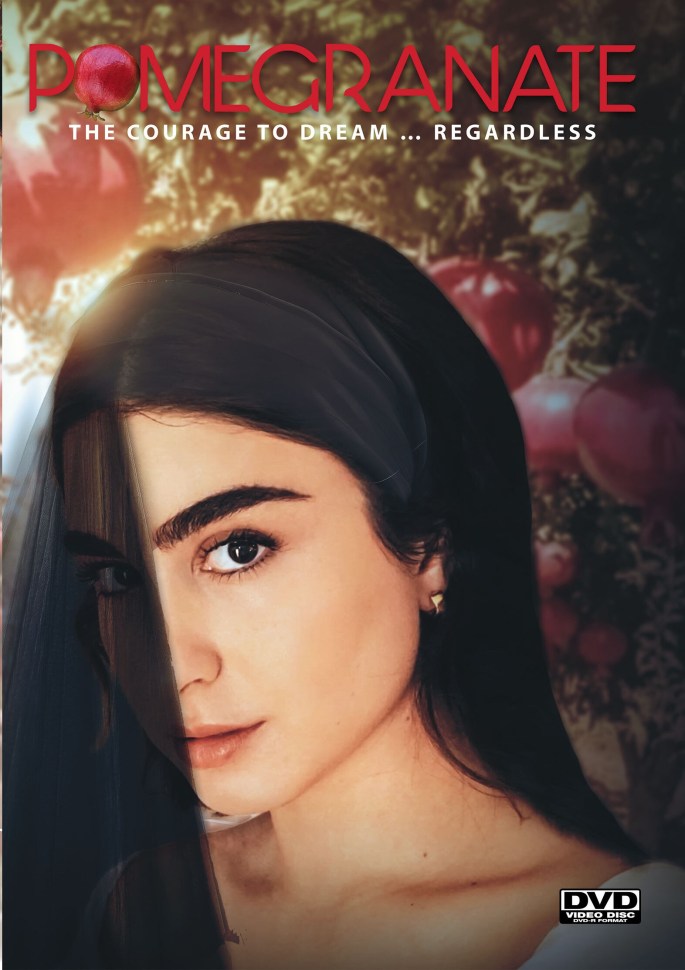
Pomegranate at the United States Naval Academy

A few weeks ago, my film Pomegranate was shown in a class at the United States Naval Academy as part of their engagement series. The film has been screened in many places, but this particular experience left a profound impact on me, not only because of the thoughtful questions and discussions that followed but also because of one student—a young woman with Palestinian roots who interviewed me afterward.

A Shared Mission to Change the Narrative

Our interview began with the usual questions about the film’s themes and creative process, but it quickly turned into a deeply personal conversation that extended far beyond the allotted time. She spoke about her desire to change the narrative surrounding the Arab world, to break down barriers and dispel the negativity that often dominates the discourse. I realized how much we had in common—not just in our aspirations but in the struggles we’ve faced as women of Middle Eastern backgrounds trying to tell stories that challenge stereotypes.

Both of us were deeply affected by the events of October 7. Beyond the violence, we felt the weight of stereotypes we’ve worked so hard to dispel being reinforced and amplified. It’s disheartening to see how much of the Arab-American experience is overshadowed by narratives that don’t represent us. Those who don’t share mainstream views are often silenced, left to endure images and stories that perpetuate division rather than understanding.

The Stories They Don’t Want You to Hear

When I think about my time in Ramallah many years ago, I don’t recall the conflict as much as I remember the warmth of the people, the humor, the hospitality in every home, and the love that flowed freely between neighbors. I even remember the playful flirting between handsome Israeli soldiers at checkpoints and beautiful Palestinians—a moment of humanity in the midst of tension.

These are the stories people don’t want to hear, the ones that don’t fit the divisive narratives. They don’t make headlines because they don’t serve the agendas of those who profit from conflict. And unfortunately, even within our own communities, there are challenges. Whether it’s extremists canceling a book talk about Pomegranate or others refusing to support a screening because the film promotes the idea of women making choices, it’s clear that some are more invested in controlling narratives than fostering dialogue.

But for every roadblock, there’s someone like that young woman at the Naval Academy, whose passion and praise for the film reminded me why I do what I do. She called Pomegranate a beautiful and courageous movie, and applauded me for the work. Her words stayed with me long after our conversation ended yesterday.

Embracing the Positive Feedback

For decades, I’ve faced pressures from all sides. Non-Middle Easterners have encouraged me to write stories that “sell,” focusing on sensational topics like honor killings. Meanwhile, some Middle Easterners have expected me to mask our stories, pretending that our issues don’t exist. Neither approach has served us.

Instead, I’ve chosen to focus on the beauty and authenticity of our stories, and the feedback I’ve received from audiences, such as for Pomegranate, has been overwhelmingly affirming.

From non-Middle Eastern viewers:

  • “This is a genius movie.”
  • Pomegranate is a very courageous and timely production.”
  • “I was on the edge of my seat throughout the entire film. The comedic relief was done perfectly and didn’t take away from the seriousness of the story.”
  • “This was a strong movie, with strong characters.”

From Middle Eastern viewers:

  • “I liked the way you brought the sensitive topics in an open-ended and elegant way. It wasn’t how other Arabic movies try to politicize such topics.”
  • “The story was perfect. The characters were perfect. The cinematography was perfect. The editing was perfect. The music was perfect. Everything was different. Don’t change any of the team in part two.”

Moving Forward

If Pomegranate has resonated with even one person, like that young woman at the Naval Academy, then it’s all worth it. For her and for others who have commended the film, I will continue to tell stories that celebrate the humanity, love, and resilience of our communities.

The journey isn’t easy, but it’s necessary. In a world that often seeks to divide, I’ll keep focusing on the beauty and complexity of our shared experiences, breaking down barriers one story at a time.

Pomegranate, which has won over 40 international awards, is streaming in 25 countries. You can click here to find out where to watch it
Women Reshaping Middle Eastern Narratives: Pomegranate

March is Women’s History Month—a time to celebrate the achievements, resilience, and creativity of women around the world. This year, International Women’s Day (March 8) feels particularly inspiring as it coincides with the recent release to 25 countries of Pomegranate, a groundbreaking film that hit theaters on March 4. The film is not just a cinematic masterpiece; it’s a bold statement about women reclaiming and redefining Middle Eastern narratives.

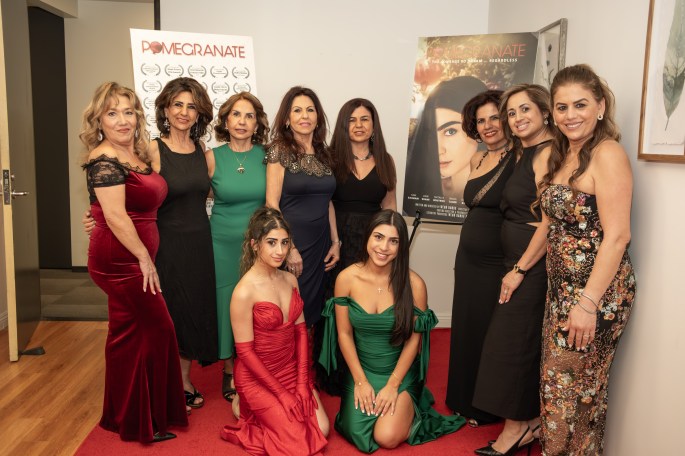
Before its wide release, Pomegranate had its exclusive premiere in Los Angeles on February 27, bringing together cast, crew, and supporters for a night of celebration. As someone who attended the premiere, I was struck by the energy in the room—a shared excitement for a film that promises to transform how Middle Eastern women’s stories are told. From the red carpet to the post-screening discussions, it was clear that Pomegranate is much more than a movie—it’s an inspiring movement.

At its core, Pomegranate is a story that centers women’s voices, their struggles, and their triumphs. The film explores themes of identity, resilience, and the power of storytelling. In an industry—and a world—that often sidelines women’s perspectives, especially in Middle Eastern contexts, Pomegranate breaks barriers by putting women at the forefront.

Click below to see where you can watch the film in 25 countries!

The Power of Representation

The Middle East has long been portrayed through a narrow lens in global media, often shaped by stereotypes that fail to capture the region’s rich diversity and complexity. Pomegranate challenges these depictions by offering a story rooted in authenticity, told through the eyes of women who refuse to be silenced.

The film is not only a celebration of Middle Eastern culture but also a reminder of the universal struggles women face and overcome. By focusing on female protagonists navigating personal and societal challenges, Pomegranate humanizes their experiences in a way that resonates across borders.

Why Pomegranate Matters

Released during Women’s History Month, Pomegranate is a timely reminder of the importance of women’s voices in shaping cultural narratives. The film’s release on March 4 is symbolic—it ties into a month dedicated to honoring women’s contributions throughout history, while also urging us to reflect on the work that still needs to be done for gender equality.

International Women’s Day, celebrated today, reminds us of the global fight for women’s rights and representation. Pomegranate amplifies this message by showcasing how women can redefine the stories told about them—and by them.

A Call to Action

The release of Pomegranate is more than just a cinematic event; it’s a call to support women storytellers and creators. As audiences, we have the power to shape what stories are told by choosing what we watch, share, and celebrate. Films like Pomegranate remind us that representation matters—and that when women take control of their narratives, the world listens.

This Women’s History Month, let’s celebrate the women who are changing the face of storytelling. Let’s amplify their voices, honor their stories, and continue pushing for a future where every woman’s perspective is valued.

If you haven’t yet seen Pomegranate, make it a priority this month. It’s more than a film—it’s a movement.

Happy International Women’s Day!

Pomegranate: A Dream Realized

After ten years of dreaming, creating, and persevering, my feature film Pomegranate will finally be released on March 4th to audiences across 25 countries. This is not just a release—it is the realization of a vision that has grown and transformed over a decade. Pomegranate is a story of identity, resilience, and cultural connection, brought to life through the voices of women, and I couldn’t be more grateful to share it with the world.

As I reflect on this journey, I am reminded of the wisdom held in the changing seasons.

Winter is the season of stillness, a time when the earth rests beneath its frost-covered blanket. It is the quiet between breaths, a sacred pause where we are invited to retreat inward and reflect on the landscapes of our lives. What have you built with your hands and heart?

Winter is the keeper of wisdom, asking us to take stock of what we have planted and nurtured—what has bloomed, what has withered, and what awaits the kiss of spring’s warmth to awaken. It is a time to cradle your accomplishments gently, to honor the path you’ve walked, and to ready yourself for the season of renewal that lies ahead.

In this quiet season, may you find beauty in the stillness, peace in the shadows, and love in the sanctuary of your soul. May you emerge from winter’s dreamscape into the golden light of spring, renewed and alive with all that you have become. Stand where you are, take in the horizon, and know that from this place, anything is possible.

As Pomegranate makes its way into the world, I carry with me the lessons of the seasons—of patience, of resilience, and of the endless potential for new beginnings.

With heartfelt gratitude,
Weam Namou

(Pomegranate will be released on March 4th in 25 countries. Stay tuned for updates and screening details!)

Official Audiobook Release of Pomegranate is Today!

We are thrilled to announce that the Pomegranate audiobook is now LIVE on Audible.com! Sandy, the Narrator, and I, the Author, worked very hard with all our hearts to make this project come to life and available for your enjoyment.

Listening to a book is a different experience than reading one. Hearing the story animates its characters and events. It activates the imagination in even more ways than reading with the eyes, soaking up the text and its nuances more effortlessly. If you think about how old storytelling is, it makes sense! The printing press was only invented just over 580 years ago, but humans have been verbally sharing stories verbally around the fire and the kitchen table for the majority of our existence.

This story has made a strong impression on people. It’s funny, it’s real, and it asks important questions. To give you an idea, our first audiobook reviewer said that it was like gaining access as though “a portal into a community.” The reviewer goes on:

About the book: This book was surprisingly fun. The story progresses quickly, and covers a lot of cultural territory. Some of the details were shocking to me, in a good way. The story veraciously captures the struggle between an individual will and cultural expectations. There were a few things that I did not understand, but the galloping tempo prevented me from getting hung up there.

About the narration: I was nervous at first, as the forward was a little stiff. But within a few minutes of Chapter 1, I knew I could relax and be carried away into the story. The humor in the work is extracted beautifully. The anger is captured precisely. The protagonist’s struggle to find and express her voice makes its way deep into the voice of the narrator in an amazing way. It’s clear that the narrator has “felt these emotions, felt these stories herself”. As a result, she delivers them earnestly. The narrator does a wonderful job remaining consistent between each character voice, which makes tracking dialogue effortless. I am very impressed.

We think it’s worth your time to explore Pomegranate, whether with the audio, ebook or print version!

The neat thing is that if you aren’t an Audible.com member yet, you can get the audiobook for FREE with a 30 day Audible trial.

Just CLICK HERE TO GO TO AUDIBLE, start the trial process, and get the Pomegranate audiobook!

And, if you do decide to explore Pomegranate, we would love and appreciate if you could leave an honest review.

By the way, if you’d like to learn more about the movie, Pomegranate, which is currently in post-production, you can check it out here: https://pomegranatemovie.com/