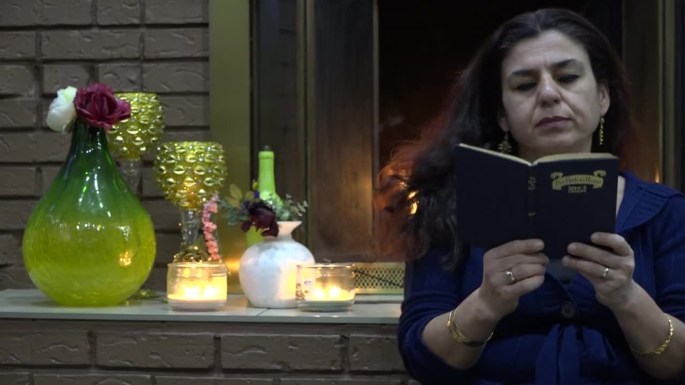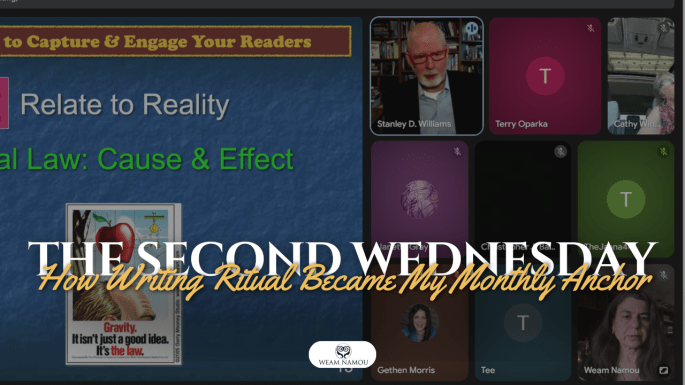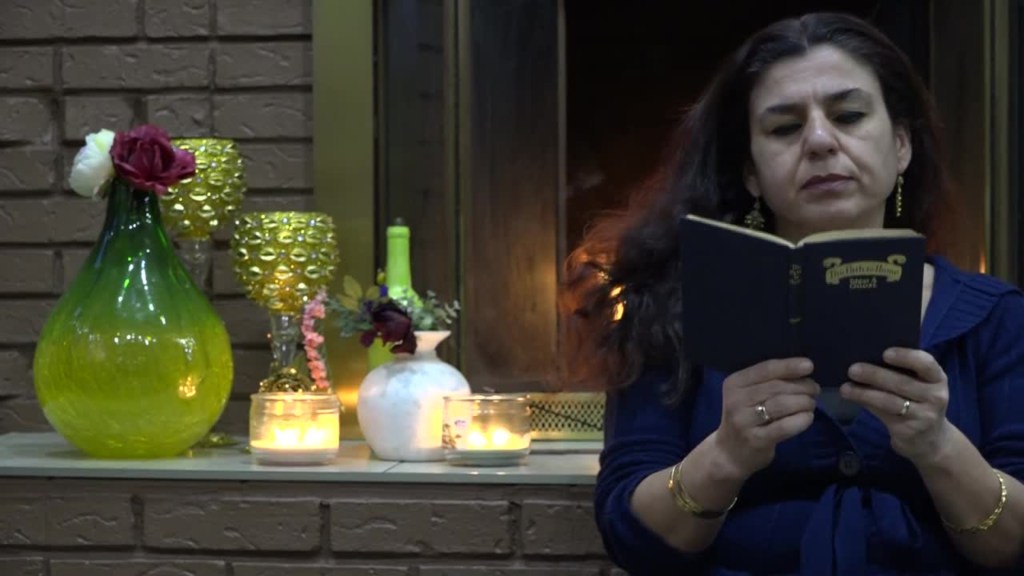
The Second Wednesday: How Writing Ritual Became My Monthly Anchor

I used to think that discipline meant forcing myself to write every single day, no matter what. That if I missed a day, I was failing. That real writers didn’t struggle with motivation or doubt.

Then I became a mother. Then I started juggling multiple projects. Then life happened in all the ways life happens, and I realized something important: discipline isn’t about perfection. It’s about showing up when you can and creating rituals that keep you tethered to your purpose.

That’s how my Writing Ritual was born, and over the years, it grew to where I started sharing it with others.

Every second Wednesday of the month, from 11 AM to 12 PM EST, writers from all over gather online for an hour. Not to critique manuscripts or workshop scenes. Just to breathe. To remember why we started this in the first place. To set intentions and remind ourselves that we’re not alone in this work.

And thanks to the Authors Guild, it’s completely free.

How It Started

In 2018, I became an Authors Guild ambassador when the organization launched its regional chapter initiative. The Authors Guild is the nation’s oldest and largest writing organizationโ€”they fight for copyright protections, provide legal support for contract reviews and disputes, and offer professional resources and community for writers across the country

The regional chapter program aimed to create supportive local communities for writers in cities like Detroit, Chicago, Cleveland, Philadelphia, and Seattle. As the Detroit ambassador, I wanted to create something that felt personal. Something that honored what I saw writers needing most: consistency, encouragement, and a space to just be.

One day, I was brainstorming with the Authors Guild’s Manager of Regional Chapters. I mentioned that I’d been running workshops focused on intention-setting and creative practiceโ€”rituals that helped writers reconnect with their voice and vision.

She said, “Why don’t you turn it into a monthly online meeting?”

That conversation became Writing Ritual.

What Happens in Writing Ritual

Writing Ritual is an hour-long virtual gathering. We don’t workshop. We don’t critique. We focus on the practice of writingโ€”the mindset, the discipline, the ritual of showing up even when it’s hard.

Each month, we explore themes like setting clear intentions for your writing, overcoming creative blocks, building sustainable habits, and honoring your voice when the world tells you to conform.

It’s a space to pause. To reflect. To ask yourself, Why am I doing this? What story am I trying to tell? What am I afraid of?

And to hear other writers ask the same questions.

Why This Matters to Me

Writing can be so isolating. You sit alone with your thoughts, your doubts, your ideas. You wonder if anyone will care about what you’re creating. You question whether you’re good enough, whether it’s worth it, whether you should keep going.

I’ve been there. I still go there sometimes.

But what I’ve learned over the years is that community changes everything. Not a community that judges or competes, but one that simply witnesses. That says, I see you. I’m here too. Keep going.

Over the years, I’ve watched writers join hesitantlyโ€”unsure if it’s “for them”โ€”only to become regulars who protect this hour fiercely. They tell me it keeps them grounded. That it helps them remember their purpose when everything else feels chaotic.

One writer told me, โ€œThis hour every month brings me back to why I even started writing โ€” it reminds me that my stories matter.โ€

That’s what I hoped for when we started.

My Own Struggle with Ritual

I’ll be honest. There have been months where I almost canceled Writing Ritual. Where I thought, I’m too busy. I have too much on my plate. Maybe people won’t notice if I skip this month.

But then I’d show up. And so would they. And I’d remember why I created this in the first place.

Because I need it too.

I need the reminder that writing isn’t just about productivity or publishing. It’s about staying connected to the part of myself that has something to say. The part that believes stories matter.

Writing Ritual has become my anchor. The one thing that, no matter what else is happening, reminds me to slow down and remember why I started this work.

If You’re Looking for This

If you’re a writer who feels scattered, overwhelmed, or disconnected from your purposeโ€”Writing Ritual is for you.

If you’ve been meaning to start that project but keep putting it offโ€”this is for you.

If you just want an hour each month where you’re not alone in this workโ€”this is for you.

We meet every second Wednesday of the month from 11 AM to 12 PM EST. It’s free. You don’t have to be an Authors Guild member to attend, though I highly recommend joining if you’re serious about your writing career.

A Final Thought

For more than 20 years, I’ve shared my work through books, workshops, retreats, seminars, and personal consultations. I love helping writers and creatives develop their voice, strengthen their craft, and bring their unique vision into the world.

Writing Ritual is an extension of that missionโ€”a space where writers can gather, set intentions, and support each other in this beautiful, challenging work we’ve chosen.

I hope you’ll join us.

To learn more about my work and offerings, visit weamnamou.com/services 

Weam

Returning to Sacred Ground: Remembering My Teacher Lynn Andrews

There are places that hold memory. Not just in photographs or stories, but in the land itself. In the soil, the air, the way the light falls at dusk.

This past fall, I returned to one of those places. Lynn Andrews’ home in Arizona.

Lynn was my teacher. The woman who helped me find my voice again when I thought I’d lost it forever.

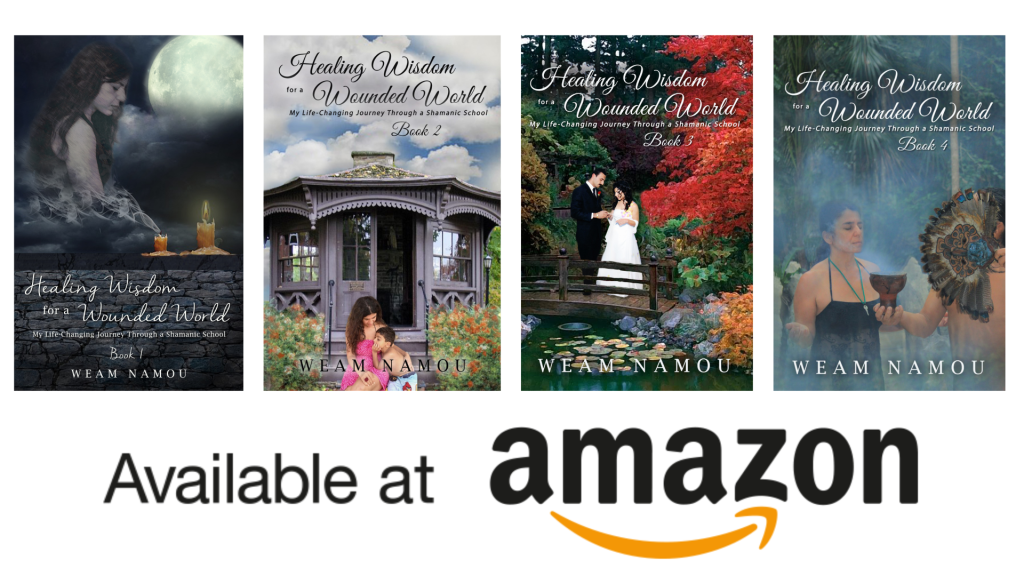
Years ago, struggling with writer’s block, juggling motherhood and the weight of watching my birth country torn apart by war, I picked up her book Writing Spirit. One phone call to ask for literary advice turned into four years in her shamanic Mystery School, a journey that would transform everything. I’ve written about this experience in my four-part memoir series, Healing Wisdom for a Wounded World, because Lynn’s teachings didn’t just help me write again. They helped me live again.

Lynn passed away two years ago, but her legacy lives on. Her daughter, Vanessa, now carries forward her mother’s work, honoring the wisdom that has touched so many lives across the world.

The Teacher I Never Expected to Find

Lynn V. Andrews was a New York Times bestselling author who wrote 21 books chronicling her three decades of study with shaman healers on four continents. Her journey began in the 1970s when she traveled to northern Canada seeking a sacred marriage basket and encountered Agnes Whistling Elk and Ruby Plenty Chiefs, Native American healers who would become her teachers and change the course of her life.

What started as a quest for an artifact became a spiritual awakening, one she shared with the world through her Medicine Woman Series. In books like Medicine Woman, Jaguar Woman, and Star Woman, she chronicled her experiences with the Sisterhood of the Shields, 44 women healers from cultures across the globe, from Panama to Nepal to Australia.

For thousands of years, these women have practiced, guarded, and handed down sacred feminine teachings from shaman to apprentice, mother to daughter. The Sisterhood remained hidden, appointing Lynn as their public messenger.

When I read her books for the first time, I recognized something in them. A truth I’d been searching for without knowing it.

A School Without Walls

In 1993, Lynn founded what she called “The Way of the Wolf,” a four-year Mystery School without walls. She created this program so that people around the world could access these ancient teachings without leaving their homes, without uprooting their lives.

I was one of those students.

When I joined the Mystery School, I thought I was signing up to heal my writer’s block. I had no idea I was about to confront wounds I didn’t even know I carried, wounds from my childhood in Iraq, from the trauma of war, from trying to fit into a culture that didn’t fully understand where I came from.

The school taught me how to see energy. How to heal the blocks within myself. How to remember who I was beneath all the conditioning and fear.

Lynn used to say, “Everyone has indigenousness in them, not just Native Americans.” She believed that ancient wisdom lives in all of us, across every culture and continent. That we are all keepers of Earth and memory. As a Chaldean woman carrying 5,000 years of Mesopotamian heritage, her words gave me permission to honor my own ancestral roots, to see that my story, too, was sacred.

Under the Arizona Sky

When our group arrived at Lynn’s home this fall, I felt her presence everywhere. In the red rocks. In the vast Arizona sky. In the quiet spaces between words.

We gathered under the stars one of the nights. Lying on the earth, looking up at the endless expanse of sky, I felt something shift. The desert has a way of stripping everything unnecessary away. Out there, under those stars, there was no room for pretense. Only truth.

I thought about all the times Lynn had told us: “You are not separate from the Earth. You are her daughter.”

Lying there, I understood what she meant. The land was holding us. The way a mother holds her child.

Vanessa, Lynn’s daughter, now tends to this sacred space, shedding light on the work her mother began, keeping the teachings alive for those who seek them. Watching her honor her mother’s legacy reminded me of the responsibility we all carry to pass on what we’ve learned, whether through books, teachings, or simply the way we live our lives.

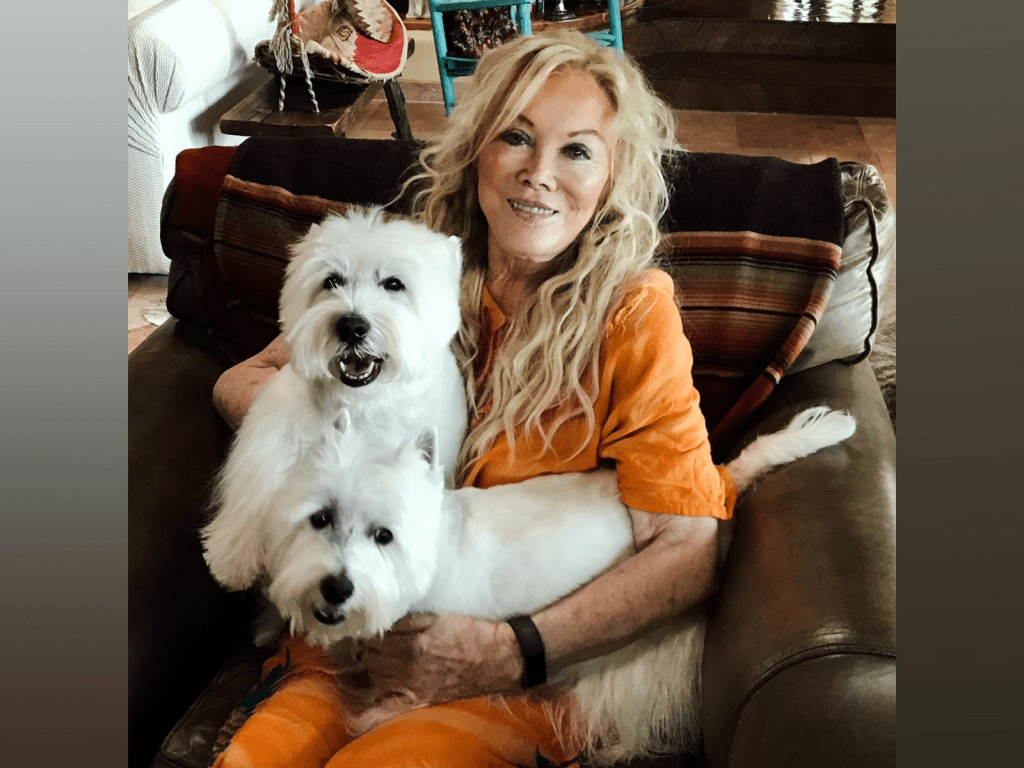
With Vanessa, Lynn’s Daughter, During Our Visit to Arizona

Honoring Her Legacy

I’m now creating a documentary about Lynn’s teachings called Indigenous Wisdom: Keepers of the Ancient Ways. Part of it will be filmed at her home, weaving together her voice, her legacy, and the global reach of her message.

Because Lynn’s work was never meant to stay in one place. It was meant to travel, like seeds on the wind, landing wherever hearts were ready to receive it.

The documentary will honor not just Lynn’s journey with Agnes Whistling Elk, Ruby Plenty Chiefs, and the other teachers she wrote about in books like Crystal Woman: Sisters of the Dreamtime and Windhorse Woman, but also the universal truth she taught: that sacred feminine wisdom exists in every culture. That we all carry ancestral knowledge. That healing ourselves heals the world.

What the Journey Taught Me

Visiting Lynn’s home again reminded me of something I often forget in the rush of daily life: sacred spaces hold us, even when we’re not physically there.

The teachings I received in her Mystery School didn’t end when I graduated. They live in me. In how I write. In how I parent. In how I show up in the world.

Over the years, I’ve learned that healing isn’t linear. That we return to the same lessons again and again, each time at a deeper level. That transformation isn’t about becoming someone new. It’s about remembering who we’ve always been.

Standing in the place where Lynn lived, where she prayed, where she gathered women from around the world to remember their power, I felt the full weight of that gift.

For Those Who Are Seeking

If you’re curious about Lynn’s teachings, I encourage you to explore her work. Her books are available both in print and as ebooks, and her school continues to welcome new students.

There are also gatherings held throughout the year, like the Spring Gathering in Michigan, where students and apprentices come together to continue the work.

For me, writing my memoir series Healing Wisdom for a Wounded World was my way of honoring Lynn and sharing what her teachings did for my life. If any part of this resonates with you, I’d love for you to explore that journey with me.

A Final Thought

As I left Arizona, I looked back at the land one last time. The red rocks. The wide sky. The quiet that holds everything.

Lynn used to say, “The Earth is always speaking. We just have to remember how to listen.”

I’m still learning how to listen. But I know now that sacred ground doesn’t just exist in faraway places. It exists wherever we choose to remember. Wherever we choose to return. Wherever we choose to honor what came before us and what will come after.

Thank you, Lynn. For the teachings. For the courage. For showing me and so many others the way home.

CRANBROOK – WHEN THE UNIVERSE REDIRECTS YOU

This week, I found myself back at Cranbrook House and Gardens for the 125th anniversary celebration of Detroit Working Writers. Walking through those familiar rooms stirred up memories I hadn’t thought about in years.

Cranbrook holds a special place in my story, though not in the way I originally imagined. Years ago, I trained to become a docent there. I was drawn to the estate’s beauty, the carefully preserved history, the stories embedded in every room. I thought this was where I was meant to be.

But the universe had other plans.

When Things Don’t Click

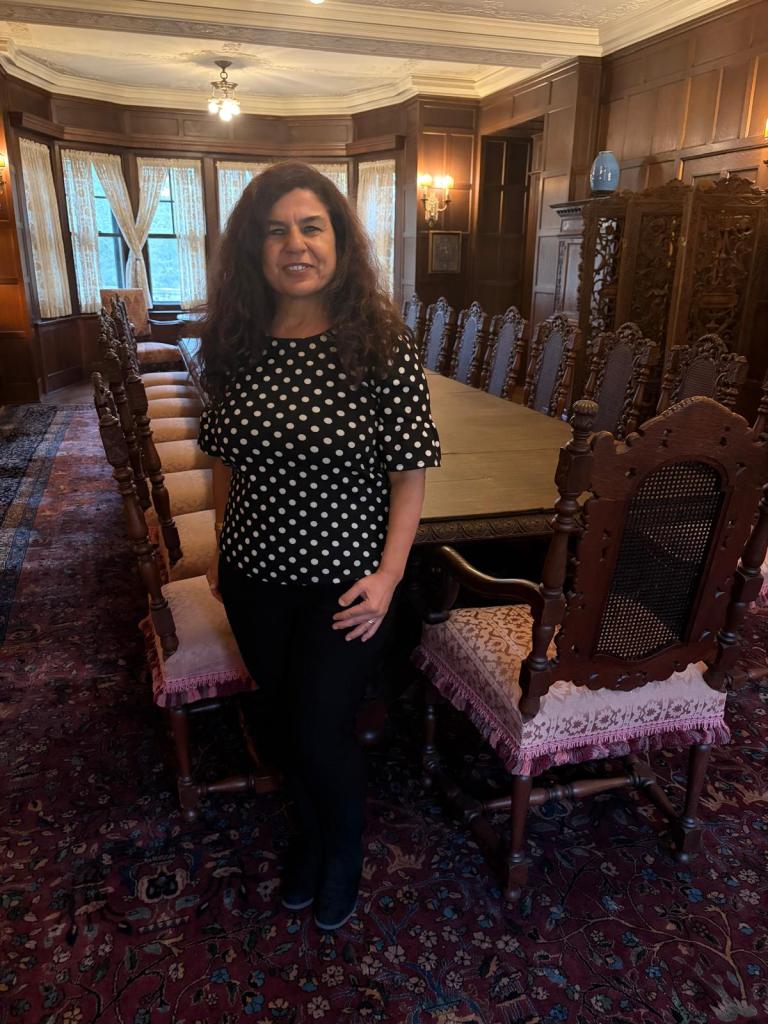
During the docent training, we were each assigned a room to memorize. Every week, we’d practice presenting as if we were actual docents, working toward that official role. I remember standing in the dining room, trying to absorb every detail, every story, every piece of furniture.

Here’s what I wrote about that experience in Little Baghdad, Chapter 17:

“As I envisioned the meals that took place around the dining table, I heard the docent explain that we were each assigned a script with a room to memorize for the next meeting. Each week, we’d play docent as a means to attaining true docent status. Fear crept in. I don’t retain information very well unless the topic truly matters to me. Otherwise, I tend to freeze. And lo and behold, that was exactly what happened when I stood there in the center of puzzled looks from the rest of the docents-in-training, unable to recall anything about the dining room except that the maid spilt soup on one of the sons and Mrs. Booth’s silverware had ‘Nelly’ etched on the reverse of each of the pieces, the name that her family called her. This reminded me of Nelly Olson in Little House on the Prairie.

That night, walking to my car in the cold quiet winter night, I reflected on the house. โ€ฆ By the time my feet reached my car, I’d made up my mind. I can’t do this.”

I felt embarrassed. Disappointed in myself. I’m usually good at retaining information, at learning new things. Why was this so hard? What was wrong with me?

I never became a docent at Cranbrook.

Then Everything Changed

Not long after that experience, I became the Executive Director of the Chaldean Cultural Center and Museum.

And suddenly, everything that had been difficult at Cranbrook became effortless.

The history of my people, the artifacts, the stories of ancient Mesopotamia, the journey of the Chaldean community. I absorbed it all naturally. I could speak about our culture, our contributions to civilization, our struggles and triumphs without needing to memorize scripts. It just flowed.

This wasn’t about capability or intelligence. It was about calling.

The Spiritual Lesson

When I talk about spirituality, this is what I mean. It’s not always about rituals or meditation, though those have their place. Sometimes spirituality shows up in the simple recognition of where you belong versus where you’re trying to force yourself to fit.

At Cranbrook, I was pushing. At the Chaldean Museum, I was flowing.

That’s the difference between being in alignment and being out of alignment. Your body knows. Your spirit knows. Even when your mind is still trying to convince you that you should make it work.

The struggle I experienced at Cranbrook wasn’t failure. It was guidance. The universe was redirecting me, saying, “Not this path. Keep looking. Your purpose is waiting somewhere else.”

Nothing is Wasted

Looking back now, I see how that experience prepared me in ways I didn’t understand at the time. The docent training taught me about preservation, about honoring history, about the importance of telling stories with care and accuracy.

I used all of that at the Chaldean Museum. I just used it for my own people, my own culture, my own calling.

Nothing is ever wasted. Every detour teaches us something. Every closed door points us toward the one that’s meant to open.

Coming Full Circle

Standing in Cranbrook House this week, years after that difficult realization in the cold parking lot, I felt grateful. Grateful that I listened to that inner voice telling me I didn’t belong there. Grateful that I didn’t force myself to keep going just to prove I could do it.

If I had become a Cranbrook docent, I might never have stepped fully into my role at the Chaldean Cultural Center. I might never have dedicated myself so completely to preserving and sharing the stories of my ancestors.

Sometimes the things that don’t work out are the biggest blessings.

A Message for You

If you’re struggling right now in a place where you thought you belonged, pay attention. Not all struggle is meant to be pushed through. Some struggle is a message.

Ask yourself: Am I struggling because I’m growing, or am I struggling because I’m in the wrong place?

Growth struggle feels hard but purposeful. Misalignment struggle feels hard and hollow.

Trust that inner knowing. Trust that if something isn’t clicking, maybe it’s because something better is waiting. Something that will feel like coming home instead of trying to belong.

Your calling isn’t something you have to force. When you find it, you’ll know. Not because it’s easy, but because even when it’s hard, it feels right.

The universe is always guiding us. Sometimes through open doors. Sometimes through closed ones.

Both are blessings.

Reconnect with Nature: Chaldean Insights for Today

This article, written by me, was first published by Words of the Earth as “Adopt a Mindset of Service” on May 15, 2025: Link to the original article.

As a Chaldean, or Neo-Babylonian, I am inspired by my ancestors, who made extraordinary contributions to civilization. From inventing the wheel and developing agriculture to recording the first writer in historyโ€“a princess and priestess named Enheduannaโ€“Chaldeans laid the foundations of human progress. They were astronomers who studied the stars to understand their place in the universe and believed in using their gifts in service to others. This ethos of service and ingenuity offers valuable guidance for living sustainably today.

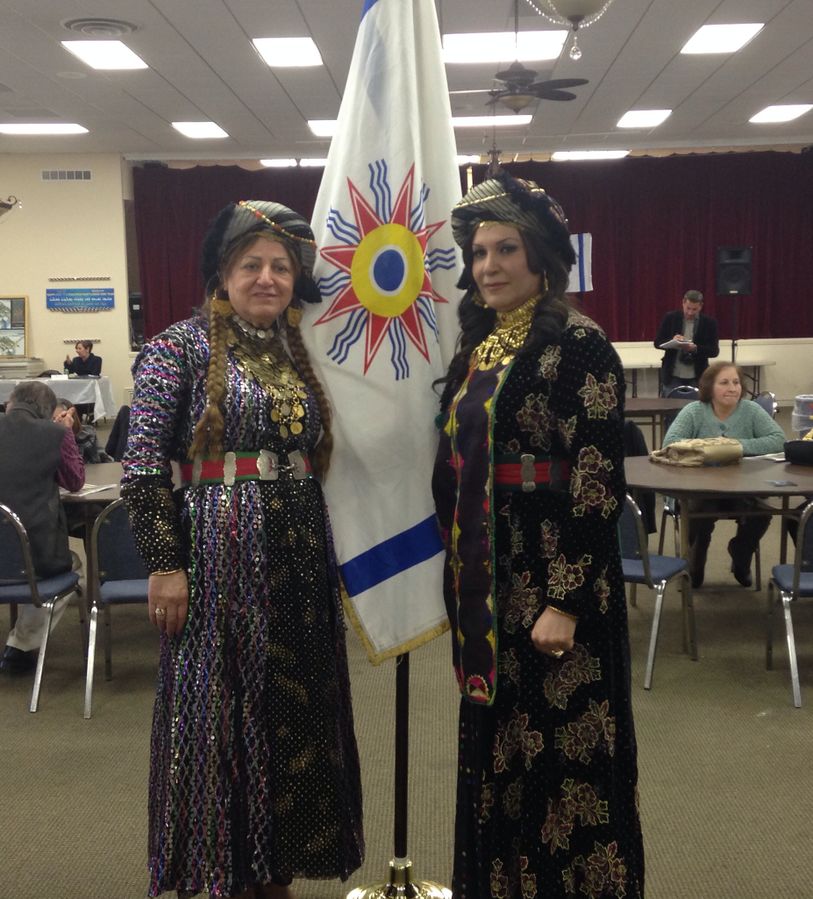
I took a picture of these women during an Akitu Festival at St. Joseph Chaldean Church

Like Native Americans, Chaldeans had a deep respect for nature and understood the interconnectedness of all life. They lived in harmony with the Earth, recognizing that survival depended on balance and reciprocity. Their world also fostered a greater balance between male and female energies, with men and women working together for the higher good. Revisiting these ancient values, alongside modern methods, can teach us how to live more sustainably. Hereโ€™s how their wisdom, and my own experiences, influence my approach to sustainability:

Adopt a Mindset of Service: My ancestors saw service as a fundamental duty, believing every action impacts the greater whole. Sustainability begins with this mindsetโ€“reducing waste, conserving resources, and contributing to the planetโ€™s well-being.

Reconnect with Nature: As agricultural pioneers, they understood the importance of working with the land. Planting gardens, supporting local farmers, and eating seasonally are simple ways to honor this connection while reducing our footprint.

Innovate Simply: Mesopotamians invented tools like the wheel and irrigation systems. Today, we can prioritize energy-efficient solutions, reduce consumption, and creatively repurpose resourcesโ€“practices that blend innovation and simplicity.

Embrace Interconnectedness: Astronomers by nature, my ancestors viewed the universe as an interconnected whole. Likewise, sustainability requires recognizing that every choiceโ€“what we buy, how we eat, how we travelโ€“affects the Earth.

Share Stories and Knowledge: Enheduanna, the first recorded writer, reminds us of the power of storytelling. Sharing knowledge creates awareness and inspires others to embrace sustainable practices.

The Chaldeans rebuilt after immense challenges, demonstrating resilience and adaptability. They did so by blending ancient wisdom with modern practices to create a sustainable world rooted in balance, service, and respect for the Earth.

Reignite Your Writing Spirit at the Half-Day AG Writing Retreat

On Saturday, May 3rd, Iโ€™ll return to the Colombiere Conference and Retreat Centerโ€”a place that has been a sanctuary for me and so many others over the years. Itโ€™s where I once led a yearly Path of Consciousness Spiritual and Writing Retreat, a space where creativity and spirituality intertwined, offering clarity and healing. During the pandemic, like many of us, I had to pause those gatherings.

Now, Iโ€™m returning as an Authors Guild ambassador, hosting a half-day writing workshop, and I couldnโ€™t be more excited to step back into this serene setting. Iโ€™ll be teaming up with Gethen Christine Morris, a fellow graduate of Lynn Andrewsโ€™ School of Sacred Arts, to create a meaningful and inspiring experience for writers.

Over the years, Iโ€™ve learned that writing is far more than the act of putting words on a page. Itโ€™s a journey inward, a dialogue with the self, and a way to make sense of the world around us. Writing has been my constant companion, something Iโ€™ve leaned on in solitude as Iโ€™ve navigated lifeโ€™s challenges and joysโ€”such as being hospitalized for COVID, losing my mother, witnessing my children grow into themselves, filming my first feature narrative, Pomegranate, and experiencing the ups and downs of marriage and other close relationships with family and friends. Each of these moments, whether filled with pain or celebration, has found its way onto the page, helping me process, heal, and grow.

When writers gather, something beautiful happens. We share not only our techniques and stories but also our fears, our doubts, and our triumphs. Thereโ€™s a strength and energy that forms in the company of like-minded souls, an understanding that goes beyond words. Writing can be isolating, but it doesnโ€™t have to be lonely. In community, we find encouragement, inspiration, and the gentle nudge we sometimes need to keep going.

Iโ€™ve also learned that creativity flourishes when we give it spaceโ€”when we take time for reflection, movement, and stillness. Some of my best ideas have come not while I was staring at a screen but while walking in nature, journaling after a yoga session, or simply sitting quietly. This is what makes gatherings like this retreat so special. They remind us to slow down, to breathe, and to let the creative process unfold naturally.

At the retreat, weโ€™ll spend time writing, reflecting, and being present with ourselves and each other. Gethen will lead us in yoga and meditation, and Iโ€™ll guide a writing workshop to help participants tap into their stories and creative potential. There will also be time to walk the beautiful grounds of Colombiere, to connect with nature, and to let inspiration flow.

But more than the schedule, what I hope this retreat offers is an opportunity to pause and reconnectโ€”with your creativity, your goals, and your inner voice. Writing is a powerful tool for transformation, not just for the stories we tell but for the lives we live.

If youโ€™re feeling stuck, uninspired, or simply in need of a reset, I encourage you to make time for yourself. Whether itโ€™s through this retreat or another way, give yourself the gift of stepping away from the busyness of life to reflect, recharge, and rediscover your creative spirit.

Iโ€™m looking forward to this retreatโ€”not just as a leader but as someone who loves learning and growing alongside others. Every time I work with a group of writers, I walk away feeling inspired by their courage, creativity, and commitment to their craft.

If this resonates with you, Iโ€™d love for you to join us. Letโ€™s come together to reignite our creative spirits and continue this incredible journey of writing and self-discovery.

Click here to learn more!

Click here to RSVP. Thereโ€™s no fee, but space is limited, and registration is required.

Where Writing Began: My Chaldean Heritage and Storytelling Journey

Writing is more than the simple act of putting pen to paperโ€”it is a lifeline, a sanctuary, and a means of resistance against forgetting. It began in my birthplace, Iraq, the cradle of civilization, where ancient Mesopotamian culturesโ€”including the Chaldeansโ€”helped shape history by developing one of humanityโ€™s most profound tools: the written word.

I was honored to reflect on this legacy in the inspiring article, “Why Are You Passionate About Paper & Forest Products?” ๐ŸŒฟโœจ The feature gave me the opportunity to share how deeply my Chaldean roots have shaped my passion for storytelling and preserving history.

The Chaldeans are among the earliest contributors to the written word, a tradition we have carried through millennia. My ancestors, who still speak Aramaicโ€”the language of Jesusโ€”used writing as a means to create, document, and inspire. The first recorded writer in history, Enheduanna, was a Mesopotamian princess, priestess, and poet, whose words continue to echo across time.

As a Chaldean-American, I consider writing both a gift and a responsibility. It is a legacy I proudly carry forward, creating stories that honor my heritage and ensure the voices of my people are remembered.


The Power of Writing: A Personal Reflection

In the article, I contributed to the section Cultural Heritage and the Power of Writing, where I shared how my peopleโ€™s groundbreaking invention of writing has shaped my lifeโ€™s work. Hereโ€™s an excerpt (click here for the article):

โ€œOver the centuries, empires and adversaries have tried to erase us, yet we preserved our identity through the written word. Even as recently as 2014, extremists sought to destroy the artifacts and written records of my people. Despite these threats, our stories endure because of the resilience of writing as a medium. Paper became more than a tool; it became a sanctuary, a means of peace and resistance against forgetting. The simple act of putting pen to paper is a way to honor those who came before me and ensure that their voices are not silenced.โ€

These words remind me of the fragility of memory and the vital role writing plays in preserving history, especially for the Chaldean people. When ISIS destroyed ancestral villages and cultural artifacts in northern Iraq, I felt a deep urgency to document our stories. Writing became my way of ensuring that the history, struggles, and triumphs of my people would not be forgotten.


The Beautiful History of the Chaldeans

The Chaldeans have a rich and vibrant history that dates back to ancient Mesopotamia. Known as one of the earliest civilizations, the Chaldeans contributed significantly to the development of writing, astronomy, and mathematics. Their legacy of innovation and resilience continues to inspire me today.

Even as our communities have faced displacement and destruction throughout history, weโ€™ve held onto our traditions, language, and culture. Writing has been a cornerstone of this survival. Whether inscribed on clay tablets or recorded on paper, it has allowed us to preserve our identity for future generations.

As an author and filmmaker, I strive to honor this history by creating stories that reflect the strength and beauty of my people. Through storytelling, I hope to shed light on the struggles weโ€™ve overcome and the contributions weโ€™ve made to the world.


Read More

In addition to reflecting on my cultural connection to writing, the article highlights other perspectives from leaders in the paper and forest products industry. Itโ€™s a fascinating read that explores sustainability, innovation, and the role of paper in everyday life.

If youโ€™re interested in learning more about my journey and the stories of other contributors, check out the full article here: Why Are You Passionate About Paper & Forest Products?

My passion for writing has been the driving force behind much of my lifeโ€™s work. It has led me to write 20 books and thousands of articles, earn an Eric Hoffer Book Award, and write, direct, and produce two feature films, which together have won over 50 international film awards. Iโ€™ve also held numerous leadership roles that have allowed me to advocate for storytelling, heritage, and cultural preservation on a larger scale.

These accomplishments are more than milestonesโ€”they are part of my mission to honor my ancestors’ resilience and ensure their voices endure for generations. You can learn more about my journey in my four-part memoir series on Lynn V. Andrews’ mysticism school, which transformed my life as a woman, wife, mother, and author, and deepened my connection to my ancient roots.

Thank you for taking the time to read about my passion for writing and the cultural heritage that inspires it. Iโ€™d love to hear your thoughtsโ€”what role does writing play in your life?

https://www.amazon.com/dp/B078MK8HZZ

Spiritual Insights: Exploring the Chaldean-Kabbalah Connection

Last year, during an interview with Daniel Rosenstein, I discovered an intriguing connection between our shared interests and cultural histories. Danielโ€™s mother was born in Baghdad, and she, like many others, had to leave in 1948 due to the Farhud Exodus. Our conversation opened the door to a fascinating exploration of the Chaldeans and their overlooked legacy.

Daniel revealed that he had learned about the Chaldeans in his studies but, like many, was unaware that this ancient community still exists today. As a Chaldean myself, this was a powerful reminder of how important it is to share our history and keep our stories alive.

What made our discussion even more compelling was the connection Daniel made between the Chaldeans and the Kabbalah. He sent me several resources that delve into the relationship between the ancient Chaldean traditions and the mystical Jewish teachings of the Kabbalah. These connections shed light on overlapping histories, spiritual philosophies, and shared wisdom that transcend time and geography.

Here are some key insights, inspired by the resources Daniel shared:

1. The Chaldeans and Their Legacy

Known for their contributions to astronomy, mathematics, and spirituality, the Chaldeans flourished in Mesopotamia (modern-day Iraq) between 612 and 539 BCE. They were instrumental in shaping early civilization and left their mark on various cultures, including the Jewish people during the Babylonian Exile. Source

2. Chaldean Influence on the Kabbalah

The Kabbalah, often referred to as the mystical or esoteric side of Judaism, shares many concepts rooted in Chaldean spirituality. The Chaldean Kabbalah, according to some scholars, was a precursor to the Jewish Kabbalah, blending astrology, numerology, and divine symbolism. Source

3. Theosophy and the Chaldean Mystical Tradition

H.P. Blavatsky, a founder of Theosophy, wrote extensively about the Chaldean Kabbalah. She described it as a key to understanding the hidden wisdom of the ancients, connecting it to the broader spiritual traditions of the East. Source

4. Numerology: A Shared Language of Mysticism

Both Chaldean and Kabbalistic systems emphasize numerology as a means of understanding the divine order of the universe. These philosophies reveal how numbers hold symbolic power and can guide spiritual growth. Source

5. The Origins of Kabbalah in Pagan Mysticism

Some argue that the origins of Kabbalah can be traced back to ancient pagan practices, including Chaldean magic and mysticism. This perspective emphasizes the interconnectedness of spiritual traditions across cultures. Source

6. Modern Perspectives on Kabbalah

Even today, the Kabbalah continues to evolve, and its historical ties to the Chaldeans remain a topic of interest for scholars and spiritual seekers alike. Source

Personal Reflections

As a Chaldean, an award-winning author, and a spiritual guide, Iโ€™ve dedicated much of my life to exploring the intersections of faith, culture, and self-empowerment. My journey has included deep work within the Chaldean community, as well as studies at a Shamanic school under the guidance of my teacher, Lynn Andrews.

Through this work, Iโ€™ve learned the importance of understanding and harnessing energy, embracing silence, and building a strong connection with intuition. These lessons resonate with the wisdom found in both Chaldean and Kabbalistic traditions, highlighting the universal truths that connect us all.

If youโ€™re interested in exploring these themes further or seeking guidance, I invite you to take a step further into your own spiritual journey. If this resonates with you, Iโ€™d love for you to join me at a truly transformative event:

Unlock the Gateway to Spiritual Opulence & Self-Love!

Fear is simply a way of keeping you asleep. To awaken, you must move out of fear and into love. Fear keeps you in ego, while love brings you closer to your true essence. Gratefulness is keyโ€”it opens your heart and connects you to your inner truth.

Do you want to be truly shielded? Then embrace vulnerability. Vulnerability is your greatest shield because it requires dropping the ego and stepping into your authentic self.

As Lynn V. Andrews says:

โ€œSelf Love and Spiritual Opulence.โ€

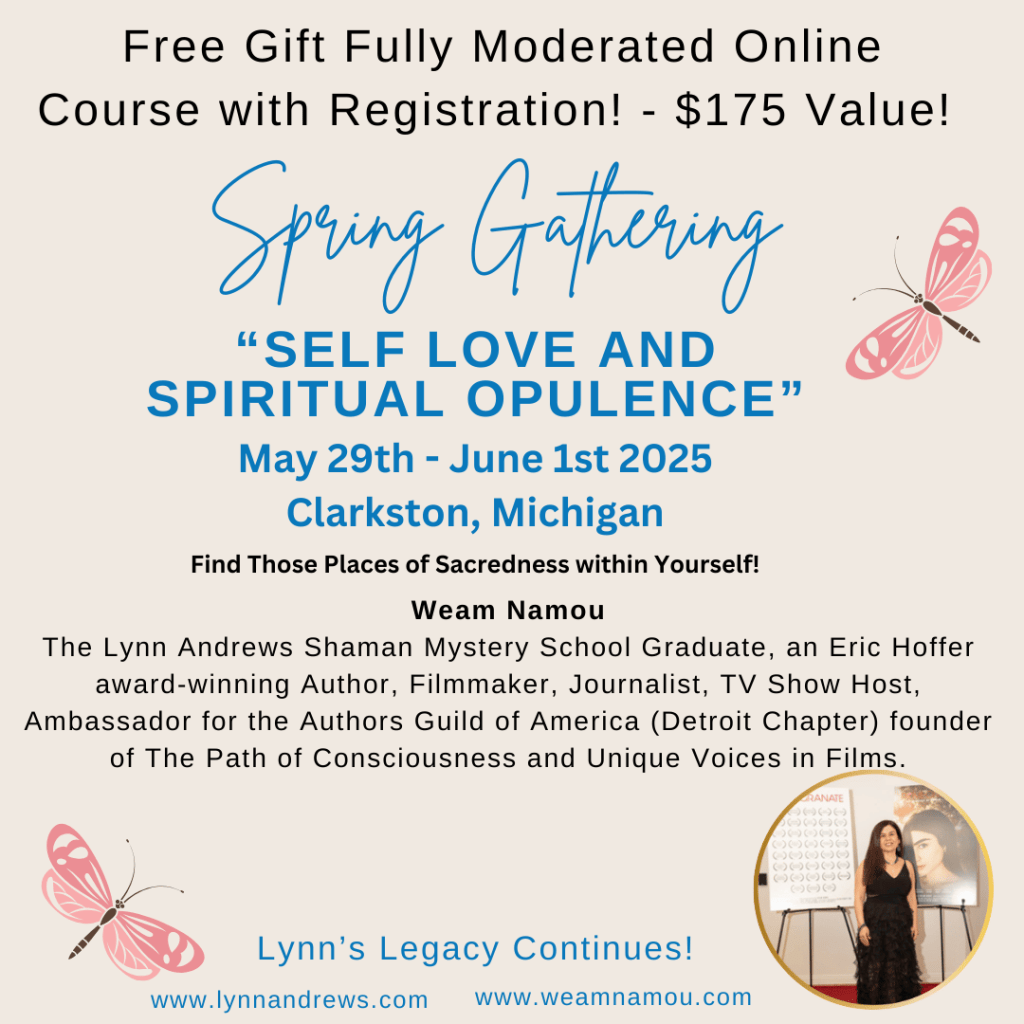
Join us at Lynn Andrews Productions’ Spring Gathering 2025
When: May 29th – June 1st, 2025
Where: Clarkston, Michigan

Embark on this transformative journey with me, Weam Namou, a graduate of The Lynn Andrews Shaman Mystery School, Eric Hoffer award-winning author, filmmaker, journalist, TV show host, and founder of The Path of Consciousness and Unique Voices in Films.

Letโ€™s honor Lynnโ€™s legacy together, and unlock the pathways to love, spiritual opulence, and self-discovery.


To learn more, visit this link https://lynnandrews.com/pages/spring-gathering-2025-in-michigan-details

Sharing My Chaldean American Story at the Charles H. Wright Museum of African American History

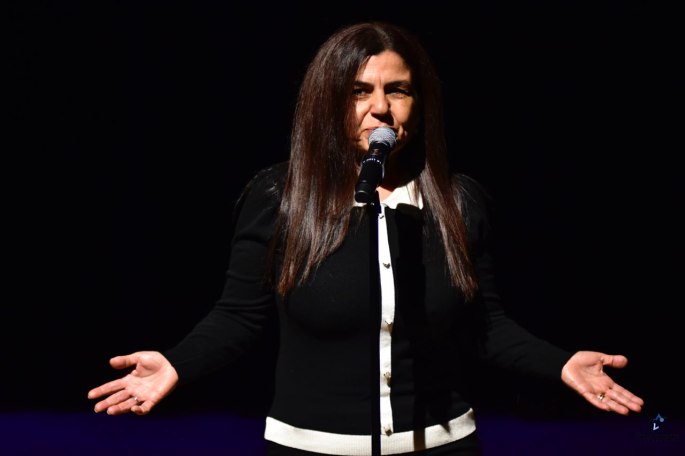
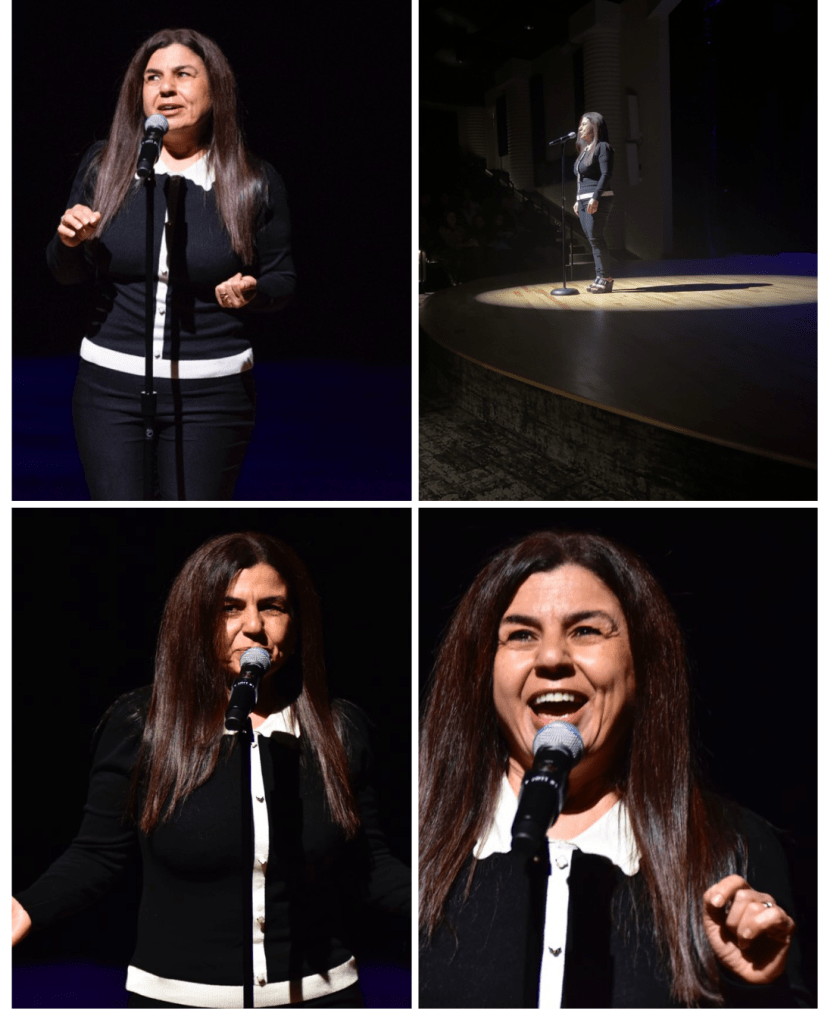
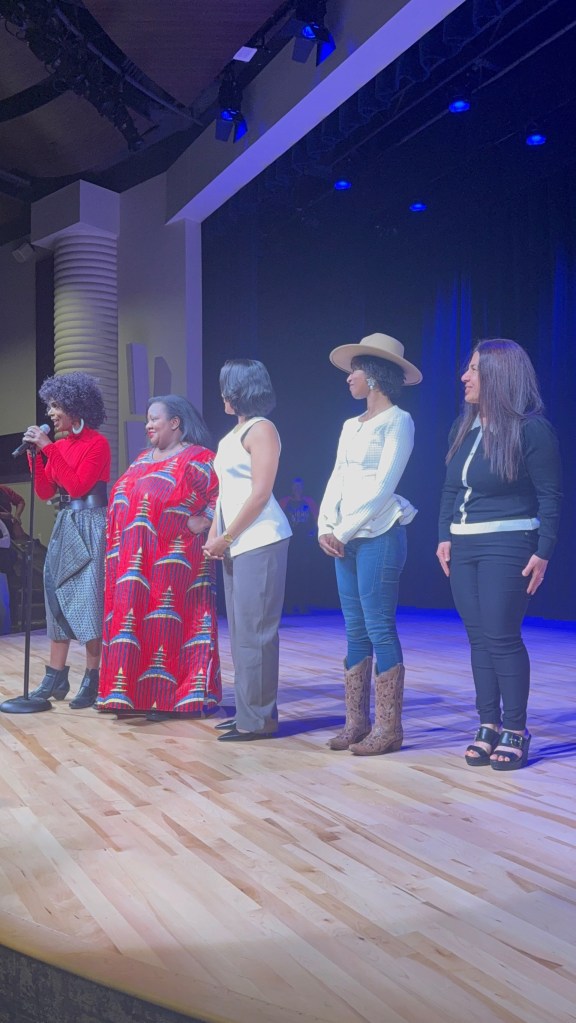
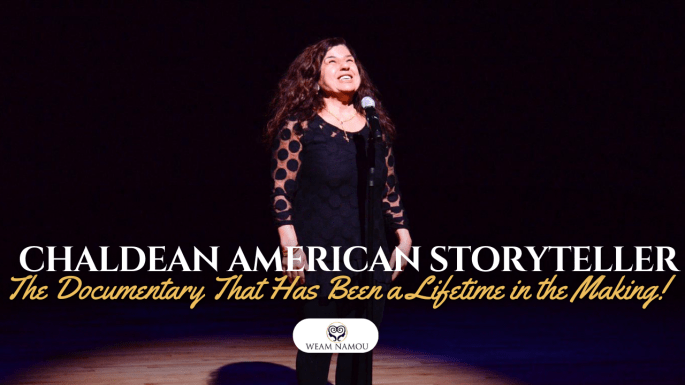
On March 21, 2025, I stood on the stage of the Charles H. Wright Museum of African American History, ready to share my story as part of The Secret Society of Twisted Storytellers (TSSOTS). This event, hosted by the visionary Satori Shakoor, was a powerful celebration of Womenโ€™s History Month. It was an evening of courage, vulnerability, and connection, where stories from diverse backgrounds came alive in front of an audience that was nothing short of extraordinary.

I brought my Chaldean American story to the stage, sharing what it was like to grow up in Iraq. I spoke about the day my school principal slapped me so hard for missing one of Saddam Husseinโ€™s parades that I passed out. That slap wasnโ€™t just a moment of physical painโ€”it was a symbol of the fear and oppression that permeated life in my homeland. It also marked the beginning of my journey toward reclaiming my voice and my power.

At one point, as I spoke about my mother and emotions overwhelmed me, I had to pause. The audience didnโ€™t just sit silentlyโ€”they held me in that moment. One woman later told me that she wanted to leave her seat, come on stage, and hug me. I felt everyoneโ€™s support, their unspoken hugs wrapping around me as I gathered myself and continued.

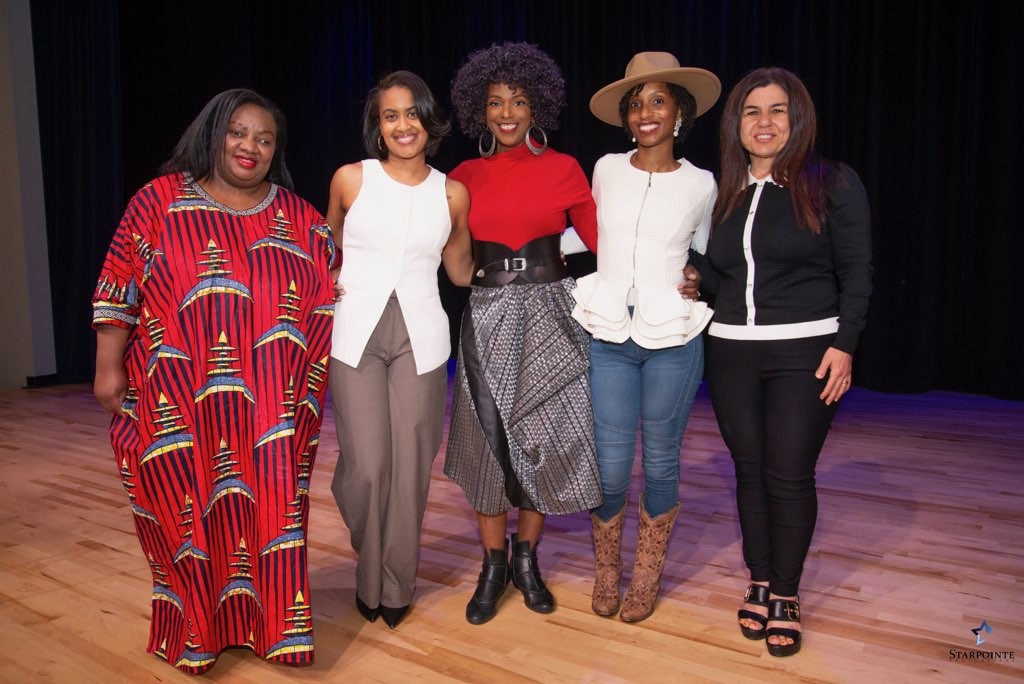
The evening wasnโ€™t just about my story, though. It was about the collective power of storytelling. I was honored to share the stage with three phenomenal women:

  • Ciera Estelle, who spoke about her journey from advocating for a bullied classmate as a young girl to becoming an educator who teaches the importance of speaking up. Her message was a powerful reminder that silence can make us complicit in injustice.
  • Tuyishime Claire Gasmgera, who offered a unique perspective on feminism from her experiences in Rwanda. She challenged Western ideas of feminism, advocating for a broader definition that empowers women to make their own choices, whether thatโ€™s activism or caring for their families. In her case, she went from hating being in the kitchen to loving it!
  • Faith Brown, whose heart-wrenching story left no one in the room untouched. As the author of The Monster that Killed His Family Twice: The Faith Green Story, she shared the unimaginable tragedy of losing her four children to her husbandโ€™s violence. Her strength was a testament to the resilience of the human spirit.

Together, we shared stories that transcended cultures and continents, united by themes of resilience and transformation.

An Extraordinary Audience

The audience that night was unlike any Iโ€™ve ever encountered. They werenโ€™t just watchingโ€”they were with me, every step of the way. Their attentiveness, their warmth, and their energy created a space where I felt safe to share even the most vulnerable parts of my story.

After the event, many came up to me to express their support. Some hugged me, others shared their own reflections, and one woman said, โ€œI felt every word you spoke.โ€ It was humbling to see how my story resonated, and it reminded me of the profound connection that storytelling can create.

The Power of Listening

What made this night truly special wasnโ€™t just the storiesโ€”it was the way the audience listened. Listening is an art form, and when itโ€™s done with intention and an open heart, it can transform both the storyteller and the listener.

Satori Shakoor opened the evening by reminding the audience of their vital role: to listen. โ€œYou have the most important job tonight,โ€ she said. And she was right. Too often, people are so focused on preparing their response that they miss the essence of whatโ€™s being shared. But that night, the audience listened with their hearts, creating a space where stories could unfold in their rawest, most authentic form.

Satoriโ€™s Vision and the Magic of TSSOTS

This is the magic of The Secret Society of Twisted Storytellers. Founded in 2012 by Satori Shakoor, TSSOTS is rooted in one of humanityโ€™s oldest and most intimate traditions: the oral art of storytelling. What began in a 45-seat performance space in downtown Detroit has grown into a global phenomenon, with standing-room-only audiences at venues like The Marygrove Theater and the Charles H. Wright Museum of African American History.

Satori herself is a powerhouse. Her warmth, wisdom, and passion for storytelling have transformed countless lives. Beyond her work with TSSOTS, sheโ€™s also a talented artist and storyteller with an upcoming film project, Confessions of a Menopausal Femme Fatale, that promises to be as impactful as her live events. Her vision is simple yet profound: to use storytelling as a tool for healing, connection, and transformation.

As I left the stage, I carried with me the love and support of everyone in that room. Of course, I shared my story behind Pomegranate, which, as a result of healing, I was able to accomplish. The beautiful part is that after all the encouragement and support Iโ€™ve been given by others, the icing on the cake is being able to pass it forwardโ€”through my work and simply by being me.

To learn more about The Secret Society of Twisted Storytellers or to attend future events, visit www.twistedtellers.org.

To learn more about Pomegranate, visit:

Pomegranate at the United States Naval Academy

A few weeks ago, my film Pomegranate was shown in a class at the United States Naval Academy as part of their engagement series. The film has been screened in many places, but this particular experience left a profound impact on me, not only because of the thoughtful questions and discussions that followed but also because of one studentโ€”a young woman with Palestinian roots who interviewed me afterward.

A Shared Mission to Change the Narrative

Our interview began with the usual questions about the filmโ€™s themes and creative process, but it quickly turned into a deeply personal conversation that extended far beyond the allotted time. She spoke about her desire to change the narrative surrounding the Arab world, to break down barriers and dispel the negativity that often dominates the discourse. I realized how much we had in commonโ€”not just in our aspirations but in the struggles weโ€™ve faced as women of Middle Eastern backgrounds trying to tell stories that challenge stereotypes.

Both of us were deeply affected by the events of October 7. Beyond the violence, we felt the weight of stereotypes weโ€™ve worked so hard to dispel being reinforced and amplified. Itโ€™s disheartening to see how much of the Arab-American experience is overshadowed by narratives that donโ€™t represent us. Those who donโ€™t share mainstream views are often silenced, left to endure images and stories that perpetuate division rather than understanding.

The Stories They Donโ€™t Want You to Hear

When I think about my time in Ramallah many years ago, I donโ€™t recall the conflict as much as I remember the warmth of the people, the humor, the hospitality in every home, and the love that flowed freely between neighbors. I even remember the playful flirting between handsome Israeli soldiers at checkpoints and beautiful Palestiniansโ€”a moment of humanity in the midst of tension.

These are the stories people donโ€™t want to hear, the ones that donโ€™t fit the divisive narratives. They donโ€™t make headlines because they donโ€™t serve the agendas of those who profit from conflict. And unfortunately, even within our own communities, there are challenges. Whether itโ€™s extremists canceling a book talk about Pomegranate or others refusing to support a screening because the film promotes the idea of women making choices, itโ€™s clear that some are more invested in controlling narratives than fostering dialogue.

But for every roadblock, thereโ€™s someone like that young woman at the Naval Academy, whose passion and praise for the film reminded me why I do what I do. She called Pomegranate a beautiful and courageous movie, and applauded me for the work. Her words stayed with me long after our conversation ended yesterday.

Embracing the Positive Feedback

For decades, Iโ€™ve faced pressures from all sides. Non-Middle Easterners have encouraged me to write stories that โ€œsell,โ€ focusing on sensational topics like honor killings. Meanwhile, some Middle Easterners have expected me to mask our stories, pretending that our issues donโ€™t exist. Neither approach has served us.

Instead, Iโ€™ve chosen to focus on the beauty and authenticity of our stories, and the feedback Iโ€™ve received from audiences, such as for Pomegranate, has been overwhelmingly affirming.

From non-Middle Eastern viewers:

  • โ€œThis is a genius movie.โ€
  • โ€œPomegranate is a very courageous and timely production.โ€
  • โ€œI was on the edge of my seat throughout the entire film. The comedic relief was done perfectly and didnโ€™t take away from the seriousness of the story.โ€
  • โ€œThis was a strong movie, with strong characters.โ€

From Middle Eastern viewers:

  • โ€œI liked the way you brought the sensitive topics in an open-ended and elegant way. It wasnโ€™t how other Arabic movies try to politicize such topics.โ€
  • โ€œThe story was perfect. The characters were perfect. The cinematography was perfect. The editing was perfect. The music was perfect. Everything was different. Donโ€™t change any of the team in part two.โ€

Moving Forward

If Pomegranate has resonated with even one person, like that young woman at the Naval Academy, then itโ€™s all worth it. For her and for others who have commended the film, I will continue to tell stories that celebrate the humanity, love, and resilience of our communities.

The journey isnโ€™t easy, but itโ€™s necessary. In a world that often seeks to divide, Iโ€™ll keep focusing on the beauty and complexity of our shared experiences, breaking down barriers one story at a time.

Pomegranate, which has won over 40 international awards, is streaming in 25 countries. You can click here to find out where to watch it

Living Tribal in a Democracy

โ€œYouโ€™ve moved away from each other. Youโ€™ve torn apart your families, disassembled your smaller communities in favor of huge cities. In these big cities, there are more people, but fewer โ€˜tribesโ€™, groups, or clans where members see their responsibility as including the responsibility for the whole. So, in effect, you have no elders. None at armโ€™s reach in any event.โ€

Neal Donald Walsh

I grew up dismissing the value of what my ancestry had to offer me, which was overshadowed by a patriarchal system that defines women from that point of view.  I was influenced by a young and modern generation that assumed they had life figured out, and as a result, tended to ignore the older generationโ€™s way of thinking.

But shortly after I became a mother, things changed. I began searching into my personal genealogy and quickly became fascinated by what I discovered about my ancestorsโ€™ cultural identity, my โ€œtribeโ€ whose tribal ways date back thousands of years. Within a decade, I awoke to answers Iโ€™d been looking for: Who am I?  Who are my people? I already knew where I came from – Iraq, but the physical distance between that place and myself and the human misery associated with it, kept me from truly understanding and appreciating its ancient history, culture, and language.

My mother and I

My research shed light on my people, the Chaldeans, an indigenous Aramaic-speaking group whose lineage dates back to ancient Mesopotamia, and it shifted my views. In television and movies, tribal lifestyles are stereotyped as backwards or romanticized as mysterious and belonging to uncontacted tribes. I soon realized that if not documented, the rewarding side of this ancient tradition will be wasted. So in 2007, I began filming a documentary that included interviews and archival footage. I  interviewed my mother, sisters, nieces, cousins, and uncleโ€™s wives about how it feels, as women, to live tribally in a democracy. They shared their perspectives, how, despite their assimilation to the westerner lifestyle, they continue to be connected to their instinctual tribal ways that most people repress in civilized life. They embodied an East-West wisdom that we are all in need of today. I called the documentary Living Tribal in a Democracy. 

Over a decade has passed since I began the documentary. Between raising my children, working on various creative projects, and caring for my elderly mother who lived with us, I worked on it sporadically. After my mother passed away in February 2019, I screened and discussed a ten-minute segment of my documentary at Wayne State University at an event called Creative Many. The story received positive feedback and the organizers encouraged me to continue with the project. Thatโ€™s when I realized it was time to revisit and complete the work. The communityโ€™s cultural identity endangered, I felt it especially important to systematize the memories of its people and heritage.

This is when I realized that the story also needs to be written into a book that, similar to the documentary, explores the role that ancient Mesopotamia played in the birth of our contemporary culture. In this book, I show that, although women played a major role in building the cradle of civilization, the rulers of that region tried to destroy/hide that knowledge. This great loss has had consequences for the world. 

The book raises the following questions, which I myself, as someone living tribal in a democracy, struggled with for decades and went to great lengths to find the answers: Are tribal societies models for future societies? How can tribalism and democracy coexist? Would it do the world good to return to some of the old ways, with smaller communities, a higher regard for feminine sacredness, the family system, and the elderly? How can we learn from the ancients, who are often romanticized as warriors or noble savages and we assume live in faraway or remote lands, in the jungles of Peru or in restricted areas such as Indian reservations, and neglect to see their presence in our backyard? Are we aware they do live with us here today? What was the role of women in ancient Mesopotamia, where once upon a time, kings attributed their right to rule through their official marriage to the goddess?

My mother and her great grandson, Mateo

Some of this material became the topic of my book Mesopotamian Goddesses. The rest I bundled up in my upcoming book Little Baghdad: A Memoir About an Indigenous People in an American City, which will be published by the end of this year. As for the documentary, the completion and release of that project is still to be determined.ย  Meanwhile, itโ€™s shelved among my umpteen projects that want to bring to memory the wisdom and importance of ancient ways which revered nature, feminine sacredness, and community.ย 

Once someone asked me why I felt I needed to write so many books. I thought it was a strange question. Would someone ask a surgeon why there was a need to perform operations on a regular basis or a teacher, or any other profession? Still, I reflected on that question and realized that part of the joy in writing my stories is the self-discovery that occurs in the process. How can you connect to the power of your own lineage and discover the richness, beauty and wisdom as well as the wounds and traumas that lie there? Your lineage doesnโ€™t have to be physical heredity, but can be a spiritual lineage. Looking at your heritage will help you come to terms with and understand who you really are, what role you play in the story youโ€™re in, and how to change, if you so desire.ย 


Every month, I interview remarkable individuals on a weekly basis for the Virtual Discussion Series in partnership with Unique Voices in Films, the Chaldean Cultural Center, CMN TV and U of M [Detroit Center].

Check out my YouTube channel where you can watch the interviews live and subscribe. Be sure to set reminders/alerts so you can stay updated on Live and uploaded content.

You can also now find me on Tik Tok, where Iโ€™m letting loose and sharing morsels of my life.