How The World’s Fastest Indian Inspired My Filmmaking Journey

I’m thrilled to share that I was recently featured in Racing News’ article, 7 Lesser-Known Motorsports Documentaries That Had a Profound Impact. In this piece, I had the opportunity to discuss my love for the film The World’s Fastest Indian, which has been a deeply inspiring work for me both as a viewer and as a filmmaker.

If you haven’t seen it, The World’s Fastest Indian tells the true story of Burt Munro, a New Zealander who, in his 60s, set a land-speed record at the Bonneville Salt Flats on his modified 1920 Indian Scout motorcycle. The film, starring Sir Anthony Hopkins, is a testament to perseverance, ingenuity, and the power of following your dreams, no matter the obstacles.

Version 1.0.0

Why This Film Resonates With Me

What struck me most about The World’s Fastest Indian was Burt Munro’s determination to pursue his dream, even at an age when most people might think it’s too late. He didn’t rely on fancy equipment or unlimited resources—he simply had the confidence, grit, and ingenuity to make things happen. Watching him work tirelessly on his old, beat-up motorcycle and take it to the world stage is nothing short of inspiring.

At the time I first watched the film, I was at a place in my life where it felt like my projects were taking forever to complete. It felt as if I would never reach the finish line. But movies like this, based on true stories, remind you of what’s possible. They show you that the hardships you’re facing have been faced by others before you—and that they didn’t let those challenges stop them.

The World’s Fastest Indian humanizes the struggles of chasing a dream. It’s not just about speed or racing; it’s about creativity, perseverance, and the unwavering belief that you can achieve greatness no matter the odds.

Lessons for Filmmaking and Life

As a filmmaker, I strive to tell meaningful, authentic stories filled with love, humor, and cultural significance—stories that help audiences learn about my ancient Chaldean Iraqi community while finding universal connections. Much like Burt Munro’s story, my work often touches on the power of determination and the beauty of human connection.

What makes The World’s Fastest Indian so impactful is how it educates, entertains, and inspires all at once. It shows that you don’t need perfection or privilege to achieve something extraordinary. You just need the vision, the determination, and the confidence to see it through.

That’s a lesson I carry with me in my own work. Whether I’m navigating the challenges of independent filmmaking or sharing stories from my heritage, I remind myself that the finish line is always within reach—as long as I don’t give up.

The Power of True Stories

Films like The World’s Fastest Indian show us that the hardships we face are not unique—and that’s comforting. They remind us that perseverance is universal and that many before us have overcome similar obstacles to achieve their dreams. Stories like these help us push forward, knowing that the struggle is part of the journey.

This is the kind of storytelling I aspire to create. Whether it’s exploring the traditions of my Chaldean Iraqi community or showing the universal struggles of following a dream, I aim to craft work that feels intimate and meaningful—like sharing a meal with someone and walking away with a deeper connection.

Read More

You can read the full article where I share my thoughts on The World’s Fastest Indian and its impact on my filmmaking journey here: 7 Lesser-Known Motorsports Documentaries That Had a Profound Impact.

I’d love to hear from you—have you seen The World’s Fastest Indian? What films have inspired you to push through challenges and pursue your dreams? Let me know in the comments!

Pomegranate at the United States Naval Academy

A few weeks ago, my film Pomegranate was shown in a class at the United States Naval Academy as part of their engagement series. The film has been screened in many places, but this particular experience left a profound impact on me, not only because of the thoughtful questions and discussions that followed but also because of one student—a young woman with Palestinian roots who interviewed me afterward.

A Shared Mission to Change the Narrative

Our interview began with the usual questions about the film’s themes and creative process, but it quickly turned into a deeply personal conversation that extended far beyond the allotted time. She spoke about her desire to change the narrative surrounding the Arab world, to break down barriers and dispel the negativity that often dominates the discourse. I realized how much we had in common—not just in our aspirations but in the struggles we’ve faced as women of Middle Eastern backgrounds trying to tell stories that challenge stereotypes.

Both of us were deeply affected by the events of October 7. Beyond the violence, we felt the weight of stereotypes we’ve worked so hard to dispel being reinforced and amplified. It’s disheartening to see how much of the Arab-American experience is overshadowed by narratives that don’t represent us. Those who don’t share mainstream views are often silenced, left to endure images and stories that perpetuate division rather than understanding.

The Stories They Don’t Want You to Hear

When I think about my time in Ramallah many years ago, I don’t recall the conflict as much as I remember the warmth of the people, the humor, the hospitality in every home, and the love that flowed freely between neighbors. I even remember the playful flirting between handsome Israeli soldiers at checkpoints and beautiful Palestinians—a moment of humanity in the midst of tension.

These are the stories people don’t want to hear, the ones that don’t fit the divisive narratives. They don’t make headlines because they don’t serve the agendas of those who profit from conflict. And unfortunately, even within our own communities, there are challenges. Whether it’s extremists canceling a book talk about Pomegranate or others refusing to support a screening because the film promotes the idea of women making choices, it’s clear that some are more invested in controlling narratives than fostering dialogue.

But for every roadblock, there’s someone like that young woman at the Naval Academy, whose passion and praise for the film reminded me why I do what I do. She called Pomegranate a beautiful and courageous movie, and applauded me for the work. Her words stayed with me long after our conversation ended yesterday.

Embracing the Positive Feedback

For decades, I’ve faced pressures from all sides. Non-Middle Easterners have encouraged me to write stories that “sell,” focusing on sensational topics like honor killings. Meanwhile, some Middle Easterners have expected me to mask our stories, pretending that our issues don’t exist. Neither approach has served us.

Instead, I’ve chosen to focus on the beauty and authenticity of our stories, and the feedback I’ve received from audiences, such as for Pomegranate, has been overwhelmingly affirming.

From non-Middle Eastern viewers:

  • “This is a genius movie.”
  • Pomegranate is a very courageous and timely production.”
  • “I was on the edge of my seat throughout the entire film. The comedic relief was done perfectly and didn’t take away from the seriousness of the story.”
  • “This was a strong movie, with strong characters.”

From Middle Eastern viewers:

  • “I liked the way you brought the sensitive topics in an open-ended and elegant way. It wasn’t how other Arabic movies try to politicize such topics.”
  • “The story was perfect. The characters were perfect. The cinematography was perfect. The editing was perfect. The music was perfect. Everything was different. Don’t change any of the team in part two.”

Moving Forward

If Pomegranate has resonated with even one person, like that young woman at the Naval Academy, then it’s all worth it. For her and for others who have commended the film, I will continue to tell stories that celebrate the humanity, love, and resilience of our communities.

The journey isn’t easy, but it’s necessary. In a world that often seeks to divide, I’ll keep focusing on the beauty and complexity of our shared experiences, breaking down barriers one story at a time.

Pomegranate, which has won over 40 international awards, is streaming in 25 countries. You can click here to find out where to watch it

Women Reshaping Middle Eastern Narratives: Pomegranate

March is Women’s History Month—a time to celebrate the achievements, resilience, and creativity of women around the world. This year, International Women’s Day (March 8) feels particularly inspiring as it coincides with the recent release to 25 countries of Pomegranate, a groundbreaking film that hit theaters on March 4. The film is not just a cinematic masterpiece; it’s a bold statement about women reclaiming and redefining Middle Eastern narratives.

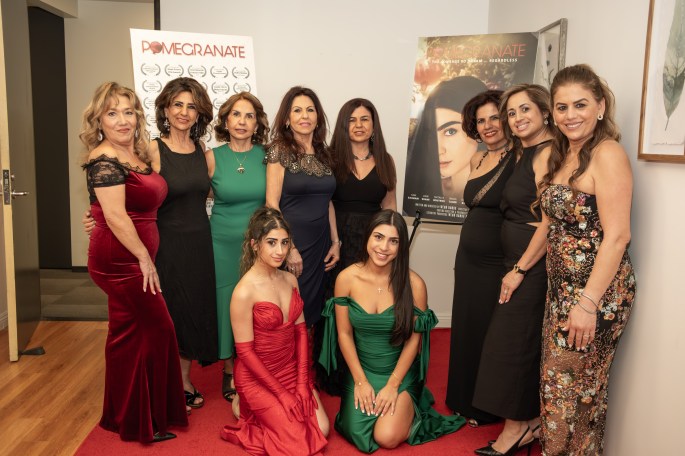
Before its wide release, Pomegranate had its exclusive premiere in Los Angeles on February 27, bringing together cast, crew, and supporters for a night of celebration. As someone who attended the premiere, I was struck by the energy in the room—a shared excitement for a film that promises to transform how Middle Eastern women’s stories are told. From the red carpet to the post-screening discussions, it was clear that Pomegranate is much more than a movie—it’s an inspiring movement.

At its core, Pomegranate is a story that centers women’s voices, their struggles, and their triumphs. The film explores themes of identity, resilience, and the power of storytelling. In an industry—and a world—that often sidelines women’s perspectives, especially in Middle Eastern contexts, Pomegranate breaks barriers by putting women at the forefront.

Click below to see where you can watch the film in 25 countries!

The Power of Representation

The Middle East has long been portrayed through a narrow lens in global media, often shaped by stereotypes that fail to capture the region’s rich diversity and complexity. Pomegranate challenges these depictions by offering a story rooted in authenticity, told through the eyes of women who refuse to be silenced.

The film is not only a celebration of Middle Eastern culture but also a reminder of the universal struggles women face and overcome. By focusing on female protagonists navigating personal and societal challenges, Pomegranate humanizes their experiences in a way that resonates across borders.

Why Pomegranate Matters

Released during Women’s History Month, Pomegranate is a timely reminder of the importance of women’s voices in shaping cultural narratives. The film’s release on March 4 is symbolic—it ties into a month dedicated to honoring women’s contributions throughout history, while also urging us to reflect on the work that still needs to be done for gender equality.

International Women’s Day, celebrated today, reminds us of the global fight for women’s rights and representation. Pomegranate amplifies this message by showcasing how women can redefine the stories told about them—and by them.

A Call to Action

The release of Pomegranate is more than just a cinematic event; it’s a call to support women storytellers and creators. As audiences, we have the power to shape what stories are told by choosing what we watch, share, and celebrate. Films like Pomegranate remind us that representation matters—and that when women take control of their narratives, the world listens.

This Women’s History Month, let’s celebrate the women who are changing the face of storytelling. Let’s amplify their voices, honor their stories, and continue pushing for a future where every woman’s perspective is valued.

If you haven’t yet seen Pomegranate, make it a priority this month. It’s more than a film—it’s a movement.

Happy International Women’s Day!

Watch Pomegranate Online Sunday – La Femme Independent Film Festival (Paris, France)

Pomegranate was chosen as an Official Selection by La Femme Independent Film Festival (Paris, France). At 7 pm PDT, they will screen it worldwide (online) on Sunday, August 20 at 7 pm PST. Viewers vote for films they like most and the winner is then screened in person in Paris, France later this year.

Click here for tickets: https://filmfreeway.com/LaFemmeIndependentFilmFestival/tickets?welcome=true

Their trusted platform Magica Cinémathèque  is an international platform and art house for the independent films based in London, Paris and Hollywood. Their audiences from all over the world, ” Europe, USA, Canada, Australia, India, China, Japan, Korea, and MENA

To date, the film has had the following awards / selections (of course, we all know there’s more to come ☺❤

* New York International Women Festival – Winner of all Categories for Best Feature Film Directed by a Woman

* Luleå International Film Festival (Sweden) (Winner – will screen in December)

* Birsamunda International Film Awards (India)- Winner for Best Actress – Sam Rahmani

* Birsamunda International Film Awards (India) – Winner for Best Feature Film on Women

*San Diego International Film Awards (Semi-Finalist)

* San Jose Independent Film Festival (Semi-Finalist)

* La Femme Independent Film Festival (Paris, France) (Official selection)

* Castle Film & Media Award (Rome, Italy) (Official Selection)

The Wonderful World of Disney

Richard Rothrock is an award-winning writer and teacher with an undying love for film, television, literature, the Indianapolis 500 and all things Disney. The author of “Sunday Nights With Walt,” he has been a great story consultant to several of my projects. Richard is a proud graduate of George Washington High School in Charleston, West Virginia and holds a Bachelor of Arts in English and Film from Oakland University and a Master of Arts from Bowling Green State University. His work has appeared in magazines, newspapers and book anthologies. 

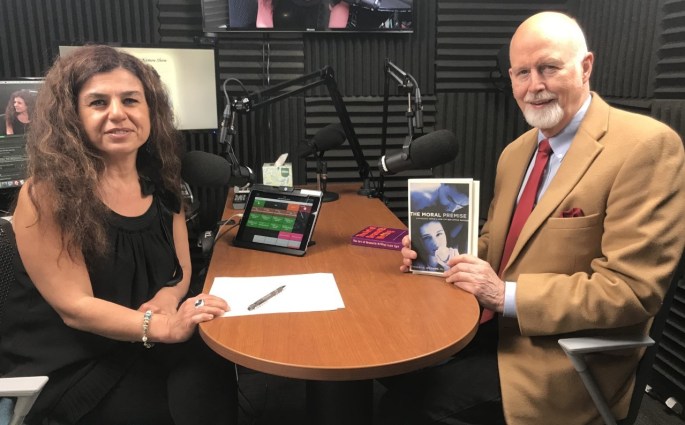
I recently interviewed Richard about his book, Sunday Nights With Walt and couldn’t get over how much he looks like Roger Ebert. In the book, Rothrock writes, “Growing up in the 1960s and 1970s, Sunday nights at my house were different from the other nights of the week. It was the only night when my mother made pizza. It was the only night of the week when we could drink soda. It was the only night of the week we could have candy for dessert. It was the only night of the week when we were allowed to eat dinner in front of the television. And the only shows we ever watched were Mutual of Omaha’s Wild Kingdom and The Wonderful World of Disney. (Mom sent us to bed as soon as Bonanza started). 

Richard’s comprehensive history of that show, in its many forms, will take you back to long-ago Sunday nights spent together with family… and Disney. He combines meticulous backstories and episode synopses with insight into how Walt’s TV show shaped American culture and how it shaped his own childhood and adolescence, gently exposing him to the wide, wonderful world outside his rural town – a world not just of Disney, but of nature, technology, history, foreign cultures, and even romance. 

Questions and Answers with Richard Rothrock: 

Is Walt Disney a personal hero of yours? Why are he and his work so
inspirational to you?
He is a hero of mine for many reasons. He was a guy with a vision. Like me, he knew
what he wanted to do at a young age and no one could talk him out of it. He wanted
to advance animation from a funny sideshow to an art form. He understood his
limitations as an artist but then hired people who complemented his talents and
abilities. Together, they did conquered animation and push it to the heights we
know today. Without him, there would be no Pixar or DreamWorks or anything.
Everything he did was built on what had come before. He tackled live action film
and was an early innovator in television. He pioneered new processes in film F/X.
He then used his knowledge of animation and moviemaking to revolutionized the
amusement park and give us Disneyland, the first modern theme park. He pioneered
the world of robotics and gave us audio-animatronics. And he was just turning his
talents and accomplishments, building on what he’d done before to help our cities
and society when he died. And all of it was designed to uplift and entertain a
worldwide audience. To build a better world and, to quote Walt, gives us “a great big
beautiful tomorrow.” And I think we need that more than ever now.

What was it like to go back and watch all the show’s episodes 50 years later?
By and large, it was fun. There were some episodes that didn’t hold up as well as I
remembered but the really great ones were just as good as before. And, being an
adult now, I picked up some new angles and incidents in them that I had missed as a
kid the first time around. The best part about this book was watching the episodes
again.

Richard Rothrock - Doesn't he look like Roger Ebert?
Were there some episodes that you could not find and wish you could have?
Yes, although I found almost all of them. I really wanted to see some past favorites
like Run, Light Buck, Run (1966) about an injured antelope adopted by a prospector.
Also Michael O’Hara the 4th (1972) about a teenaged girl who wants to be a police
officer like her dad but women “didn’t do that” back then. I wanted to see A Salute
to Alaska (1967) because it had the final introduction Walt recorded before his
death. But the biggest episodes I wanted to watch again and could not find were the
Gallegher episodes about a teenaged reporter in the 1890s. They were hugely
popular in the 1960s but have never been released on VHS or DVD. I had to rely on
my memories and whatever commentary I could find in books and on the web to
write about it.
Which episode from The Wonderful World of Disney did you enjoy the most as
a kid?
That’s easy. There were two episodes that stood out the most to the young me. The
first was Secrets of the Pirates Inn (1969) a mystery story about three friends down
on the bayou who helped an old sailor find buried treasure at the inn he just
inherited. I loved the twists and the turns in the story and how the clues led to
hidden passages and secret staircases inside the inn. And the ending had twists I
did not expect.

The other episode was The Scarecrow of Romney Marsh (1964). It starred Patrick
McGoohan as an 18th century English vicar who led a double life as a bandit named
the Scarecrow. It was a Robin Hood kind of story because the Scarecrow used the
profits from his smuggling ring to help the poor area residents pay their taxes. I
loved the chases and the daring do. There are great scenes and great performances
throughout, and the title song that opened and closed each episode was my favorite
song on the Disney show. Those were the two episodes I looked forward to the
most.

What episode did you take the most inspiration from?
Probably one that few people remember called Smoke (1970). It starred Ron
Howard in one of his last juvenile roles as a teenaged boy named Chris. He is still
trying to get over the death of his much loved father a few years back. What makes
it all worse is that his mother has remarried to a really nice guy and everyone
accepts this new stepfather but Chris. Because accepting him will mean Chris has
gotten over the loss of his father and he doesn’t want to. The episode taught me all
about the destructive power of grief and how it can make a mess of our lives if we
are not careful. I have used that lesson multiple times in my life.

How have you applied the show’s inspirations in real life?
In many ways. It taught me how to deal with bullies in school. It helped me learn
how to deal with loss and growing up. Romance. Divorce. Dealing with adults. The
show turned into a guide for when I was down and when I had doubts. I pretty
much learned all the basics of adulthood from the show and have built on that
knowledge ever since.
How did The Wonderful World of Disney affect other members of your family?
I don’t really know because we never really talked about it. I suspect Mom liked the
show because it was good, safe family entertainment so she wouldn’t have to worry
about we kids being exposed to something inappropriate. I know my sisters loved
The Scarecrow of Romney Marsh as much as I did. Being older, they were big fans of
The Mickey Mouse Club which I missed. My sister Pam loved Babes In Toyland
(1961) though I never knew why she loved it so much. She loved that movie so
much as a child that she literally wore out our copy of the soundtrack album by
playing it over and over. Now as to whether they took those lessons forward into
adulthood, I don’t know.

Richard
The Wonderful World of Disney was appointment TV for a generation. Do you
think there is anything like that for kids today?
Not in the same way. I do believe there are children and teens out there who obsess
about one show just as much as we did. What is different today is how they
consume that show. No show is ladled out anymore on a week-to-week basis. It is
binged watched non-stop online, even the children’s networks employ binge
watching. I know that Disney Channel airs marathons of Phineas & Ferb almost
every morning. Nickelodeon does hours and hours of SpongeBob SquarePants.
Cartoon Network does the same with Teen Titans. So today’s children are able to
watch their favorites all day every day in a way we could not back then. I don’t
know if that makes it “appointment TV” but it is there for the watching.

Would a show like World of Disney survive today?
I don’t think so. It was a show that tried to appeal to a wide audience. And it tried
to introduce that audience to a wide spectrum of life experiences and nature and
world cultures. Today’s shows don’t try for a wide audience. They aim for niche
audiences only interested in one thing and those niche audiences don’t seem
interested in much of anything outside of that niche.
Was there a time when you wanted to work for Disney?
Surprisingly, no. I couldn’t draw so I knew I had no chance working in animation.
And in the 1970s it seemed like the glory days of the studio had passed. I did dream
about working at one of the parks at one time but that was a long time ago.
Would you have lived in EPCOT had Walt Disney actually built it?
Yes, definitely. I loved the look of the city from the downtown to the residential
neighborhoods. I loved the idea of riding a People Mover or a Monorail wherever I
went. And the homes had the same style as the houses in The Incredibles (2004) so I
think they looked super cool. That 1960s notion of futuristic design still looks
pretty good to me.
What are you hoping your audience takes away from this project?
For the people who watched The Wonderful World of Disney every Sunday night, I
hope it brings back cherished memories and helps them reclaim and relive a special
time in their childhoods. For those who were not alive back then, I hope it helps
them better understand the importance of Walt Disney to both the entertainment
industry and how he helped shape the values of the Baby Boomer generation. And
how what he tried to instill in we children of the 1960s is still just as relevant today.

What is the enduring appeal of Disney?
There is definitely a nostalgia factor of looking back at a simpler time. However, I
think Disney’s enduring appeal is the belief in human goodness. That when things
are bad we can come together. And that there is hope for the future if we are willing
to work for it. That we again appreciate the value of science to make good progress
in our lives. We can still have “a great big beautiful tomorrow” if we want it to be.

Visit Richard’s website https://www.richardrothrock.com/

The Importance of Empowering Others

Last week, I received notice that my feature documentary, The Great American Family, won an IndieFEST international film award (Women Filmmaker category), joining the ranks of other high-profile winners of this respected award including Liam Neeson, George Clooney, Susan Sarandon, Leon Lee, and Katie Holmes. This is the same story that won a 2017 Eric Hoffer book award.

Part of my success is discipline and hard work (I worked 8 years on the documentary and 6 of those years also on the book). Another part is faith, the belief that I can and I will do what I set out to do. Another important part is service, doing something that will benefit another without expecting anything in return. And that also describes Kai Mann’s road to success.

Kai Mann4

An author, entrepreneur, and inspirationlist, Kai contacted me years ago to interview me on her show, Conversations with Kai Mann. I followed her over the years and found that her writing is both positive and with purpose. She believes that her keen ability to provoke thought, trigger change and enlighten the lives of others has catapulted her to a literary success. Whether it’s in the form of a blog post or article, Kai strives to empower and educate followers around the world about the nature of love, the importance of relationships and how these play a vital role in life.

Which brings us to the topic of why it’s important to empower and enrich others.

Geshe Michael Roach, a Tibetan monk who’s originally from Los Angeles and who graduated from Princeton with honors, shares the strategy that made him a multi-millionaire.

  1. Decide what it is that you want
  2. Find someone else who wants the same thing
  3. Help that person get what they want
  4. At the end of the day be grateful and happy for the good that you’ve done.

Michael was the first American to receive the Geshe degree at Sera Monastery in Tibet. After, his teacher instructed him to set up a business in Manhattan to help Tibetan refugees. With a loan of $50,000 and three employees, Michael started a company that ended up making $100 per year and at one point $200 million.

I believe that serving others by lifting them up, empowering them, giving them the very thing you are striving for, does help you rise as well – especially if you don’t forget to do the Number 4 step – appreciate the good you’ve done. Rather than complain about what you don’t have, provide it. Before asking an influential and busy person to help you, do something for them. If there’s blockage with your money flow, check if you owe someone money you’re avoiding to return, or ask yourself when was the last time you donated to a cause you believe in?

Spend your time creating and providing rather than complaining and criticizing. Be the source. If nothing else, you’ll be a much happier person.

To join our spiritual and writing community, check out The Path of Consciousness’ upcoming conference and retreat http://www.ThePathofConsciousness.com

To learn more about Kai Mann, visit her website https://kai-mann.com/

The Moral Premise

“Every commercially successful story, be it a movie or novel, has at its heart a true and consistent Moral Premise,” says Dr. Stan Williams. “Without this crucial element, your story is destined to fail.”

Stan is the vice president of Unique Voices in Films, a 501(C)(3) nonprofit organization, a veteran producer of hundreds of documentaries, and an active Hollywood story consultant who has worked most notably on multiple film projects with Will Smith. He’s the author of The Moral Premise: Harnessing Virtue and Vice for Box Office Success, which Will Smith considered “The most powerful tool in my new tool box.”  

“The Moral Premise is the crux of successful storytelling since Plato, 2,500 years ago,” he says. “Yes, it’s been around that long… and yes, I know, my book came out only in 2006.”

In 2006 Michael Wiese Books published Stan’s book and almost immediately he was asked to give workshops on the topic, which he has done across the country, most notably in Los Angeles and S.E. Michigan where he resides.

As a result of his book, the workshops, and the numerous motion picture projects he worked on, which have grossed over a billion dollars worldwide, and due to repeated requests, Stan created a training that’s widely and readily available to people. Through story craft training, writers are able to master their story, whether it is a novel, screenplay, or stage play. Here’s a link to learn more http://storycrafttraining.blogspot.com/

I met Stan at the Motion Picture Institute of Michigan where he taught Directing and Screenwriting classes. He always had a fresh approach to the art and craft of writing, one which helps a writer focus and get to the heart of the story. We recently worked on my feature script, Pomegranate. His eye for detail and respect for the writer’s own moral premise for the characters made the process incredibly productive and fulfilling.

Pomegranate
Working on the script Pomegranate with Stan

Stan offers one-on-one story consult, but if you’re not local, there are many other ways to learn from him. You can read his book, watch the 10 episodes of Storycraft Training (7.5 hours in 20 videos) and read over 200 of his blog posts which offer much inspiration. Stan’s appreciation for storytelling has led to an abundance of material where he talks about why stories are so important to culture, and what do stories and natural law have in common? His program covers, among many other things, the correlation between a story’s moral validity and box office receipts, the role irony plays in every aspect of a successful story, why impossibilities are necessary in every story, and how Aristotle’s 6 pillars of a great story contribute to drama and suspense.

  1. PLOT: The arrangement of events or incidents on the stage. 
  2. CHARACTER: The agents of the plot that provide the reasons for the events.
  3. THEME: The reason the playwright wrote the play.
  4. LANGUAGE: dramatic dialogue which consists of narrative and dramatic.
  5. RHYTHM: The heart of the play.
  6. SPECTACLE: Everything that is seen or heard on stage.

Stan structures his Moral Premise this way:

(Vice) leads to (defeat), but (Virtue) leads to (success).

Choosing the movie Finding Nemo as an example, he writes that Marlin is a clownfish living in the Great Barrier Reef. When tragedy leaves him a widower, with only one remaining son – Nemo – his protective instincts kick into overdrive. He’d do anything to keep Nemo from harm, but in the process he’s smothering his son. Then Nemo is taken by divers, and Marlin has to navigate an entire ocean to find his son and bring him home.

Throughout the movie, the quest to find Nemo is the external story, but the “real” story is about Marlin overcoming his fears for his son. This is seen clearly at the climax, when Nemo and Marlin are finally reunited against all odds. Within moments, however, a school of nearby fish are caught in a net, and Nemo insists he knows how to save them. Marlin has to face his worst fear – the possibility of losing his son yet again – and choose to release Nemo to swim back into danger.

The Moral Premise of the story could be expressed like this:

Overprotective anxiety leads to losing those we love, but releasing those we love leads to finding them again.

In his latest blog post, Stan talks about why he is always encouraging young screenwriters to find friends who are filmmakers to make their own films. Forget Hollywood, he writes, because getting stuff done is ultimately more satisfying that spitting into the Santa Ana Winds.

Having an insight into Hollywood, he helps writers set realistic expectations and yet also encourages them to dream big – through their own work and not through a dependence on others. He appreciates the heart of a story while in the process, ensuring that the writers entertains, challenges, uplifts this generation and the ones to come.

Stan will be doing a workshop for the upcoming Path of Consciousness spiritual and writing conference & retreat (Oct. 4-6) http://www.thepathofconsciousness.com

You can contact Stan through email at Stan@MoralPremise.com 

Unique Voices in Films Website http://www.UniqueVoicesinFilms.org