Today, I attended Palm Sunday at a Chaldean church, a community that traces its roots back to one of the oldest Christian traditions in the world. The church was alive with devotion and joy, its walls echoing with ancient prayers and hymns sung in Aramaic, the language Jesus himself spoke. It was a moving experience, immersing myself in the faith and culture of a community with such a profound connection to history.
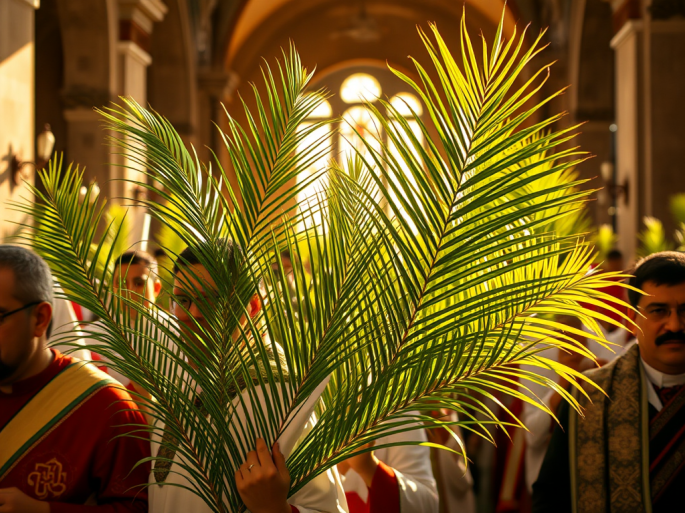
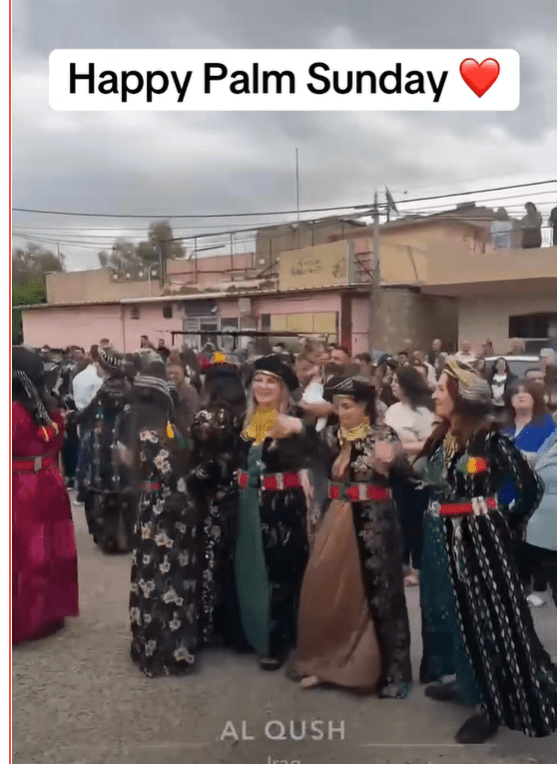
One of the most striking parts of the ceremony was the procession. Members of the congregation walked down the aisle holding palm branches, waving them high in the air as a symbol of reverence and celebration. The atmosphere was electric as women released traditional Middle Eastern mirth sounds—ululations—made during happy occasions like weddings or other festivities, added a layer of cultural depth to the ritual, blending faith and heritage in a powerful way.
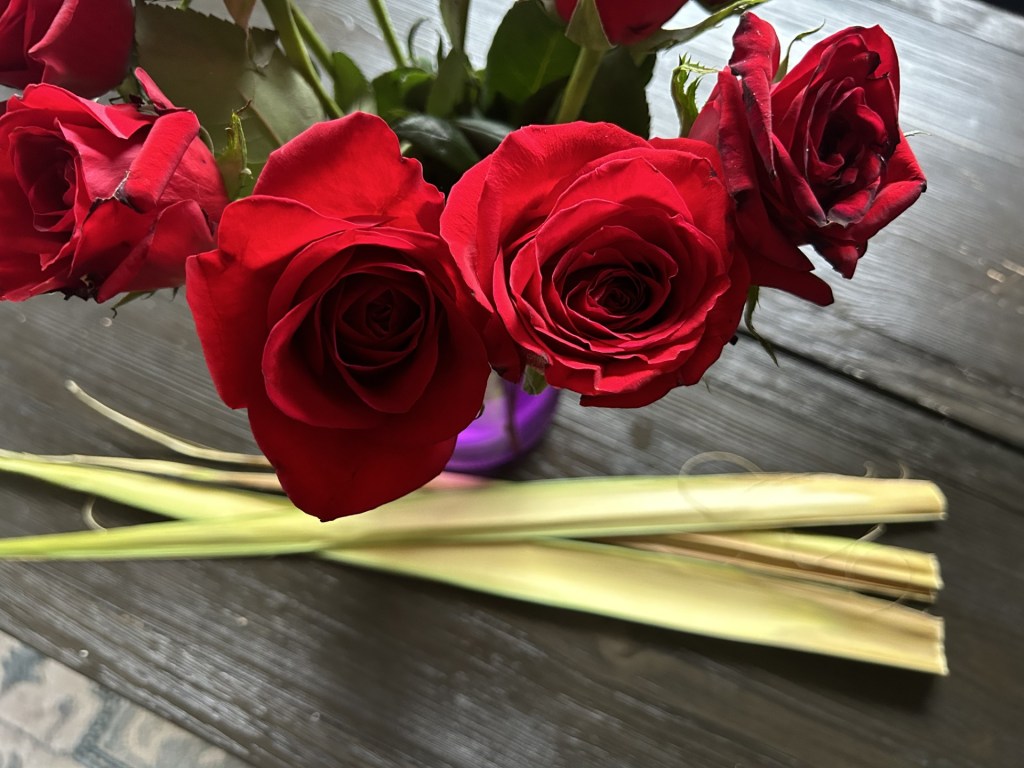
At the end of the celebration, everyone received a palm branch to take home. Holding that simple branch in my hand, I couldn’t help but wonder—what does this symbol truly mean? Was there a deeper story behind it?
When I returned home, after having a late brunch with my family, walking the dog, then taking a nap, I decided to do a bit of research. What I found was fascinating, connecting the palm branch not only to Christianity but to a much older legacy: the traditions and beliefs of ancient Mesopotamia.
Palm branches are central to the Christian celebration of Palm Sunday, symbolizing Jesus’ triumphal entry into Jerusalem. They represent victory, peace, and eternal life. But their significance goes back much further in history, to the ancient civilizations of Mesopotamia.
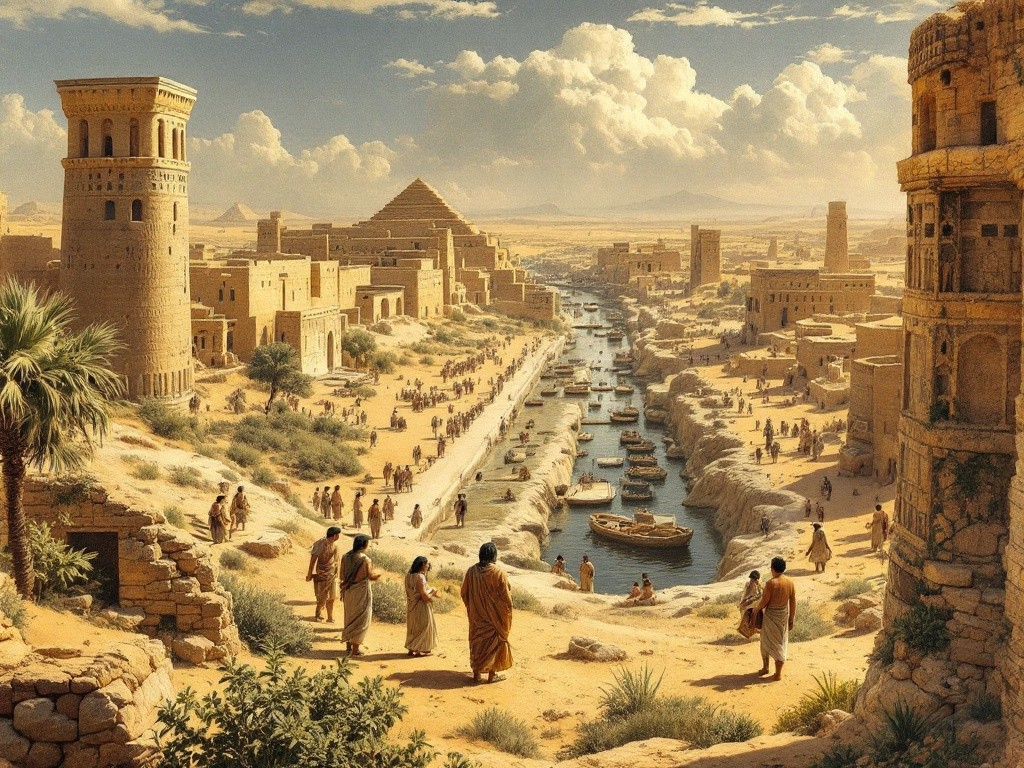
In Mesopotamia—the cradle of civilization and the land that gave rise to the ancestors of today’s Chaldeans—the palm tree was a powerful symbol. It represented life, fertility, and prosperity in a region where agriculture depended on the rivers and the lush vegetation they supported. The palm was sacred, appearing in religious rituals, art, and even mythology.
Palm branches were often associated with deities like Ishtar, the goddess of fertility and love, and Shamash, the sun god. They were depicted in carvings and reliefs, sometimes as part of sacred trees or in scenes of divine blessing. The palm’s connection to life and renewal made it a potent emblem, one that resonated deeply with the spiritual beliefs of the time.
As Christianity emerged and spread throughout the region, it absorbed and reinterpreted some of these older symbols. The palm branch, once a sign of prosperity and divine favor in Mesopotamian culture, became a symbol of Christ’s victory over death and sin. On Palm Sunday, Christians around the world carry these branches as a reminder of Jesus’ sacrifice and the promise of eternal life.
Imagine, the palm branch I brought home today carries that history.
In a world that often equates opulence with material wealth, it is essential to remember that true opulence transcends the physical. It is about the richness of our connection to the divine, the depth of our understanding of universal laws, and the ability to live in harmony with the sacred forces that govern existence. As a Chaldean, I am deeply inspired by the ancient wisdom of my ancestors, who were renowned as astrologers, astronomers, mathematicians, and magicians. Their knowledge was not merely intellectual—it was soulful, mystical, and transformative.
The Legacy of Chaldean Wisdom
The Chaldeans, also known as the Neo-Babylonians, were pioneers in understanding the mathematical and cosmic principles that underpin the universe. According to Rhonda Byrne in The Secret, “The ancient Babylonians and their great prosperity have been well documented by scholars. They are also known for creating one of the Seven Wonders of the World, the Hanging Gardens of Babylon. Through their understanding and application of the laws of the Universe, they became one of the wealthiest races in history.”
This profound legacy speaks to the Chaldean mastery of universal laws, which they saw not as abstract concepts but as living truths that could be applied to every aspect of life. They understood the sacred geometry of the cosmos, the rhythms of the stars, and the balance of energies that govern existence. Their wisdom was both scientific and spiritual, rooted in a deep reverence for the divine order.
Spiritual Opulence: A Modern Perspective
My teacher, Lynn V. Andrews, often spoke about “spiritual opulence,” a state where sacred wisdom becomes accessible to everyone, inviting us to connect deeply with the divine—however we define it. She described this era as the “time of the magical eye,” a moment in history when the veil between the physical and the spiritual is thinner than ever. In this time, nothing stands between us and the Great Spirit, God, Goddess, or the creative source of all beauty and abundance.
Spiritual opulence is about tapping into this divine connection and allowing it to transform every facet of our lives. It is not limited to religious practices or rituals; it is a way of being that integrates the mystical with the mundane. It is seeing the sacred in the ordinary and recognizing that the same universal laws that govern the stars also govern our thoughts, actions, and relationships.
The Science of Mysticism: Chaldean Contributions to Modern Understanding
The Chaldeans’ contributions to science and mysticism are a testament to their understanding of the universe as a unified whole. Their advancements in mathematics and astronomy were not separate from their spiritual practices; they were tools for understanding the divine order. For example:
Astrology and Astronomy: The Chaldeans were among the first to map the heavens, recognizing the influence of celestial bodies on earthly events. They saw astrology not as superstition but as a science that revealed the interconnectedness of the cosmos.
Mathematics: Chaldean mathematicians developed sophisticated systems for measuring time and space, including the 360-degree circle and the concept of zero. These innovations were rooted in their understanding of balance and harmony, principles that are essential to both mathematics and spirituality.
Magic and Mysticism: For the Chaldeans, magic was not about illusions or tricks—it was the art of aligning oneself with universal laws to manifest desired outcomes. This mystical practice was grounded in their deep knowledge of energy, intention, and the power of the human mind.
These ancient teachings remain profoundly relevant today. They remind us that the universe operates according to principles that are both scientific and spiritual, and that by understanding and applying these principles, we can create lives of abundance, harmony, and purpose.
An Invitation to Reflect and Connect
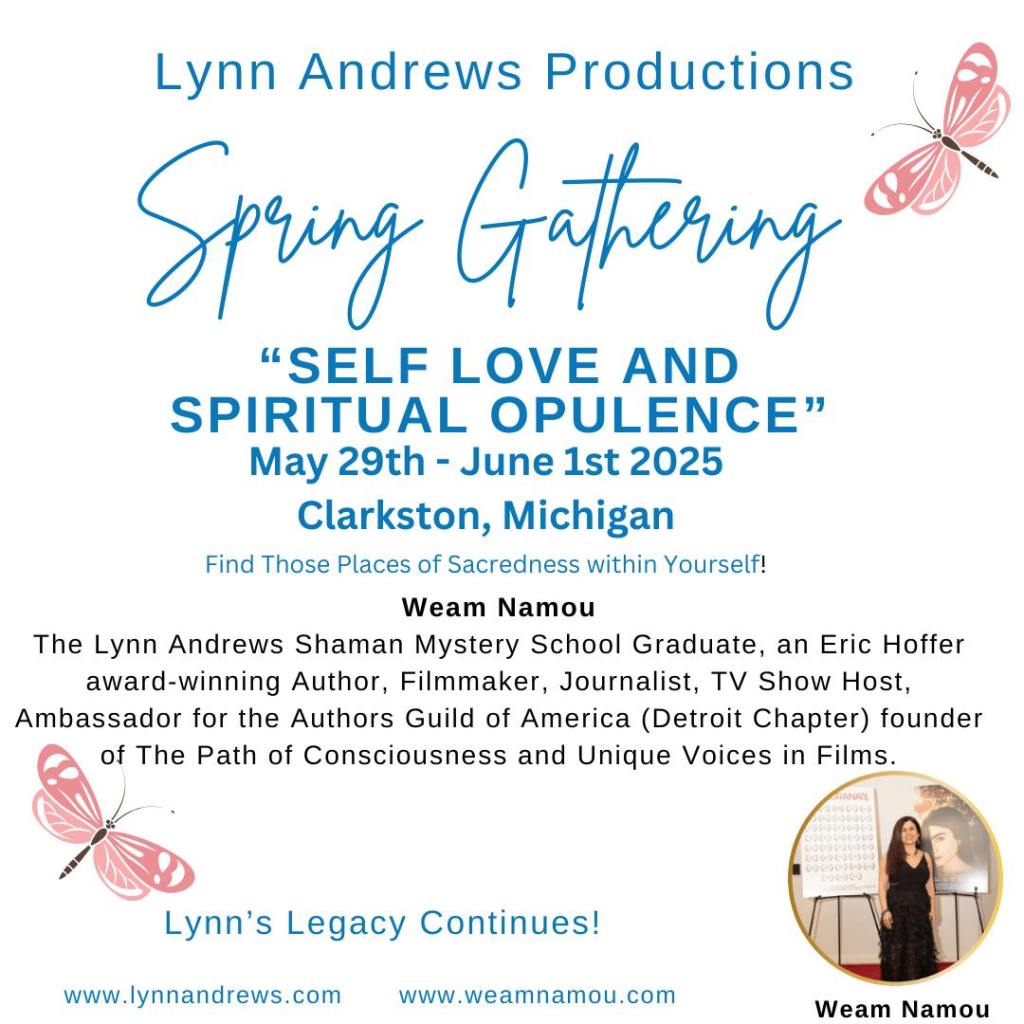
As I prepare to lead a retreat inspired by Lynn V. Andrews’ teachings and my Chaldean heritage, I invite you to reflect on the concept of spiritual opulence. Ask yourself:
✨ What does “spiritual opulence” mean to you? ✨ How do you experience connection with the divine in your daily life? ✨ What ancient wisdom or personal practices help you align with the universal laws of abundance and harmony?
This retreat is an opportunity to explore these questions together, blending the mystical teachings of my ancestors with the sacred wisdom of modern spirituality. It is a chance to step into the “time of the magical eye,” where nothing stands between us and the divine, and where we can co-create lives of beauty, creativity, and sacred abundance.
Let’s continue this journey of discovery, honoring the wisdom of the past while embracing the possibilities of the present. Together, we can embody the true meaning of spiritual opulence and align ourselves with the infinite potential of the universe.
March is Women’s History Month—a time to celebrate the achievements, resilience, and creativity of women around the world. This year, International Women’s Day (March 8) feels particularly inspiring as it coincides with the recent release to 25 countries of Pomegranate, a groundbreaking film that hit theaters on March 4. The film is not just a cinematic masterpiece; it’s a bold statement about women reclaiming and redefining Middle Eastern narratives.
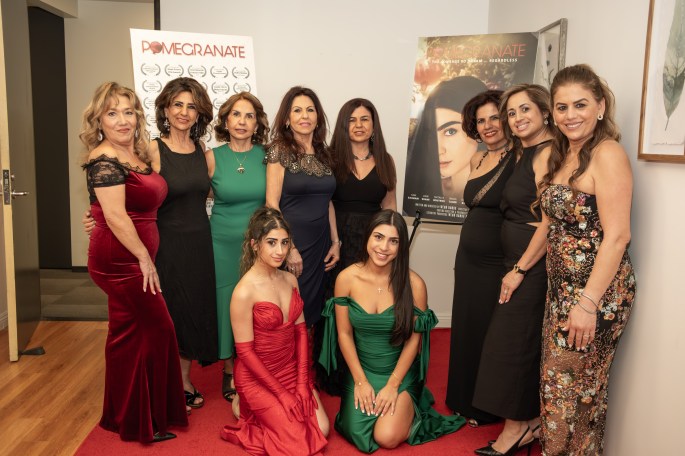
Before its wide release, Pomegranate had its exclusive premiere in Los Angeles on February 27, bringing together cast, crew, and supporters for a night of celebration. As someone who attended the premiere, I was struck by the energy in the room—a shared excitement for a film that promises to transform how Middle Eastern women’s stories are told. From the red carpet to the post-screening discussions, it was clear that Pomegranate is much more than a movie—it’s an inspiring movement.
At its core, Pomegranate is a story that centers women’s voices, their struggles, and their triumphs. The film explores themes of identity, resilience, and the power of storytelling. In an industry—and a world—that often sidelines women’s perspectives, especially in Middle Eastern contexts, Pomegranate breaks barriers by putting women at the forefront.
Click below to see where you can watch the film in 25 countries!
The Middle East has long been portrayed through a narrow lens in global media, often shaped by stereotypes that fail to capture the region’s rich diversity and complexity. Pomegranate challenges these depictions by offering a story rooted in authenticity, told through the eyes of women who refuse to be silenced.
The film is not only a celebration of Middle Eastern culture but also a reminder of the universal struggles women face and overcome. By focusing on female protagonists navigating personal and societal challenges, Pomegranate humanizes their experiences in a way that resonates across borders.
Why Pomegranate Matters
Released during Women’s History Month, Pomegranate is a timely reminder of the importance of women’s voices in shaping cultural narratives. The film’s release on March 4 is symbolic—it ties into a month dedicated to honoring women’s contributions throughout history, while also urging us to reflect on the work that still needs to be done for gender equality.
International Women’s Day, celebrated today, reminds us of the global fight for women’s rights and representation. Pomegranate amplifies this message by showcasing how women can redefine the stories told about them—and by them.
A Call to Action
The release of Pomegranate is more than just a cinematic event; it’s a call to support women storytellers and creators. As audiences, we have the power to shape what stories are told by choosing what we watch, share, and celebrate. Films like Pomegranate remind us that representation matters—and that when women take control of their narratives, the world listens.
This Women’s History Month, let’s celebrate the women who are changing the face of storytelling. Let’s amplify their voices, honor their stories, and continue pushing for a future where every woman’s perspective is valued.
If you haven’t yet seen Pomegranate, make it a priority this month. It’s more than a film—it’s a movement.
The births of my children gave me less and less reasons to travel. The pandemic helped me to embrace being home-bound. But now, my children were two thousand miles away and so was the comfortable quiet solitude of my home. It was time that I take the next step in my life.
It was my first trip to the Krotona Institute in Ojai, California, where a small group of us were there to take on various projects that would keep us busy for the next year. I was going to take a series of related classic texts written in the early 1900s and produce them into audiobooks. Audiobook narration was that “next step in my life” and I was in the middle of producing Weam Namou’s book “Pomegranate,” which had to take a back seat while on this trip.
On the Krotona campus, the first early morning was still and chilly. The rest of the residents were tucked away in their respective adobe-styled dwellings, but the birds were actively singing and fluttering about. Michigan’s bitter January weather was behind me, but I was grateful on this first morning in the mild winter of the Ojai Valley that I had my light winter jacket where I could hide my hands away.
I walked through the Sanctuary of Connections on the campu, a garden for contemplation. Step by step, my eyes sensed the newness in my surroundings. At the start of the path a statue of a Lioness stood to greet those who entered. Weathered, but revered, various offerings were placed around her majestic stance. The plaque on her throne read:
“Touching the forehead of the lioness
Speaking the name of one who suffers
Forming the connection to nature
Embrace healing powers.”
Then I found I was moving to a statue to symbolize a world religion, and another statue and another. Great traditions that hope to uplift humanity: Buddhism, Islam, Christianity, Taoism, Sufism, Indigenous traditions, Hinduism, Theosophy, Judaism, Baha’i, Zoroastrianism, Jainism, Sikhism, Confucianism, and the teachings of Krishnamurti.
As I approached the end of the path, a small shining sphere caught my attention and brought me closer to the tree from which it hung. I felt a deep connection to the tree before I realized what I was seeing and sensed it pulling me in, rather than being pushed by my own curiosity. The sphere glistened within its small, bare, and modest foliage, the branches of the tree thin and the leaves spare. I walked closer, still not knowing what it was. There it was, the smallest pomegranate I have ever seen, and the only one I have ever seen on an actual tree. The fruit’s skin had burst open, and its seeds were exposed.
I was surprised, no, I was astonished. There I was, experiencing a parallel path with the fruit staring at me and my own life, and that moment moved the lines to create a clear intersection.
After deep soul searching in 2021, I realized that I wanted to shift away from teaching Yoga full-time to narrating audiobooks. It was very much a “mid-life crisis” experience and through deep inner listening and self-observation, I began to realize this was the next step. Although, when do we actually truly “know” this sort of thing? All we can do is be open to continue learning about what the steps might be. For instance, when I began, I thought I would only be able to work on non-fiction books since I don’t read fiction and I’m not a trained actor. And then it occurred to me that I was avoiding the things I had, once upon a time, loved to immerse myself in, but stopped doing when I was prohibited from going away to college to study acting. I was avoiding fiction and I was avoiding acting. When Weam was impressed with my initial reading of her book in October 2021, I realized that I couldn’t, and shouldn’t, avoid either one anymore.
And standing there in the Sanctuary of Connections, looking at the little ruby red pomegranate, I understood that the steps I have taken through the garden of my life are moving me in the direction that I am to go.
As a second-generation Chaldean-American immigrant, Weam’s book spoke to me, a book which I know quite intimately after multiple readings, recordings, and analysis. In portraying the characters, I was eventually able to incorporate their personalities within my own being, bringing me closer to these cultural roots.
But more than that, the book spoke to me on a spiritual level, one that goes beyond imagined lines of nation, culture, religion, and gender. Immersing myself in it, I was able to incorporate the character’s souls in my own being. Their desires and struggles brought me to the Sanctuary of Connections within my own heart. Weam’s experiences and the story she shares with us, helps us to see that these desires and struggles transcend all the societal labels, these imaginary lines, that we are exposed to everyday which make us feel separate from each other.
For ages we have been trying to teach each other that we are all One, through traditions, religions, stories, and laws. And yet, it seems that these teaching tools, in our limited ignorance, have been used to create divisiveness in our hearts and minds. But there is hope. And beautiful stories like “Pomegranate,” which holds within its center the Sanctuary of Connections, will help us create a future of Unity instead.
Author Bio: Sandy Naimou has a B.A. in psychology & M.L.A. in women’s and gender studies. She teaches Yoga, serves on the board for The Theosophical Society in Detroit, and, as you already know, is an aspiring Audiobook Narrator.
Yasmeen Hanoosh is the author of The Chaldeans: Politics and Identity in Iraq and the American Diaspora. Here’s a link to learn more about the book: https://read.amazon.com/kp/embed?asin…
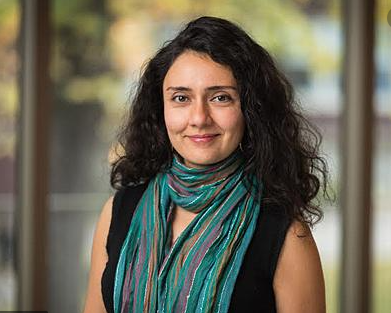
She is a literary translator, fiction writer, and Associate Professor at the department of World Languages and Literatures at Portland State University, where she directs the Arabic program. She received her Ph.D. from the Department of Near Eastern Studies at the University of Michigan in 2008. Yasmeen studies the cultural politics and literary expressions in post-2003 Iraq, especially what concerns the country’s ethno-religious minorities. Her first monograph is entitled The Chaldeans: Politics and Identity in Iraq and the American Diaspora (Bloomsbury, 2019).
Her current research project focuses on the contemporary intellectual scene of southern Iraq. As a fiction writer, Yasmeen has published a short story collection, Ardh al-Khayrat al-Mal’unah (The Land of Cursed Riches, Al-Ahali Press, 2021). Her second collection, Atfal al-Jannah al-Mankubah (Children of Afflicted Paradise) has been translated and excerpted in several languages, including English, Spanish, and Italian. Her English translations of Arabic fiction have appeared in various literary journals and publications, including World literature Today, Banipal, ArabLit Quarterly, and The Iowa Review. Yasmeen’s translation Closing His Eyes (Abbas), received an NEA translation fellowship in 2010, and her translation of Scattered Crumbs (al-Ramli) won the Arkansas Arabic Translation Prize in 2002, and has been since excerpted in a number of publications and anthologized in Literature from the Axis of Evil: Writing from Iran, Iraq, North Korea and Other Enemy Nations (2006).
In addition to her scholarship, translation and writing, Yasmeen has been teaching the Arabic language and directing the Arabic program at PSU since 2010. She also teaches a wide variety of courses on Middle Eastern culture and literature, including Critical Perspectives on the Middle East (UNST), Oil Cities and the Arabic Novel (HONORS), the Arabian Nights, among many others. Before coming to PSU she taught at the University of Michigan (2002-2009), al-Akhawayn University in Morocco (2003, 2005); The American University in Lebanon (2004); The University of Virginia in VA (2003); and Wellesley College in MA (2007-2008).
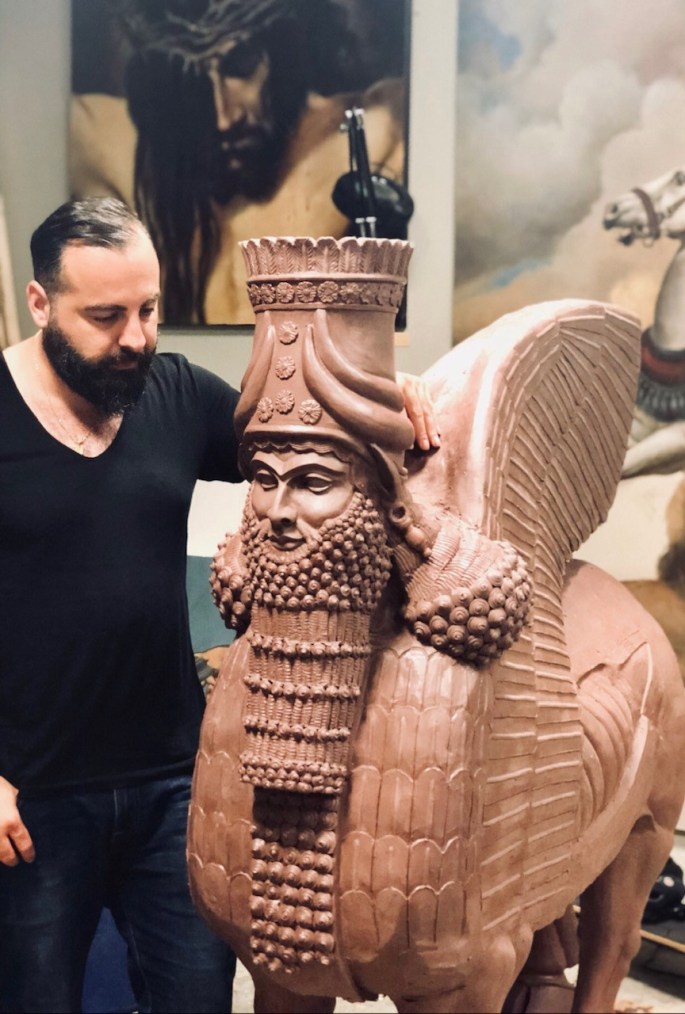
Reni was born in Baghdad, Iraq in 1981. In hopes of a brighter future, his family decided to leave their home country when Reni was ten years old. This dream was made a reality as they entered the United States in 1993, and Reni was immediately enrolled in elementary school. At an early stage of his life, Reni discovered a profound love for drawing. His talent was undeniable and noticeable by his teachers.
During his high school years, art became Reni’s priority. Taking many classes in this field, his artistic interests swelled, and Reni began to realize that he could fuse his passion for art with the dedication he had for his ancestors’ culture he’d left behind. Reni pursued his college education in Creative Studies in 2005, where he furthered his reach and began painting and sculpting. Inspired by Western art, as well as legendary artists, Reni dedicated his life to his crafts. With each piece that Reni creates, he strives to remain true to his Assyrian and Babylonian heritage and ensure its survival through his portrayals. Not only does he seek to influence all generations of Assyrians, but he also hopes to inspire the people of the world.
In recent years, Reni has been commissioned to create several large artistic creations in places of worship, community organizations, and commercial establishments. His signature style speaks volumes about his creativity, and enforces his personal message that he echoes “I was born to re-create my ancestors’ art despite its destruction by ISIS.”
Dr. Rocco A. Errico is an ordained minister, international lecturer and author, spiritual counselor, and one of the nation’s leading Biblical scholars working from the original Aramaic Peshitta texts. For ten years he studied intensively with Dr. George M. Lamsa, Th.D., (1890-1975), world-renowned Assyrian biblical scholar and translator of the Holy Bible from the Ancient Eastern Text.
Dr. Errico is proficient in Aramaic and Hebrew exegesis, helping thousands of readers and seminar participants understand how the Semitic context of culture, language, idioms, symbolism, mystical style, psychology, and literary amplification—Seven Keys that unlock the Bible—are essential to understanding this ancient spiritual document. Dr. Errico’s publications include: Let There Be Light: The Seven Keys, And There Was Light, The Mysteries of Creation: The Genesis Story, The Message of Matthew, Setting a Trap for God: The Aramaic Prayer of Jesus, Sodom and Gomorrah: What Really Happened, Classical Aramaic Book 1. He is also the co-author, with Dr. Lamsa, of 13 Aramaic Light biblical commentaries (seven on the New Testament and six on the Old Testament).
Dr. Errico is the recipient of numerous awards and academic degrees, including a Doctorate in Philosophy from the School of Christianity in Los Angeles; a Doctorate in Divinity from St. Ephrem’s Institute in Sweden; and a Doctorate in Sacred Theology from the School of Christianity in Los Angeles. In 1993, the American Apostolic University College of Seminarians awarded him a Doctorate of Letters. He also holds a special title of Teacher, Prime Exegete, Maplana d’miltha dalaha, among the Federation of St. Thomas Christians of the order of Antioch. In 2002, he was inducted into the Morehouse College Collegium of Scholars.
Under the auspices of the Noohra Foundation, he continues to lecture for colleges, civic groups and churches of various denominations in the United States, Canada, Mexico and Europe. https://noohra.com/
Noor Matti’s calling was to go live in Iraq and serve the people there, so that’s what he did, and that’s what he still does. His charity work was particularly helpful in 2014 after ISIS attacked the Christian villages in northern Iraq.
Noor was raised in Ankawa, Erbil until his family was forced to flee in 1992 due to deuterating situation in Iraq. He spent two years in Greece as a refugee, until his family was allowed to reach Detroit. A stranger in the US, Noor looked to music as a way to escape the confusing new land, as he rode the MP3 wave and began to create mix CDs for classmates. In 2012, the media opportunity finally came, as Noor was hired by Babylon Media in Ankawa, Iraq, to establish the country’s first ever all-English radio station. By 2018, Noor was tapped to also host a weekly international Arabic show on Babylon TV. Since 2014, Noor has held the operations manager position for the Shlama Foundation, where he has coordinated 200 projects to be implemented.
Evette Kassab – Not only is Evette proficient in Surath, but she can read and write in Surath as well. Volunteerism has played a major role in Evette’s life. She co-founded the non-profit, E’rootha, in 2008 to preserve the identity of the Chaldean Assyrian Syriac diaspora and to inspire a cultural awakening within the youth of Michigan. From dance classes, language classes, a mentoring program for refugees, and a sports camp to genocide awareness events and art shows, she has actively worked to develop these initiatives for the past decade.
I met Dr. Yaacov Maoz last year when he traveled from Israel to Canada and the United States. He stopped at the Chaldean Museum and we discussed his interesting and very important projects.
The Ezra and Nechemia immigration campaign of the 1950-1951 winter marked the peak of Aramit-speaking immigration to Israel. Some 100,000 Jews who had been living in Iran, Iraq, Turkey, and Syria brought a forgotten Jewish culture dating back thousands of years to Israel. Its crowning glory was the spoken Aramit language. Nearly half a million of their descendants now live in Israel, and fifty to one hundred thousand of them speak the language. The large majority of the world’s Jewish Diaspora, both in the west and the east, had yet to hear how one of the two founding languages of the Jewish people is spoken.
Dr. Yaacov is leading the campaign to revive and preserve the Aramit (Aramaic) language. He was born to a family that immigrated to Israel from Mesopotamia and is a native speaker of Aramit ( ארמיתThe Jewish version of Suret). He received his academic training principally at the Hebrew University of Jerusalem, where he wrote his doctorate on aesthetics in rabbinic thought, which deals, for the most part, with Aramit in the Talmud and Midrash. During this period, he also completed rabbinic studies at the HUC without accepting ordination. He has had two books published (in Hebrew), Poetic Justice – poetry and short stories, and God, Love and Aesthetics – a theological-philosophical essay. He is currently engaged in research of rabbinic thought, lectures on Judaism and Israeli society, and is a social activist for the promotion of interfaith dialogue.
Dr. Yaacov works at the Israel Association of Community Centers, where he is Director for Content Development and has published Festivals in the Community, a series of widely distributed booklets, the foremost of which is the Haggadah of Identities, a Passover Haggadah with an Israeli commentary. He is involved in strengthening Jewish pluralism, in promoting dialogue between different sectors in Judaism, in the connection between Israel and the Diaspora, and in developing understanding between Jews and Arabs in Israel. He has led several conferences with his associates in the Tikun Movement, the most outstanding of which was the Matrouz International Conference, in which Arab colleagues from Morocco and France participated.
Dr. Yaacov has established a public council of intellectuals and a committee of social activists for the revival of the Aramit (ארמית) language. He has opened study groups and created a Facebook group, held a preliminary conference on solidarity with the Assyrian nation, published journalistic articles, spoken on radio broadcasts, and appeared on television. He maintains contact with the Assyrian diaspora leadership the world over on a daily basis and seeks to increase awareness throughout the Israeli public of the Assyrian nation’s suffering, its cultural richness, and the wonderful opportunity strategic cooperation with the Assyrian nation offers.
“Do not so easily dismiss the Aramit language for we find that the Holy One, blessed be He, honored it in the Torah, Prophets, and Writings.” Yalqut Shim’ omi
Paul Batou was born in 1959 in a tiny village on the border between Iraq and Turkey. When he was two years old, the Kurds destroyed his village in an act they called “ethnic cleansing.” This forced his family to migrate to Mosul and eventually to Baghdad, where he lived among Arabs. His family rented a room with six other families. Almost forty people shared one small kitchen, bath, and toilet. He described his home as “more like a prison.” Even though his family spoke a different language, Aramaic, they managed to survive. Batou’s mother was forced to work like a slave in a hotel while his father traveled back and forth from Baghdad to the north in order to restore their land. He could not imagine working in a city while others stole his land.
None of Batou’s siblings completed their education, but thanks to his aunt’s generosity, he was enrolled in a Catholic school. He performed very well, especially in art and science. At first, he drew simple Disney characters, and then graduated to Western wild west-style pictures. At the age of twelve, he wrote his first short story, which was a love story based in the city of Kremat, where he grew up. His journey as an artist continued throughout high school.
In 1989, Batou traveled to Italy to study art, but his father refused to finance his studies. He returned to Baghdad and was accepted in a pharmacy school, so he followed that direction. Luckily, the school had a studio for the arts. One of the protocols in Iraq was that each college must have a music and art department to be used for students’ hobbies.
The following is an excerpt from the book Iraqi Americans: The Lives of the Artists
WN: Why didn’t you study art in Baghdad?
BATOU: The College of Fine Arts was exclusive to the Baath Party. I didn’t even bother to apply because I had no desire to become one of their members. I was fortunate that the director of the studio in the pharmacy school was one of the most famous Iraqi artists, named Abdul Ellah Yassin. That’s how I practiced and learned art in a more professional fashion. It was as if I’d missed something and then found it. I was hungry to absorb all the knowledge I could in art.
WN: While living in Iraq, did you have any serious encounters with the Baath Party?
BATOU: My problems with the Baath Party began after I received my bachelor’s degree. I was accepted to continue my master’s degree in toxicology. However, because of my friendship with Abdul Salman, a Shia Muslim student who was disliked by the Baath Party, my art teacher told me that, like my friend, I would not have a chance. My friend and I took our case to the minister of education and eventually to the minister of health, who refused to help us. When we asked him why his daughter was going to England for the master’s degree when her scores were lower than ours, he replied, “She is my daughter and I want the best for her.” The minister’s final advice was for us to join the army.
One of my classmates from elementary school had become a powerful person in the Iraqi intelligence agency, the Mukhabart. I had helped him in his academic study in pharmacy school and we used to play together during childhood. He offered me the opportunity to study nuclear pharmacy in Sweden. In return, I would receive an excellent pay and my family would be provided with a nice home and a comfortable life. It was either the army or studying abroad and joining the Mukhabarat. It was like having to choose between heaven and hell. I chose hell.
I served in the army five years during the Iraq-Iran war. The first few months, I was on the front line, and every night I asked myself if I had made the right or the wrong decision. I played by my principles, and my principle was not to give up my freedom. I later wrote a poetry book, My Last Thoughts About Iraq, which is based on the notes and soldiers’ quotes I jotted down during the time I served in the war, from 1983 to 1988.
Matters changed when I was placed in the medical unit and began focusing on helping as many people as I could. We were in a city that bordered Iran, where there was shelling and wounded men every day. That’s when I forgot my doubts and questions. God gave me peace in my heart, and I ended up staying in order to help the people who needed me. I stopped feeling like I made a bad decision and I felt happy to be a pharmacist. I’m helping more people now.
WN: What was the driving force behind leaving Iraq and coming to America?
BATOU: Freedom. The turning point in my search for freedom was when I started reading and painting the Epic of Gilgamesh. That story had a major impact on my thinking as a human and as an artist. Gilgamesh and his long journey and search for life, love, and freedom opened my mind and caused me to look back at my roots as a Mesopotamian. I became more determined to love my land and my people and to fully understand that this is my Iraq, not owned by Shiites, Sunnis, or Kurds. The Christians of Iraq are the natives of Iraq. They carry the heritage of Iraq.
Seeing my friends, mostly artists, writers, and poets whose thinking was in opposition to that of Saddam’s ideas, taken by Baath Intelligence or put in prison or disappearing from the university affected my thinking. I realized I am not free. If you search for freedom while under the dictator rule, either you think to exit Iraq, or if you can’t do that, your alternative is connecting to whatever makes you feel free. To me, the gypsy culture, writing poems, painting, and playing classical guitar provided me with the ideals that I live by and the freedom to express myself among the people who fear God and pray all day.
In 1989 I moved with my family, a wife and a son, to Athens and eventually to the United States. Although it was difficult in the beginning, the image of America being the land of freedom and opportunity lived up to its name. I found American people very helpful. They assisted me as best as they could. One person who played a big role in my success was a friend and pharmacist by the name of Ira Freeman. He offered me a job in his pharmacy even though I had no experience with computers and I didn’t know the name of the drugs since they were different than what I had learned in Iraq. He even provided me with financial assistance to get me through.
One thing you learn in America is that you have full freedom. Humans with freedom will have more powerful production than humans under oppression. I’m happy in America, but I miss the friends I left behind in Iraq. I’ve written many times that I can’t feel joyful and happy when my friends in Iraq are sad and worried.
One day my father told me Iraq is my homeland. It was called Mesopotamia before, the land of two rivers. My mom said any land that gives you freedom is your land. I ask myself one question. Could I have done all this in Iraq? Would I get the same support to express myself freely, with no restrictions? The answer is no. Only true freedom will make you a professional pharmacist, artist, writer, and musician. How many people living in Iraq now missed that opportunity? Freedom is what makes a country and its people great. Finally, this is my land. I lost my home in Iraq. I don’t want to lose my home here. The way to keep my home is to restore the world to peace.
WN: Why do you think that America is not very familiar with Iraq’s art?
BATOU: Everyone agrees there was a big arts movement in Iraq long before Saddam came into power. Many artists had traveled to Europe and accomplished such extraordinary work there that they were very well-known there. While American professional observers who deal with art know about the high standards of art and music in Iraq, the general public does not know. The United States and Iraq did not have good enough relations to create programs where Americans can come to Iraq and witness, for themselves, Iraq’s culture or people, or for Iraqis to come to the United States and do art exhibits.
Since there was no cultural interference or exchange with Iraq, Americans didn’t know anything about Iraq’s history, culture, and heritage. That’s the one reason that the US failed with Operation Iraqi Freedom.
Yet our cultures are similar in a way. It’s about new invaders who came in with a different culture and changed Iraq to what we see now. This is a repeat of what happened to the Native Americans, when Europeans invaded the Natives’ land and changed their beliefs, religions, and way of life.
WN: Have you visited Iraq since you left?
BATOU: I once felt that even if I visited Iraq for one or two weeks, that would mean I would have to give up my freedom for one or two weeks, which I didn’t want to do. Then, in 2014, I finally visited the northern part of Iraq for two weeks. It was the first time I was there since I left in 1989. Things were stable and people were generally happy when I visited. I told them, “It can’t be sustained. Things will not end happily.”
WN: What made you say that?
BATOU: The government offices were unorganized and corrupt. You can’t maintain a society with poor politicians and poor thinkers.
Everyone focuses on the Islamic State, but the war in Iraq has been ongoing since 2003. I believe Saddam was only one person and we, the Iraqis, gave him his power. We became his hands and eyes, his army and secret police. We the Iraqis created the dictator. Iraq for the Christians was not a paradise before his rule. We lived among a lack of knowledge and education. Iraq was always a land of fear and discrimination. Maybe the Islamic State did something good. It brought the world’s attention to us. Before then, no one knew or cared about the minorities in Iraq.
The Islamic State has a positive presence in the Middle East. They cause people to examine their thoughts and beliefs about killing others, which were happening even before they entered the picture. Saddam also tried to destroy our identity and culture, but not in this way.
WN: Can you tell us about Minor Dreams and Confessions, two of your paintings?
I painted Minor Dream in the 1990s during the sanctions against Iraq. I used to have family there and you could feel the pain and suffering of the people during that time. I thought about the kids, especially after what Madeline Albright said in regards to half a million Iraqi children dying due to the sanctions that made it difficult to access milk and prohibited other basic foods and medicine items. When asked by the TV anchor if the price is worth it, Albright said, “We think the price is worth it.”
I also painted Confessions in the 1990s, and this relates more so to the Christians of Iraq, when the Arabs conquered Mesopotamia. You know how you confess your sins to the priest and the sins will go away? I confessed so that I can wash away all the sins of Iraq. I shouted and cried, but I am tied up. I cannot reverse the history of Iraq. It’s God’s Will that it falls. After reading the Bible many times, I found that God insulted Babylon repeatedly for having enslaved the Jewish people. The wars, the sanctions, the invasion— they are punishments from God. They are consequences of the past.
WN: How do you plan to restore the world to peace?
BATOU: The way to make a change is through what I do with art and what you do by writing books. We become a voice for the people who cannot express what is in their minds and hearts. Our job is to explore the world through beautiful art. Our job is not to condemn Islam, Christianity, or any other religion, but to provide people with a vision.
For me, art has a universal message. Part of art’s universal message is to deliver beautiful pieces with nice colors, logic, and philosophy for all humans. My colors reflect the tone of the Earth, the language of the universe, the cry and pain of the oppressed people.
As an artist, I go back to that civilization, that beauty, and ask myself, why do I need to restore that Iraq? It’s because it represents the great civilization, the beauty, the knowledge about all humans. My love for the US plays an important role in my art. Since 9/11 there has been less freedom in the US, affecting the way people live and think. One of my goals is to restore that freedom.
Usually artists, whether they are American, Iraqi, or from any other country, don’t like war. Our concern is mostly for the innocent people who will suffer, whether those people are the citizens of Iraq or our troops and their families in America.








 The Path of Consciousness